

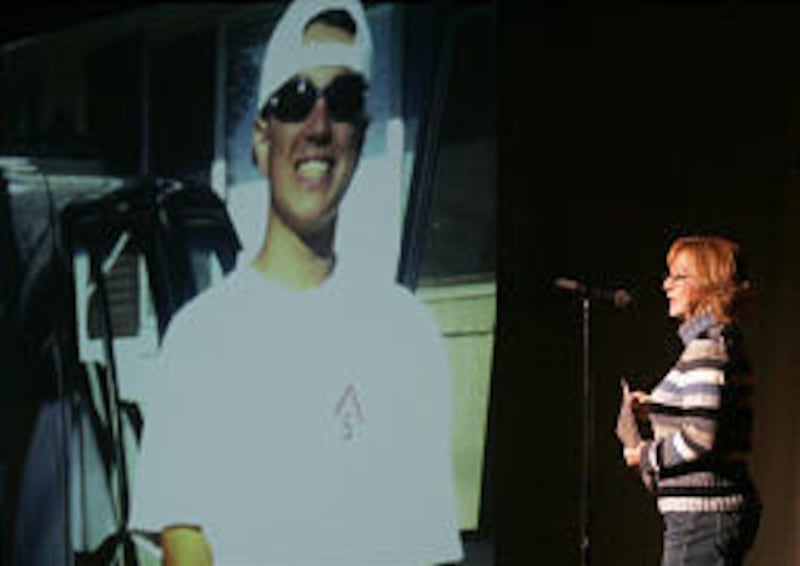
SPRINGVILLE — A year and a half ago, Marianne Stephens' son died of complications related to years of taking heroin intravenously.
Stephens said she had no idea her son would be prone to drug addiction and abuse — but the realization taught her a life lesson she wants to share with others.
Stephens joined other prominent members of the Springville and Mapleton communities at Springville High School last week to present a community plan that officials hope will stem the tide of illicit drug abuse among young adults and teenagers in the cities.
"We're a highly religious community, and parents think they do all of the right things," Stephens said. "They don't think they're going to have problems with risky behavior. They think they won't have to worry because that won't happen. Well, it does. It can."
Throughout the event, organized by Youthnet, a drug-abuse awareness group, a plan of 40 "Developmental Assets" produced by the Search Institute were discussed.
According to the Search Institute, when a community's children and teenagers are exposed to at least 31 of the assets, chances of the kids having problems in school, committing suicide or taking illicit drugs are greatly reduced.
As presented by both mayors of Springville and Mapleton, both police chiefs, several city council members and other educators in the community, each of the assets will be promoted one month at a time in Springville and Mapleton.
Assets include strengthening family support, establishing a caring school climate, encouraging creative activities and fostering responsibility among young people.
A list of the assets can be found through Youthnet or at www.youthnetutah.org.
"It's kind of therapeutic (to take action) because the worst thing about dealing with this problem is that it never goes away," said Kevin Scholz, chairman of Youthnet.
Scholz also had a child who became addicted to drugs. He started to work with year-old Youthnet to deal with the frustration of feeling helpless.
"So often we have a sense of inability to do anything about these problems," Scholz said. "Each and every youth in the community is at risk. Nobody is immune. Nobody is protected."
E-mail: achoate@desnews.com