

SPRINGVILLE — When she was a girl, Mary Elen Shenk had a recurring nightmare. She was being chased by bears and she ran into the upstairs closet in her family home. She slammed the closet door. Then she was safe.
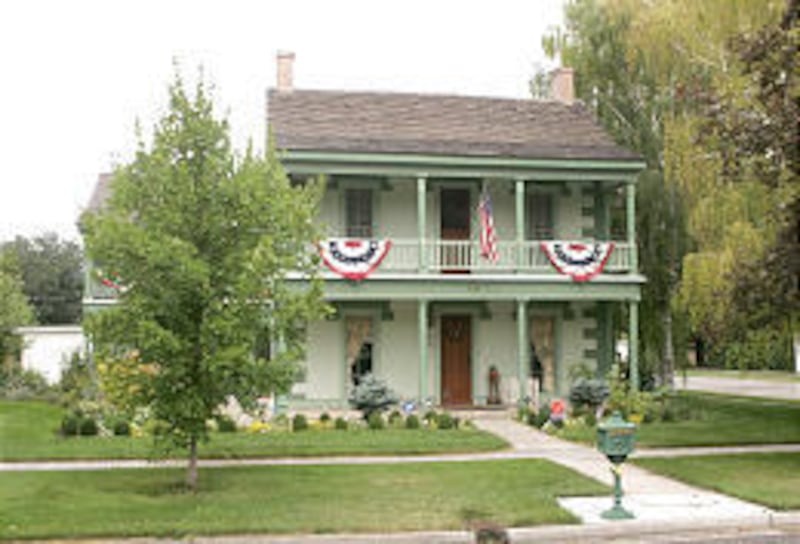
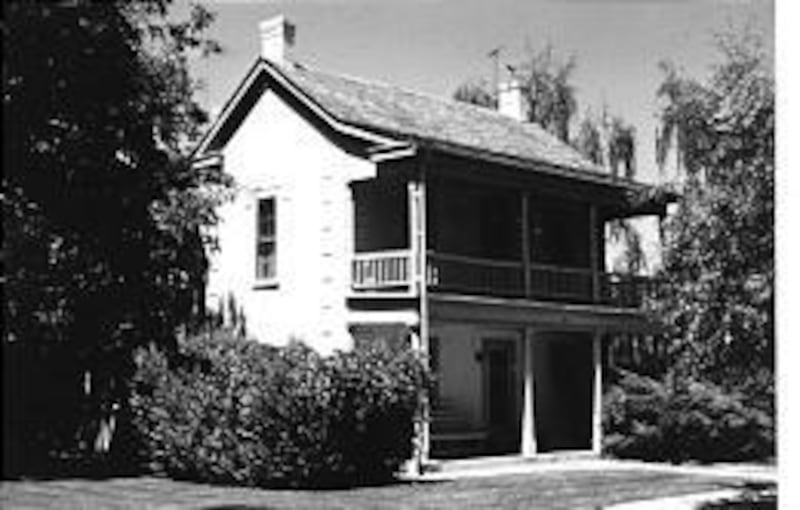
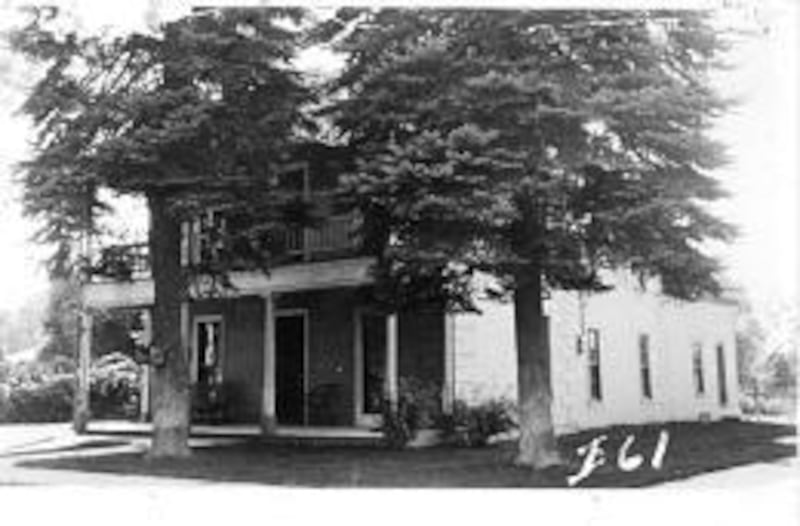
Today, she lives in that same home, the oldest house in Springville. It was built in 1856 by her great-great-grandparents, William and Ann (Dilworth) Bringhurst.
The upstairs closet is still there. The family always called it "the long closet." When Shenk was a child, the top cupboards in the long closet were for stuff no one looked at any more and the lower cupboards were where the family games were kept.
She knows who built the cupboards in that huge old closet.
Shenk's neighbor, who recently moved back to Springville after her husband retired from the military, is the granddaughter of the carpenter who made the cupboards. Shenk talks happily about this connection with her home's history. Of course when you live in a house that has been in your family for nearly 150 years, the history of place and the history of family are one in the same.
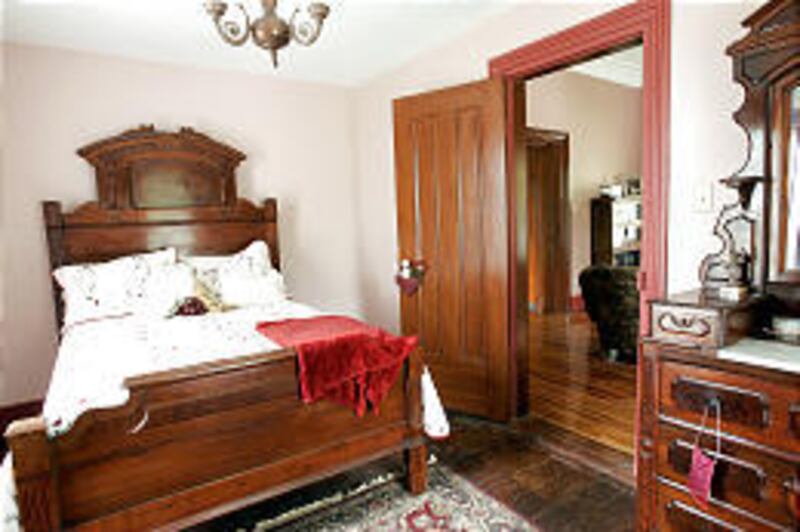
Shenk knows that Brigham Young slept in the south bedroom, next to the upstairs parlor. That bedroom was her sister's when they were girls. The upstairs parlor has long since become a bedroom, and when Shenk was a girl that was where her grandmother slept.
When she stands at the kitchen sink, Shenk remembers her mother or her grandmother standing at the kitchen sink. When she hears the doorbell, she remembers how her mother used to know the exact number of steps it took to walk from the kitchen to the front of the house. Sometime in the 1960s, Shenk's mother made a little sign, hand-lettered, to save herself the trip.
The sign hung on the front door, and it told visitors to come around to the side door. Shenk has kept her mother's sign. It's near the kitchen sink, where she can see it every day. "I was very close to my parents," she says.
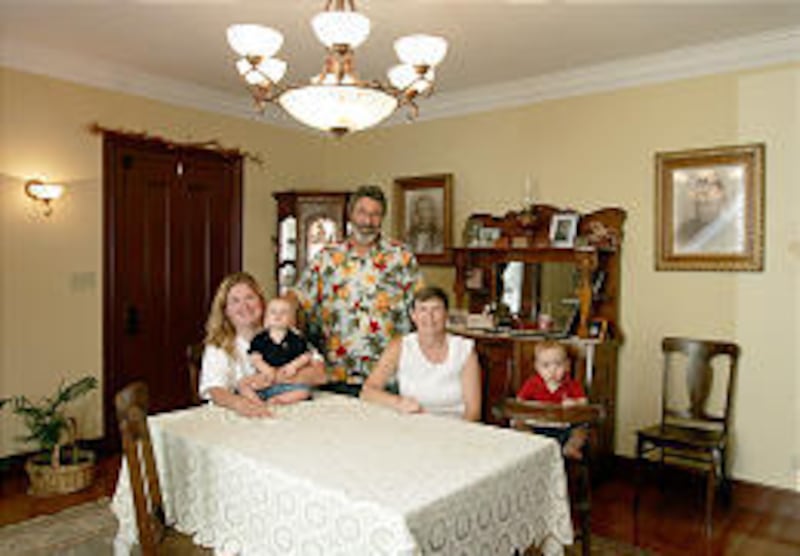
Mary Elen and her husband, Warren, moved into the home in 1992 to take care of Mary Elen's folks after her mother had a stroke. They were following the family's tradition: children taking care of their parents in the family home, then growing old themselves and being taken care of by their children in the same house.
William Bringhurst was a legislator in the Territorial Legislature, a businessman in Provo, and a member of the Brigham Young Academy board of trustees. He was sent by Brigham Young to start a settlement in what is now Las Vegas. Brigham Young himself, was a frequent visitor to the home in Springville, according to family lore. Legend also has it that William Bringhurst kept a diary, but he wrote about something his wife didn't want remembered so she burned his diaries after he died.
At any rate, Shenk is sure that, if they existed, the diaries are not in the house. When they remodeled, they removed everything. Emptying out the top shelves of the long closet, Shenk came across an old family Bible and the logbook of births that had been kept by her great-grandmother on her mother's side, who was a midwife.
William and Ann Bringhurst were cared for in this house by their daughter, Deseret. She in turn raised a family in the home and was cared for in it by her son, William Bringhurst Crandall, and his family. William's son, Leo Crandall, was Mary Elen's father.
Except for two years of his life, Leo lived in the house. He brought his bride, Lillian Bird, to share a home with his mother.
Mary Elen's mother, Lillian, died, in 1997. In 1999, the Shenks began renovating the family home in order to build her father a bedroom on the ground floor. Her father took great interest and delight in the renovation, though he passed away before it was quite finished.
At first, the Shenks thought they'd remodel a room at a time. But when they realized Mary Elen's mother had had the historic home placed on the National Register, they decided they should consult the state's historical society for remodeling advice. The advice they got was this: Don't do a thing until you make sure the house is stable and structurally sound. So they hired an architect — Joey Clegg of CD Architects — and a contractor — Ole Jensen of Taylor and Jensen Construction. The Shenks decided to restore the entire home at one time.
The house was structurally sound, the Shenks learned. But they did have to take down a rear addition that was built in 1890. The space between the original house and the addition had acted as a wick and the adobe walls of the addition had absorbed too much moisture and become unstable.
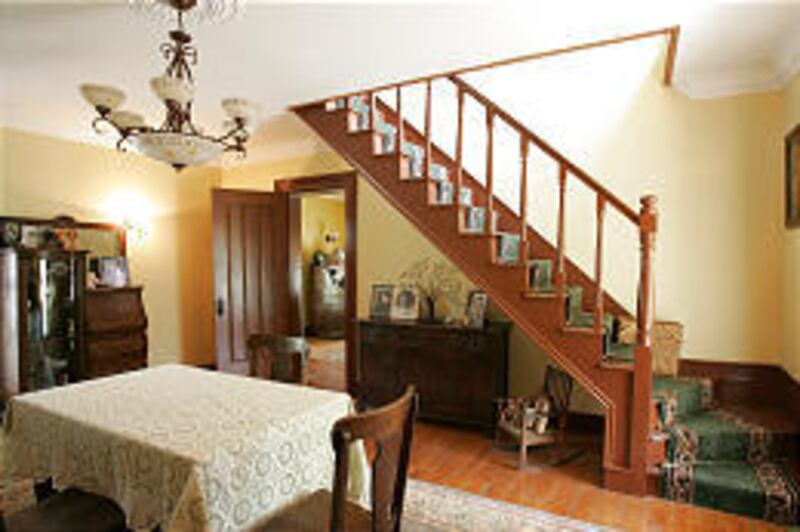
They went to great trouble to restore it. They restored the original hardware, replastered, replaced the ceiling medallions that had originally encircled the chandeliers.
They hired David and Daniel Horne to repaint the hand-grained finish on the sills and door frames. They turned the upstairs parlor back into a parlor. They bought old claw-footed tubs for the bathrooms.
When they were working on the floor in the front room, or main parlor, they discovered a trap door leading to a small space. Since William Bringhurst was a polygamist during the years of prosecution, the Shenks assume this was a hiding place. They restored the trap door and cover it with a throw rug, just as the Bringhursts must have done.
They decorated the original home in a style from the time period between 1885 and 1912. The Shenks also added some rooms to the house, in the rear where the 1890 addition had been. The new addition holds a modern kitchen and family room and bedroom, as well as a wheelchair-accessible bathroom.
If you were to visit them on a Sunday, you'd find Warren is the one who jumps right in, giving details of the renovation. It seems Warren Shenk is a history teacher, and in this house he lives out his passion for the past.
"I wish I could be a carpenter," he says. He's not — but he knows how to research every historic detail.
As he pulls out photos or talks about the light fixtures or rhapsodizes about how many coats of paint were necessary for the faux grain finish on the sills, it occurs to the visitor that he may be as much in love with this house as his wife is. No matter that she has spent more years in it than he has.
Occasionally, during the conversation, Warren will try to stifle his enthusiasm and invite his wife to explain how some detail in the restoration came about. Cheerfully, Mary Elen will tell him to explain it and she'll wander out into the garden to pick a few flowers.
But she'll come back in when the visitors reach the kitchen. There, she opens the sideboard, the one that her great-great grandmother used — and her grandmother, and her mother. At this point, Mary Elen's memories begin to take center stage. She invites a visitor to smell the wood, the place where spices have been stored for more than a century.
She loves this cupboard for the memories it brings as well as for its simple design. When she was planning her new kitchen she bought knobs that look like the ones on her antique cupboard. She had the cupboard's molding replicated as well, in the molding above her new kitchen cabinets.
Warren is the one who wrote the application for the Utah Heritage Foundation's Preservation Award (which the Shenks won in 2003). He wrote of the renovation of the Bringhurst house, saying, "It became apparent that each generation had made its contribution to the house. The first generation had the house built. The second generation put an addition on at 'the turn of the century.' The third generation installed electricity and plumbing. And Mary Elen's parents, the fourth generation, had been preserving the house in various fashions for over 60 years.
"We, Mary Elen and I, the fifth generation, decided that our project would be a complete historical renovation, interior and structurally."
What he didn't say in the application is that he and Mary Elen were thinking about the seventh generation when they did their remodeling. And sure enough, their daughter and son-in-law, Marye Jane and Tony Kiser, have twins who just turned 1.
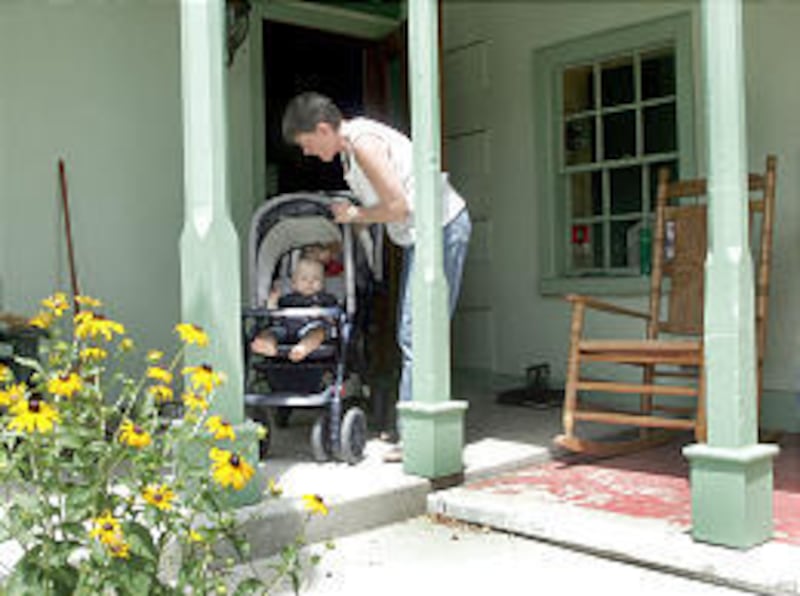
Mary Elen and Warren baby-sit Jackson and Chandler every Friday. The boys come to their home, to the place where seven generations of family photos grace the mantelpiece.
In the back of her mind, Mary Elen may have been planning to come home all along. When she and her husband did come back to her childhood home, Mary Elen found clothes from her high school days still in her dresser drawers.
She was away for many years of her married life, but now she says, "I've always wanted to live here. I've always loved this house." She owns a rubber stamp that reads, "There's a place called home where my heart can rest . . ." Mary Elen Shenk says this house — the entire house, not just the bear-proof closet — is her safe place.
E-mail: susan@desnews.com