


Richard Paul Evans remembers visiting a shelter in Las Vegas several years ago where runaway teens tended to congregate. Many were leery of him because, dressed in a shirt and tie, he looked like an authority figure.
But one of the kids talked to him. "Tell people," the boy said, "that we are not bad kids. Everyone is afraid of us, but we are good kids. We have had bad things happen to us."
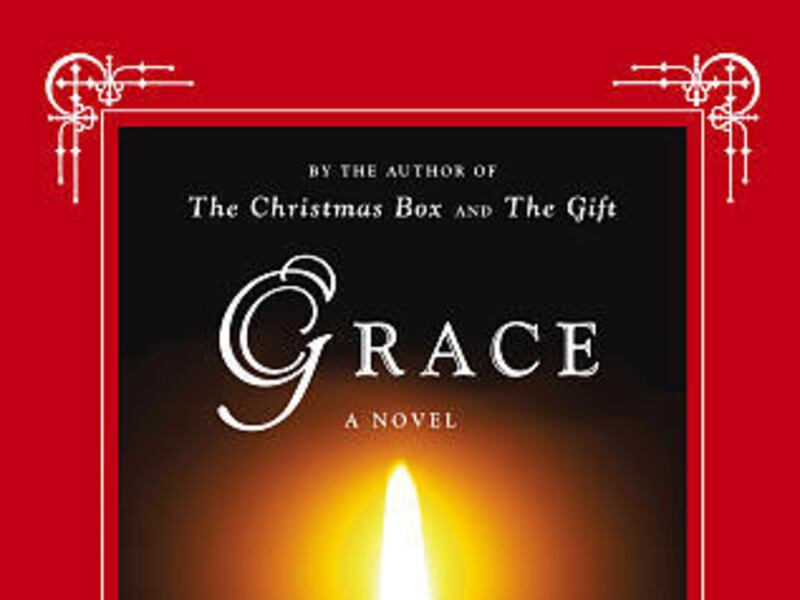
Maybe that's where the idea for "Grace: A Novel" came from. Evans' latest book tells the poignant story of a young girl who has been abused by her stepfather, has left her home and is helped and protected by two young brothers who secretly house her in their homemade backyard clubhouse.
It's a story where teenagers "discover the harsh realities of a world where love and trust are the two most precious gifts that anyone can give."
It wasn't the story that Evans set out to write. "I was going to write a story about a rich man who decided to go live among the homeless. I'm not sure just when it transitioned into this one."
The book is set in the '60s, because "back then these things just weren't talked about. There was a level of secrecy that was incredible. It wasn't until 1961 that the medical community even agreed that child abuse existed. I talked with a social worker who told me that back in those days there were hundreds of girls on the streets, and no one could figure out why. People just tended to shrug their shoulders."
He talked to a woman who had left her home at age 13 to find a safer place — the park. The fact that a park could be safer than a home, that there was nowhere else to turn, "that is stunning to me," Evans says. "Back then, if kids had talked about abuse, chances are good nothing would have been done. In the early '60s, the world was incredibly naive in some ways — yet we were playing around with nuclear weapons."
Even now, runaways are a problem. "According to the National Runaway Switchboard, between 1.6 million and 2.8 million youths run away from home each year," he says. He hopes people may become more empathetic to the problems of teens.
But, he says, "I'm just a storyteller. My main goal is to tell a story that is enjoyable to read." To him, he says, "my books are a gift. Whatever universal power or source they come from, each book seems to have its own destiny. I'm always shocked where they end up."
It has been 16 years since Evans, then an aspiring advertising executive, wrote a simple story of love and redemption for his two daughters. It was so well-received that the next year he produced 20 copies and gave them to close family and friends. More and more people wanted copies, and a phenomenon was born.
Eventually, "The Christmas Box" was purchased by Simon & Schuster, became a national best-seller as well as the No. 1-rated television movie of 1995.
Since then, there have been 12 novels that have all appeared on the New York Times best-seller list. His books have been translated into more than 22 languages. Evans has received the 1998 American Mothers Book Award, two first-place Storytelling World awards and the 2005 Romantic Times Best Women Novel of the Year Award.
"I've been incredibly blessed," he says. "Most of the writers who were writing back when I started are not out there anymore. Not only have genres changed, but there's been a changing of the guard. I'm fortunate to still be doing this. In recent years, my sales have actually been increasing. I have really terrific fans. They are die-hards and very protective."
And what's fun, he says, is that they come in all ages. "There are thousands of MySpace Web sites where kids say I'm their favorite author. At the same time, I get letters from people who say, 'My mother, who was your greatest fan, just died.' It's been an amazing blessing. I've been able to meet presidents, prime ministers, prophets and pop icons."
At the same time, he's learned not to take himself too seriously. He remembers the time he was supposed to go on "Good Day Atlanta" and showed up at the studio at 6:30 a.m. only to find out there had been a scheduling mix-up. After some argument by his publicist who was certain they were there on the right day, he agreed to come back the next morning. "The next morning as a technician was putting on my mike, he said, 'Do you want to know why you got bumped yesterday? We had Elvis' pedicurist here, and she had a jar of Elvis' toenails.' That's always helped me keep what I do in perspective."
But he also credits his wife, Keri, for keeping him and their five children grounded. "She has been so supportive. This isn't her dream. Her dream would be to live in an Italian cottage and make pasta all day. But she totally supports me."
Then, too, he remembers the time he was at a book signing and a teenage girl was obviously so happy to be there. When she finally got to the head of the line, "I said, 'So, do you like my books?' She said, 'I've never read any of them. But I'm a Christmas Box child. I just wanted you to know that I've had a good life. My brother and I were adopted together. They told us without the Christmas Box House, we probably would have been split up. So, I wanted to thank you for my brother.' That was a huge payday moment for me."
Christmas Box International, an organization dedicated to building emergency children's shelters and providing services for abused and neglected children, has served more than 20,000 children in the decade since it was launched. With his latest book, Evans is adding a new initiative to the agenda.
"Our goal is to help every youth in America who is aging out of foster care. Right now these youths face serious challenges. They've been in foster care, and then suddenly they are on their own. It's like raising a child until he's 17 and then throwing him out on the street."
For every $100 that is donated to the initiative, Christmas Box International can provide Lifestart Kits that include "simple but vital things youths need to start their transition to adulthood" — such as dinnerware, cooking utensils, a first-aid kit, sheets and towels, and important information to help them navigate on their own.
"Helping little kids is easy," says Evans. "Older kids are not as appealing, but they need us as much or more than the young ones do. Surveys show that 80 percent of kids in foster care will become parents, many before the age of 20. What we do for them not only affects them, but their families to come."
There is still in this world, he says, a need for "Grace."
Book signings
Richard Paul Evans will do the following Utah book signings for Grace: A Novel:
• Monday: Borders, 132 E. Winchester, Murray, 7 p.m.
• Tuesday: Barnes & Noble, 340 S. 500 West, Bountiful, noon; Barnes & Noble, 1780 N. Woodland Park Drive, Layton, 7 p.m.
• Oct. 18: Costco, 5201 S. State, Murray, noon
• Nov. 22: Sam's Club, 11278 South Jordan Gateway, South Jordan, noon
• Nov. 29: Seagull Book, 316 N. Market Drive, Centerville, noon
• Dec. 6: Wal-Mart, 625 W. Telegraph St., Washington, 11 a.m.
E-mail: carma@desnews.com