


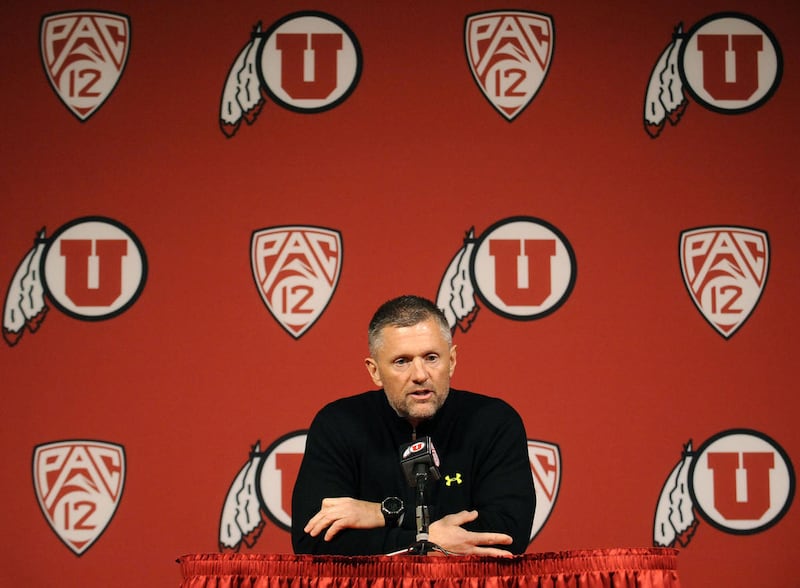



Our entry into the Pac-12 was fabulous, but then everyone thinks our problems are solved. That’s probably the biggest challenge because we need to generate money to run our programs right. – Utah athletic director Chris Hill
SALT LAKE CITY — The University of Utah athletics program has experienced a revenue boom since joining the Pac-12 Conference in 2011, but as revenue numbers continue to reach all-time highs, so have expenses and some concerns as the program reaches unfamiliar territory.
Utah’s athletic program soared to a record $62.4 million in revenue during the 2014-15 fiscal year — the most recently released data — in its first year receiving a 100 percent revenue share from the Pac-12, according to school expense report records obtained by the Deseret News. The 2015 revenue is roughly a $6 million increase from the program’s 2013-14 report.
In fact, revenues have doubled in the last five years. In 2009-10, Utah recorded roughly $30.9 million in revenue and those numbers have ballooned since the school joined the Pac-12, from which the Utes received an increasing percentage of the conference’s yearly revenue share until reaching 100 percent in 2015. Utah received $23.1 million total from its affiliation to the conference in 2015, Utah athletics’ chief financial officer Steve Smith said.
While Utah’s revenue numbers have increased, expenses have as well. In 2010, Utah spent around $31.7 million. In 2015, the program spent roughly $58.7 million catching up to and remaining competitive with Power 5 programs across the country.
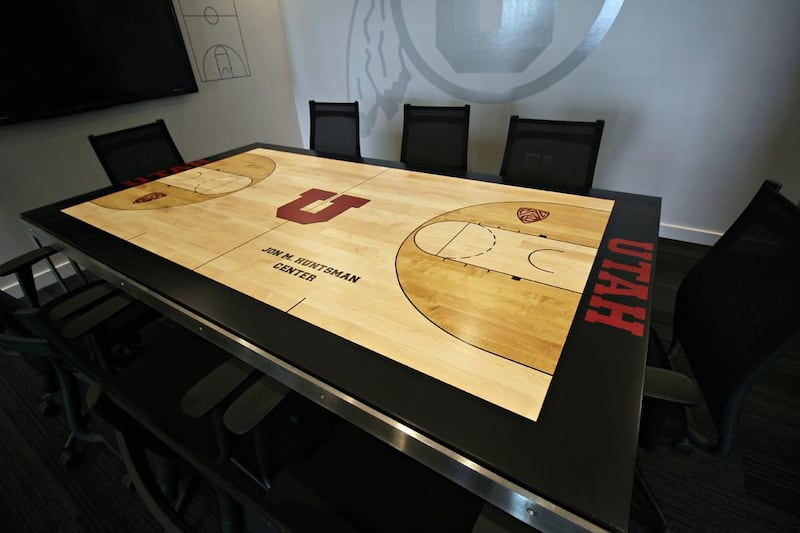
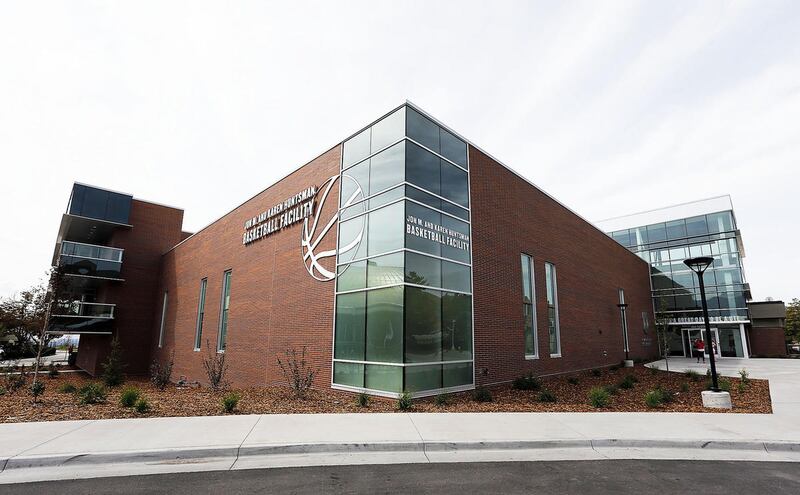
“Expenses keep going up in different areas with tuition and salaries, facilities, and we have our bond payment due with our basketball facility, and we have to pay that,” said Utah athletic director Chris Hill in an interview with the Deseret News.
According to the U.S. Department of Education athletics equity database, which uses a different subset of numbers to calculate a school’s revenues and expenses than the program’s own expense report, Utah athletics’ revenue and budget numbers lead the state and far exceed the other state schools. However, Utah remains near the bottom of the Pac-12 in both categories at $64.6 million in revenue and $62.8 million in expenses, while the average Pac-12 school generated roughly $85.6 million in revenue and spent $82.6 million, according to database numbers.
In an athletic arms race, expenses are likely to continue rising across the country as programs with bigger budgets spend for more assets to win recruiting wars, improve the quality of life for its student-athletes and remain competitive with coaching salaries, Hill said.
“We’re concerned, but I think everyone in college athletics is,” Hill added.
A look at Utah’s 2014-15 budget
Utah’s $62.4 million revenue in 2015 breaks down to around 37 percent from its Pac-12 affiliation, 21 percent from ticket sales, 16.4 percent from student fees and other subsidies, 12.8 percent from contributions and the rest from miscellaneous areas such as sports camps and concession sales, according to expense report documents.
Ticket sales accounted for $13.1 million of the 2015 revenue, a slight decrease (down $578,568) from 2014. There was also one less football home played game between those fiscal years.
Utah received $10.2 million in student fees and institutional support subsidies in 2015, which is $359,985 more than in 2014, but the percentage of subsidies accounting for the program’s total revenue dropped 1.1 percent. The Deseret News reached out to University of Utah president David Pershing, but he was unavailable to comment on this report.
Utah also received around $7.9 million in donor contributions in 2015, which is roughly a $2 million decrease from the previous year.
As for its $58.7 million in expenses, Utah spent $13.3 million in coaching salaries and benefits, $9.9 million in staff compensation and benefits, $8.7 million in student aid, including summer school, tuition discounts and aid to inactive or ineligible student-athletes, $4.9 million in team travel, $3.5 million in facilities debt services and nearly $6 million in other operating costs, among other expenses. Overall, it’s around a $3.7 million increase from 2014.
According to the document, the state completed an audit on the program's expense report on Jan. 15 — weeks before the state legislature announced it would audit Utah's athletic program.
Future growth and expenses
Utah’s athletic officials are anticipating another big revenue number when the 2015-16 fiscal year, which goes from July to July each year, comes to an end. Smith said the projection heading into the fiscal year was $68.89 million (matching the total expense budget for the year), but current projections have revenues possibly rising to as much as $71-72 million with ticket sales, donations and Pac-12 revenue numbers exceeding initial expectations.
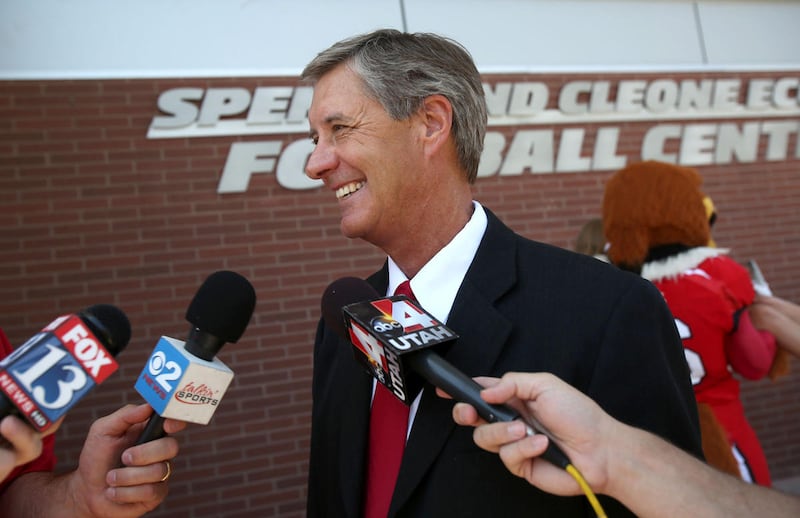
“A good chunk of our revenue streams are tracking ahead of budget or over budget,” Smith said. “I’m going to say that we’re probably going to hit over $70 million this year in revenues. … It’s kind of a high-level estimate.”
The future remains unclear beyond that.
Now that Utah holds a full-fledged Pac-12 membership, it means, among other things, that Utah’s recent revenue expansion might level off in the near future, as the rising percentage of conference revenue share was the primary catalyst for the boom in growth over the past few years.
“We’re very aware we won’t be seeing the increases we’ve seen the last three years,” Smith said.
There is hope that the Pac-12 Network can reach the same profit level as some of the other Power 5 conferences’ TV networks, as well as success athletically. For example, Smith said each Pac-12 school receives around $25,000 every time a team from the conference advances to another round of the NCAA men’s basketball tournament.
But if revenue growth becomes an issue beyond 2016, Smith said Utah is prepared.
“Going into this budget cycle, for example, fiscal year 2017, we’re trying to keep most of our expenses outside of salaries (and) compensation pretty flat. We’ll see minimal increases, but not significant.
“Certainly you look at the growth from the beginning year of the Pac-12 to this year and you think, ‘Where’s that growth going to continue from?’ We’re well aware of that, and we’re trying to curb our expenses to plateau along with our revenues.”
However, keeping expenses down can be a difficult task when the schools within the conference run on larger budgets.
“Our entry into the Pac-12 was fabulous, but then everyone thinks our problems are solved,” Hill added. “That’s probably the biggest challenge because we need to generate money to run our programs right. ... So one of the hardest things is really the reality that we have a lot of work to do and we have to educate people on that. We need to complete some things and there’s still so many things to work on.”
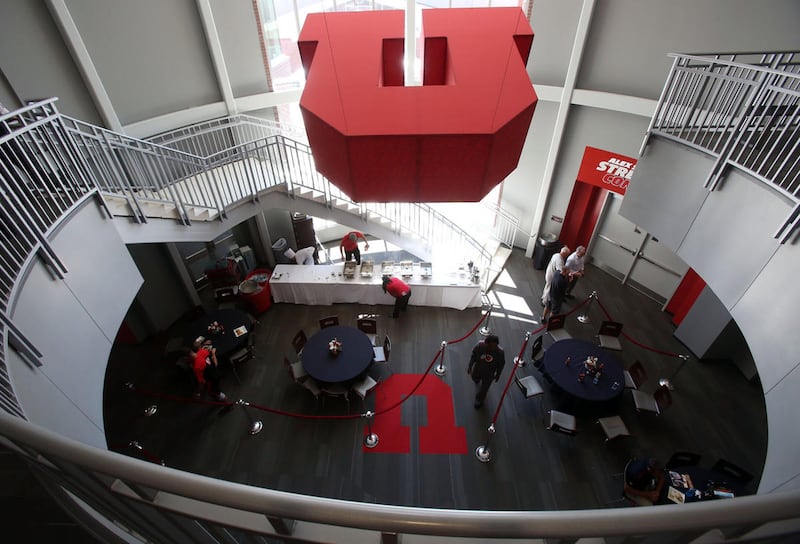
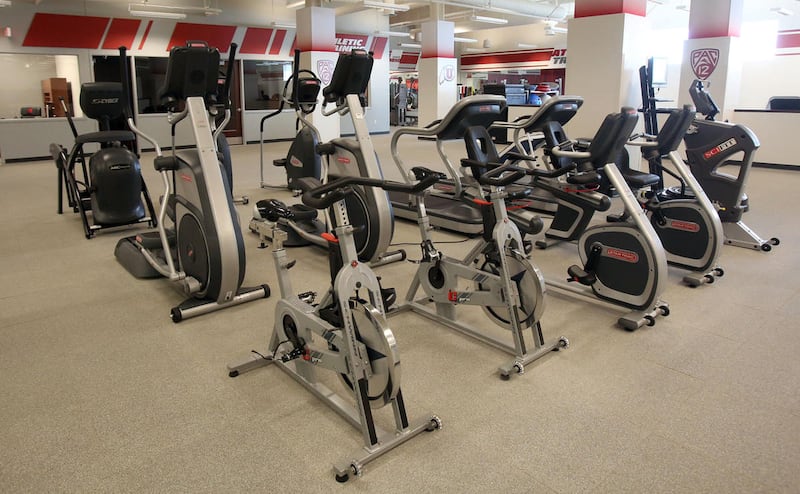
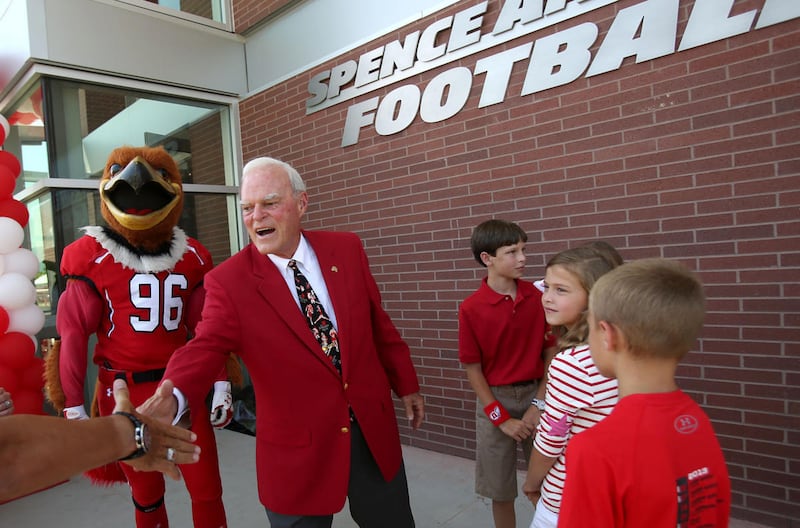
Utah has expanded its staff greatly in recent years to aid student-athletes in various ways on and off the field of play, Hill said. That is in addition to its football and basketball practice facilities that have opened since joining the Pac-12. Each has contributed largely to the increase in expenses, especially as other programs continue to find ways to expand staff.
Rising coaching salaries also have officials on edge. Within the past year, Utah gave men’s basketball head coach Larry Krystkowiak and football head coach Kyle Whittingham extensions that raised their pay closer to the top of the Pac-12. Combined, the two stand to make around $5.5 million per year and that could continue to climb. That number falls into a similar range of coaches' pay among other Power 5 programs.
“There’s three things really; there’s the facilities that have been big for us, there’s always personnel in a major sport like football and those costs are escalating and we’ve added some support people that we needed for the student-athletes’ interests but also to make sure our student-athletes have the same coverage as other Pac-12 teams,” Hill said.
Since Utah runs on a budget smaller than most Pac-12 schools and other programs across the country, Smith said Utah officials have been creative with spending while trying to add ways to increase revenue numbers.
With the football and basketball facilities complete, Utah has new plans for the future, but spending will only be based on variables of filling a need without creating major debt.
“I’d like to say we try to be smart as we can with our money with the limited resources we have. I think the success speaks for itself and so right now we’ve been able to really do a lot with maybe less than what our peers have,” Smith said. “We’ve got two brand new beautiful facilities — football and basketball — so we certainly are trying to do our best to compete. We’ve got a nationally ranked basketball team and a nationally ranked football team. I think we’ve got some pretty smart people in our department that are very budget-conscience and understand limitations and really try to make every dollar go as far as it can.”
The program is in the midst of adding a new scoreboard and sound system at Rice-Eccles Stadium. There’s also a new ski building (so the team isn’t working out of a shed, as Hill puts it), plans to expand the academics center and building renovations that are “on cycle,” Hill said.
He added that a new baseball stadium in the place of the current baseball field is in the works due to continuing conflicts at Smith’s Ballpark between the Utes’ Pac-12 and the Salt Lake Bees’ Triple-A schedules. However, that project may take time before it comes to fruition.
“Maybe a year from now we’d be in position to put up a bid,” Hill said. “That’s what we’d like to happen, but that depends on the fundraising. … We have people interested, which is nice. We’re optimistic about that.”
Fundraising is another key for any future projects to happen, Smith said, citing the McCarthey Family Track & Field Complex. The family donated $2 million to the $2.6 million project, according to the university. That’s common with most programs across the country. During the 2013-14 fiscal year, USA Today reported Oregon received $124.9 million in contributions. The Oregonian reported that Nike co-founder Phil Knight donated $95 million of that toward a new football facility.
If a donor or multiple donors jump into a project, it is more likely for that project to be accomplished, Smith said.
Utah’s goal isn’t just avoiding the rise of debt, but with coaching salaries and the future rules of student-athlete welfare (such as the cost of attendance stipends and name, image and likeness stipends) unknown, it’s also important to spend cautiously so there is money set aside for unforeseen expenses.
Not all ideas fit the criteria Utah has in place for smart spending. For example, Smith said expanding Rice-Eccles Stadium is unlikely at the moment because of cost and research that sides with the current size of the stadium.
“You have to make sure when you’re doing something, it’s going to return a nice investment,” Smith said. “(Rice-Eccles) Stadium expansion has been a hot subject that everyone’s always talking about. It’s about a $70 million project — well, you have to sell out for years and years and years in order to get any sort of return on that; whereas, if you keep your forward thinking, these (practice facilities) have been so nice for our student-athletes to have.”
In keeping with making sure money is spent wisely, there is constant communication within the athletic department that extends to situations at other programs. Smith added he and Hill often share news articles with one another hoping to avoid the pitfalls other programs across the country have fallen into.
There have been plenty of well-known cases across the country, but also in the Pac-12. Earlier this month, San Jose Mercury News reported that California-Berkeley athletics finished the 2014-15 fiscal year with an $8.5 million deficit due to $17.5 million in debt services from renovations to its football stadium.
“You just have to make sure you build buildings that make sense,” Smith said, regarding Utah’s future spending plans.
While Utah athletics may still have to spend wisely even as revenues have increased, the program has come a long way fiscally since joining the Pac-12.
With revenues continuing to climb to all-time highs, Utah officials remain optimistic yet cautious in the midst of uncertainties that make the future of college athletics unnerving.
“I hope that we continue to succeed on the field and on the court, like we have in the last couple of years,” Smith said.
“Our goal is to continue to win and succeed, and make sure we’re treating our student-athletes better than any other program in the country and in the conference. That’s really what we’re focused on and obviously we need resources in order to do so and so we can continue to try to find ways to be creative on the local level and hope that things can continue to improve also on the global level as well.”