


Elder Gerrit W. Gong of the Quorum of the Twelve Apostles has spoken extensively about artificial intelligence and its intersection with faith, human flourishing, dignity and relationships.
In recent months, the apostle of The Church of Jesus Christ of Latter-day Saints has discussed navigating the AI age with business and religious leaders, technology experts, academics, government officials and others in places ranging from Turkey to Utah.
His recent remarks delivered in a May summit in Athens, Greece, highlighted his soaring hopes for AI, as well as actionable ways AI tools can reach their highest potential.
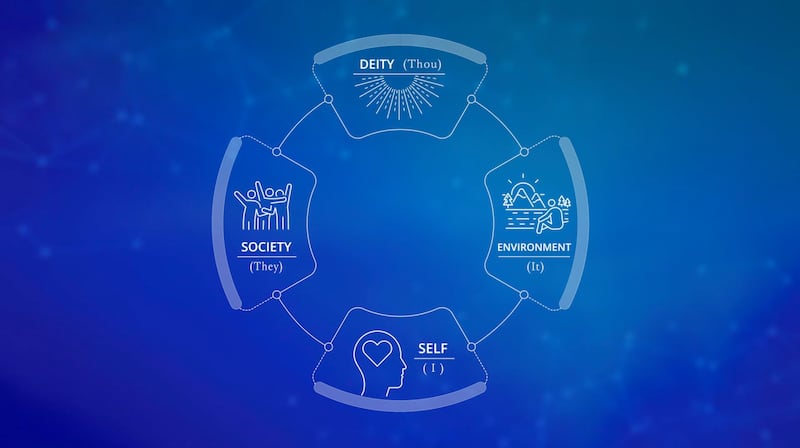
A new hourlong video published Sunday by the Church of Jesus Christ features Elder Gong further exploring the consequential impact and development of artificial intelligence through the lens of humans’ four core relationships: humans’ relationships with deity, self, others and the environment or natural world.
“I want to be clear about real challenges and concerns, but I also want to talk about AI from a perspective of faith and hope,” Elder Gong said in the new video, titled “Faith, Dignity and Human Flourishing: Hearing God’s Voice in an Age of Artificial Intelligence.”
“I want AI and related technologies to change our world for the better, to narrow digital divides, to expand human flourishing and to enhance faith, moral clarity, human meaning and possibility.”
Here is the video, which is divided into six segments; plus, highlights of Elder Gong’s key points and invitations.
Elder Gong lists truths and 3 invitations to remember and follow in age of AI
The use of AI is a “defining issue of our time,” Elder Gong said in the recent video.
He listed a series of concerns that AI’s increasing capacity has invited him and many others to consider, and later determined some truths and invitations helpful in navigating the AI age.
These truths included the knowledge that as children of a loving God, each individual:
- Possesses moral agency and the capacity for covenant community
- Is responsible and accountable for their own choices
- Has divine worth, dignity and the capacity for compassion and integrity
“When we truly understand who we are, we can approach AI and other new technologies with greater confidence, purpose and wisdom,” Elder Gong said.
In this age of AI, Elder Gong invited listeners to remember these truths and then act on and apply the following “guideposts” in one’s personal use of AI.
- Rely on the Spirit.
- Practice wisdom.
- Choose trusted sources.
“Let technology support, not supplant revelation, personal study and covenant living,” Elder Gong said. “There is no substitute for studying it out in your own mind and feeling the Lord’s spiritual confirmation in your heart and mind.”
AI and humans’ relationship to deity and self
The new church video opens with Elder Gong asking if AI can replace God.
This question “may sound provocative,” Elder Gong says in response, “but in an age when we turn to algorithms for answers, guidance and even comfort, it matters deeply.”
Speaking of AI’s potential impact on one’s relationship to deity, Elder Gong declared “AI is not and cannot be God.”
“AI can answer questions, but it cannot answer prayers,” he said. It may organize thoughts and information, but it cannot offer revelation, covenant connection or divine truth.
Elder Gong warned individuals against allowing AI to come between them and their personal relationship with God. He urged listeners to make God their “ultimate reality” and come to know him.
God is “perfect, compassionate and omniscient,” Elder Gong said. “He never hallucinates. He never makes things up. He always tells the truth, and it is the truth.”
Sometimes heaven may feel quiet, he added. “Learn to hear God’s voice through inspiration. God is not a chatbot search result that answers questions with what it thinks we want to hear. God knows our intents. … He listens. He hears, he answers.”
Turning to AI’s potential impact on one’s relationship with self, Elder Gong noted that society may need to rethink purpose and meaning in human work as AI becomes increasingly capable.
“As artificial intelligence makes some forms of intelligence a kind of commodity,” he said, “we’re challenged to redefine ourselves beyond intelligence.”
Elder Gong said individuals should place greater emphasis on “what really makes us human,” which includes “enduring characteristics such as faith, compassion, love, humility, empathy (and) forgiveness.”
He invited listeners to learn God’s plan for them and remember their identity as children of God, children of the covenant and disciples of Jesus Christ.
The use of AI is “one of history’s fastest technology adoptions,” Elder Gong said. He warned against individuals allowing AI to define their identity and invited listeners to exercise their moral agency in faith.
“No machine can measure your divine potential. … Let AI inform, but you decide with the Lord. Your identity and your agency are sacred.”
AI and humans’ relationship to others and the environment
Authentic human relationships matter, Elder Gong said.
He taught that no one should sit alone spiritually or emotionally, and that especially no one should sit alone with and be emotionally dependent on an AI chatbot.
“Monologue with an AI algorithm is different than dialogue with a human friend or family member,” Elder Gong said. “We move into a gray area when we think AI can counsel us on personal questions like which job to take or who to marry.”
Elder Gong expressed compassion for those who confide in AI chatbots, thinking they listen or know them. He urged listeners to set boundaries with AI tools, trust God and reach out to others in love.
“Prioritize real conversations with real people,” Elder Gong said. “Let algorithms assist, but spend your best energy with people.”
Elder Gong also invited listeners to spend meaningful time in nature, saying God’s creations bear witness of his love and inspire reverence.

“Unless we are careful,” Elder Gong said, “we can lose covenant connection to the natural world in today’s modernity of artificial conveniences and comforts.”
Elder Gong also noted that as AI advances, so does concern for the natural resources that it consumes.
“The intricate supply chains needed to build AI systems also tax our natural environment,” he said. “ … So we need to approach the expansion of AI infrastructure with wisdom and concern for our natural world and environment.
“When we step outside, we step into God’s classroom. Nature teaches patience as seeds grow, humility as storms pass and joy as sunlight warms the earth. These lessons are not downloaded, they’re lived.”
Elder Gong concluded the new video with hope that individuals will learn to use AI and other technologies as tools to deepen their relationships with God, self, others and the environment.
He called on listeners to prioritize AI tools and use that increase opportunities for human possibility, agency, dignity and learning.
“In a world of accelerating technology and artificial intelligence, may we never lose the divine intelligence that matters most — the voice of God,” Elder Gong said.
“May we listen for his whisper amid the noise, love one another beyond algorithms and steward creation and the environment with reverence.”