



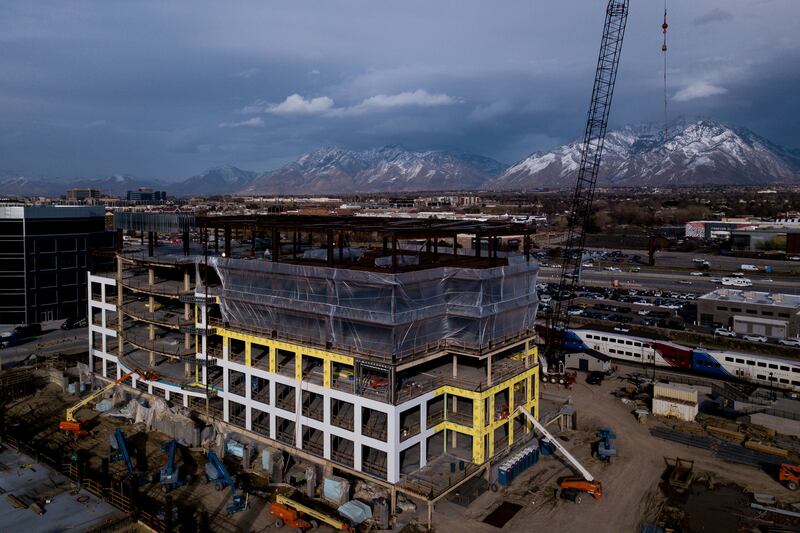


SALT LAKE CITY — Utah lawmakers passed a bill requiring the latest energy efficiency standards in construction of new commercial buildings after July 1, a move advocates say represents a big win for cleaner air.
Commercial construction codes now must adhere to at least the 2015 standard, but HB218 would bump that to 2018 requirements under the International Energy Conservation Code. It awaits the governor's signature.
"It is great to see the state take this step," said Kevin Emerson, the energy efficiency program director for Utah Clean Energy.

“Increasing the energy performance of new commercial buildings is a direct win for energy efficiency and improved air quality in Utah."
Nearly 40 percent of area pollution on inversion days can be linked to area sources, which includes homes and commercial buildings.
Emerson said the revised standards mean buildings will cost less to operate with lower utility bills and feature better quality materials.
"Utah Clean Energy works on cost-effective ways to reduce pollution, and updating building energy codes is one of the best tools available to cut energy waste, reduce pollution and lower building operating costs,” he said.
Adoption of the updated energy efficiency codes was recommended to the Utah Legislature by Utah's Uniform Building Code Commission, where Emerson holds a seat.
Many commercial buildings that exist in Utah today are built beyond even the minimum standards because of heightened interest in energy efficiency, Emerson noted.
The state's minimum requirements for energy efficiency standards in new residential construction remain unchanged from 2015 standards and were heavily amended in the 2016 legislative session.
"We would like to have seen more changes on the residential side," Emerson noted, but there is more political reluctance in that arena.
The per capita energy expenditure in Utah in 2012 was $2,840, while the national average for the same year was $3,052, according to the U.S. Department of Energy.
One of the best ways an individual can reduce energy costs is by switching to an electric vehicle or an alternative fuel hybrid, the federal agency said.
Homeowners can also look to the agency for tips on savings that include updates to windows, adding more insulation, investment in new energy efficiency appliances and even via landscaping.