


For more than 50 years, Salt Lake City resident Lester Chipman has proudly displayed a Nativity scene in front of his home. To the senior with a quick smile, his holiday display is a reminder of the real reason many celebrate the Christmas season.
The lighted plastic figurines portray Joseph, Mary and the newborn Jesus, surrounded by the three kings and farm animals. "I built the manger myself," Chipman says with a bit of pride. One also encounters a speaker that plays a narrative of the Christmas story.
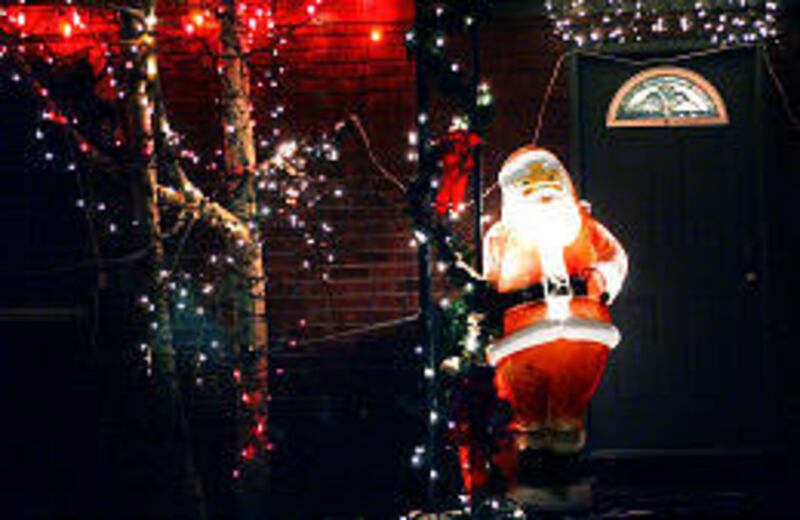
But over the past few decades, Chipman and many others say they feel Christmas has lost its meaning in the bustle of commerce and marketing. People's taste in holiday decorations have taken a swing to the secular, adorning their homes with snowmen, reindeer and garlands instead of angels, Nativity scenes and other Christian-theme decor.
"Christmas should be Christmas," Chipman said. "What it's turned into is a celebration of having fun. I'm seeing things that just make things light, like lights." Although Chipman said he has no problem with that, "this is what Christmas is really about," he said, pointing to a white porcelain Nativity in his living room.
Are people too afraid of offending others with religious items, including holiday decorations? Has Christmas turned politically correct?
Yes and no, says Taylor Vriens, vice president of Modern Display. "I think there's just a fear of rubbing people the wrong way," Vriens said.
With other religious holidays landing near Christmas, such as the Jewish holiday of Hanukkah, African-American Kwanzaa and this year the Muslim holiday of Ramadan, some people may be taking a more inclusive approach in their decorations.
"We're such a diverse country in terms of religion," said University of Utah business professor Ann Velliquette, who specializes in consumer behavior. Velliquette said like most market trends the choice in Christmas decorations is influenced by both consumers and producers, in varying degrees.
The commercial celebration of Christmas has taken on a life of its own, Velliquette said. "There's a huge, huge celebration of Christmas in China," she said. "In fact, a lot of Western holidays are celebrated there."
Although most Chinese do not consider themselves Christian, Christmas is used as a time to give gifts and decorate, Velliquette said.
Back home, religious items are diminishing.
"We actually have seen a decrease of large Nativity sets," Vriens said. The majority of customers who have purchased large Nativity decorations have been local cities and civic groups, who used to sponsor scenes at city parks. But with litigation over the separation of church and state, such displays are a thing of the past. "We've seen a drop-off. They're just not able to do it anymore," he said.
Vriens does acknowledge that religious-oriented Christmas decorations are becoming increasingly difficult to find. Vriens said the trend is not consumer-driven — the demand for more Christian decorations has increased — rather, manufacturers are striving to reach a broader market of consumers.
Each year Vriens said his company attends holiday trade shows. "When we go to markets, we see less and less religious-oriented items," he said. More and more, manufacturers are creating decorations "with broader appeal," such as snowmen and greenery. Such products are also seen as less controversial.
Vriens said most people are fine with either the religious or secular choice, but when the two are mixed, watch out. "One year we had a Christmas ornament of Santa kneeling before baby Jesus," he said. "We had some people call and complain about that, saying it wasn't appropriate, but then again, we had people asking for it, wanting to buy it."
One popular Salt Lake City venue to view holiday displays has been Christmas Street in Sugar House. For 50 years, the residents of this tiny cul-de-sac, near 1700 South and 1500 East, have decked out their homes with lights and other outside decorations. Every night after sunset in December, people pack the family car and take a drive down Christmas Street.
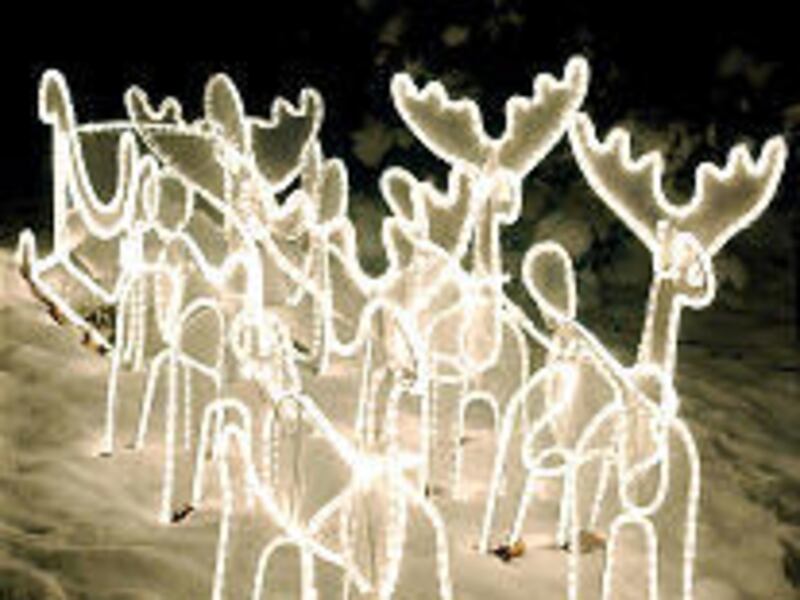
Paulette Mounteer sits in her living room. Outside her home, cars drive by taking in the sights. On her front lawn sits a blazing array of wire-framed reindeer and Christmas tree-shaped lights. Across the street, the owner of another well-lit home starts to pump up a big inflatable Santa.
"This is important. It's a fun time for family and kids," Mounteer said. "To me the meaning of Christmas is about love and family and charity and fellowship. My biggest thing is everybody should be left alone to celebrate Christmas in their own way."
Mounteer, who said she spent time working as a decorator for The Church of Jesus Christ of Latter-day Saints, said even many non-Christians she knows celebrate Christmas traditions. For Mounteer, a secularized holiday means being free to express the holidays as one wants to, whether by garlands and bells, or angels and a baby Jesus, without being harassed for it.
What she believes is important, Mounteer said, is celebrating friends, family and peace. Decorations are nice, but "I believe it really doesn't matter," she said.
E-mail: gfattah@desnews.com