

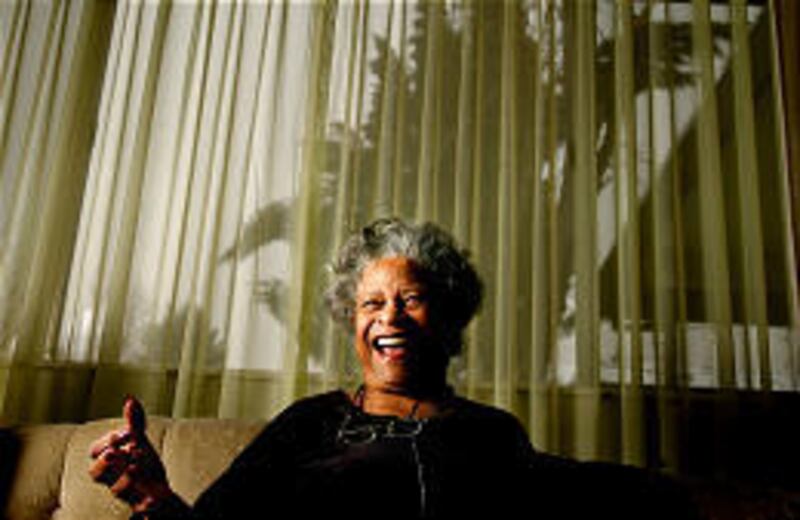
Eva Sexton knows how implausible history can sound. As a child, hadn't she heard her own grandfather's stories of slavery and decided he must be exaggerating?
Now, at 82, it's her turn to tell stories that young people can hardly comprehend: Salt Lake restaurants that wouldn't seat blacks, banks that wouldn't give them home loans, skating rinks that would only allow black children to skate after midnight. Sexton is a witness to how much has changed in the past 40 years.
For her quiet role in that change, Sexton will receive the Salt Lake NAACP's 2004 Rosa Parks Award on Martin Luther King Day.
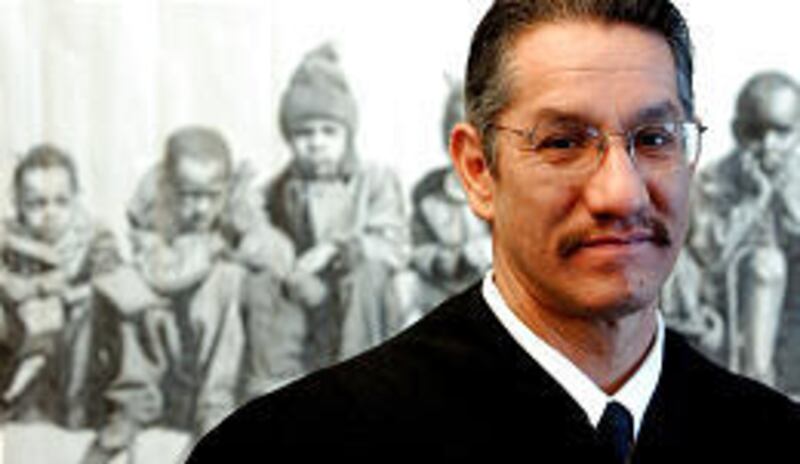
Third District Juvenile Court Judge Andrew A. Valdez will receive the group's Martin Luther King Jr. Civil Rights Award.
The Monday holiday will be marked by celebrations and school closures. The Legislature, on the other hand, will be open for business — despite continuing complaints in some quarters that convening the lawmakers on Martin Luther King Day means that the state doesn't really take the holiday seriously.
Martin Luther King-related events earlier this week included a luncheon sponsored by the Martin Luther King Jr. Human Rights Commission. Keynote speaker Wilfred Samuels, director of the African-American studies program at the University of Utah, noted that King "was no more or no less than the epitome of the American conscience."
But even though most Americans can recite parts of the famous "I Have a Dream" speech, Samuels said, "no one was listening then and no one is listening now" to the real meaning of King's words.
King would have applauded President Bush's No Child Left Behind Act for education reform, Samuels said. "But he would insist that America provide funds" to implement the act, Samuels added.
The state's Human Rights Commission handed out three Drum Major Awards, named for King's challenge that all Americans should be drum majors for justice, peace and righteousness. The awards went to State Farm Insurance, the Girl Scouts of Utah and Guadalupe Schools.
Quiet changes
The NAACP's 21st annual Dr. Martin Luther King Jr. Memorial Luncheon will be held Monday at the Grand America Hotel.
The group's Rosa Parks Award honors the life of the Montgomery, Ala., seamstress whose arrest for refusing to give up her bus seat to a white man prompted the yearlong Montgomery bus boycott. That action in turn gave momentum to a generation of protesters fighting segregation and discrimination.
Sexton, who will receive this year's award, engineered quieter changes in Salt Lake City.
She first came to Utah in 1943 at the age of 22, planning to stay just a month. But then she met Henry Sexton, married him and settled down to life in a city that ignored the African Americans in its midst. When no one would hire her, Sexton went to the Council of Church Women, the NAACP and the influential people her husband met in his job at the Salt Lake Country Club. Letters were written to area businesses urging them to hire blacks.
Eva and Henry were the first blacks in Salt Lake City to get a bank loan to build their own house. In the late 1960s the Sextons moved from the west side to Holladay, even though area residents signed a petition to keep them out. "Do you really want to go there? Because they don't want you," a banker friend told Henry.
"But Henry wanted to. I did too. I thought: It's time for something to happen! . . . I called it 'educating the area,' " Sexton said with a big laugh.
Eva and Henry adopted two boys. Later, just a couple of years after moving to Holladay, they became foster parents. In the 32 years since then, says Sexton, "there hasn't been a day without foster children." The most recent are two teenage girls, who bring the total to 112. Over the years the children have included blacks, whites, Vietnamese, Tongans and Hispanics, occasionally all at the same time.
Sexton, unofficial archivist for Salt Lake City's African-American community, has scrapbooks full of newspaper stories and obituaries, plus photo albums of pictures of her foster children. Many of these children are grown now, so there are many calls and letters about successes and failures — baby announcements, reports about jobs, letters from prison. Sexton has no illusions that things turn out perfectly for her children.
"There's a song I play," she says. " 'Lord, I have done everything I can do, now it's up to you.' " But God did give her a talent to work with teenagers, she says. "That's the reason I keep a-doin' it. I feel like if I don't, God will take that talent away from me."
The day King died
Valdez is being honored for a similar talent. He has served as a juvenile court judge for 10 years, and before that he was a public defender, representing the civil and legal rights of the poor.
These days, presiding at 125 hearings a week, he is faced with children and families in crisis, a new one every 20 minutes. Valdez initiated The Village Project, a court-appointed mentoring program for juveniles, and has served on the Task Force on Racial and Ethnic Fairness in the Legal System. He has received numerous awards, including the Peace in the Streets Award from the Salt Lake Area Gang Project and the Lillian Smith Youth Advocate of the Year Award.
Civil rights, says Valdez, "means basic dignity for all people. I think that's what Dr. King basically advocated: that equality should not be a dream but should be the condition of mankind."
Valdez remembers walking home from West High School on the spring day in 1968 when King was killed. Passing by a Job Corps center, he says, he was faced with a group of young black men who were angry about the killing and seemed to be directing their anger toward him.
"I remember telling them, 'Martin Luther King was my hero, too.' "
E-mail: jarvik@desnews.com