



In most communities and cultures — certainly, the lucky ones — there are people whom folklorists call "tradition bearers." They are people who, knowingly or unknowingly, learn the methods, techniques, lifeways of their fathers; use them; and generally pass them on to their children.
Most don't think of themselves as bearers of tradition. Many think they are simply living ordinary lives. But they connect generation to generation. They pass on skills and lore. And they help define who we are.
A common characteristic these tradition bearers share, said Randy Williams, curator of the Fife Folklore Archives at Utah State University, is a deep-seated love for what they do. "They put passion into it."
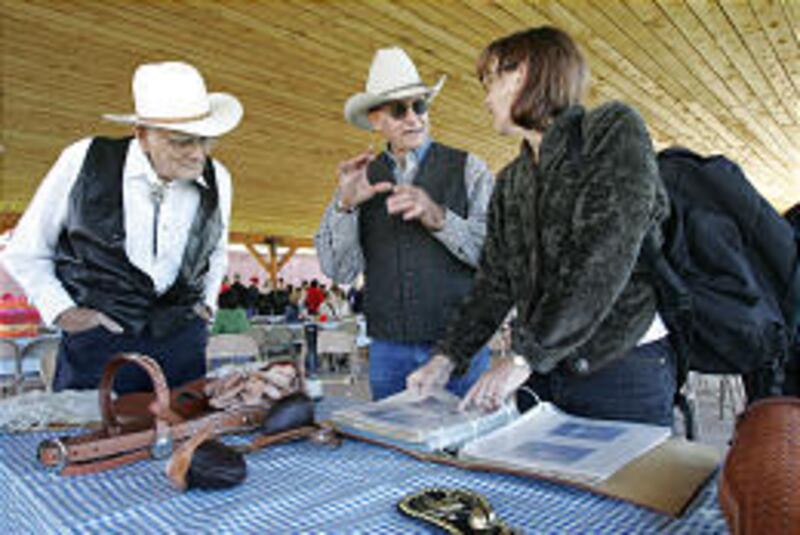
As part of the American Folklore Society meetings held in Salt Lake City last week, local folklorists put together tours so visitors could meet and talk with tradition bearers in their own settings. Williams was in charge of the farming and ranching tour that took visitors to Box Elder and Cache counties.
"There is such a living heritage of this kind in Utah," said Williams, "such a strong tradition of land use for farming, ranching, orchards. We wanted to give people an inside look at this kind of lifestyle."
The first stop was Ralph Nielson's fruit stand in Perry, which has been in the family for about 70 years.
His father came to the area in 1928 as a chemistry teacher, said Nielson. "But he couldn't raise a family on the salary he was making, so he started growing fruit." (In an ironic twist, when Nielson took over the fruit-growing business, he couldn't make a full-time living at it, so he became a teacher.)
This area is a good area for growing peaches, "probably the best in the state for peaches. Dad started picking peaches at 3 cents a bushel." His father started renting land to grow fruit on, and eventually he and his brother bought 500 acres for $500.
"It's been a great heritage," said Nielson. "I worked every day of my life with my parents. It was a great blessing. I learned how to work. Life hasn't always been easy, but it's been good. I can honestly say that I've never gone to bed at night without looking forward to getting up the next morning."
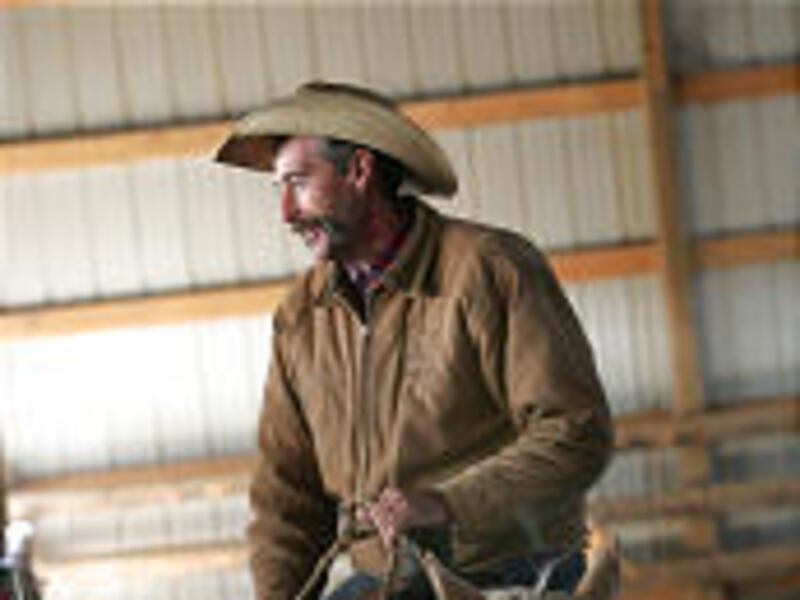
Shane Haviland, a horse trainer who lives in Paradise, could probably say the same thing. "I've been involved with livestock my whole life. I've been training horses since I was 13. I'm blessed to be able to make a living at what I love to do. I'm very lucky."
Haviland trains reining cow horses, which compete under the auspices of the National Reining Cow Horse Association, performing skills such as cutting cows out of a herd and reining and herding exercises. "Basically, what we train them to do in the show world is what was — and is — needed for ranching."
Both Glen Thompson and Marla Brindley Trowbridge also found their passion early in life. Thompson makes saddles, and Trowbridge does harness work.
"I got interested when I was in high school," said Thompson, "so I went to a leather company and asked for a job. I found out they had an internship program through the state, so I signed on."
His custom-made saddles start with a wood-and-leather saddle tree, but all the rest of the work is pretty much done by hand. It takes a full cowhide and a full sheepskin to make a saddle, Thompson explained. But you really only have two things to do, he said: "Take pride in your work and satisfy the customer."
Trowbridge was working for USU and got sent to Colorado to do a grazing study when she got so bored she started making some of her own equipment. She eventually met a man who owned a harness shop and went to work for him, learning how to make harnesses and pull teams.
Harnesses require fewer tools than saddle-making, she said, but they involve a complicated set-up in order to allow drivers to maneuver and stop, particularly with multi-horse teams. The secret, she said, is in the horse's collar. "That's where the pull in a pull harness comes from."
The northern Utah landscape is dotted with other reminders of the connection to the land that is still prevalent in the area: barns, irrigation canals, haystacks, Lombardy poplars. "Even mailbox supports have a vernacular connection to the lifestyle," said Williams.
That connection is also found at stores, such as Smithfield Implement, which has been serving cowboys, farmers, housewives and everyone else for 90 years. The motto here is "stack it deep and sell it cheap."
"We don't use computers, there's no Web site, we still inventory everything by hand," said Ralph Roylance, who runs the store with help from his son, Bart. "But we get customers from all over the region."
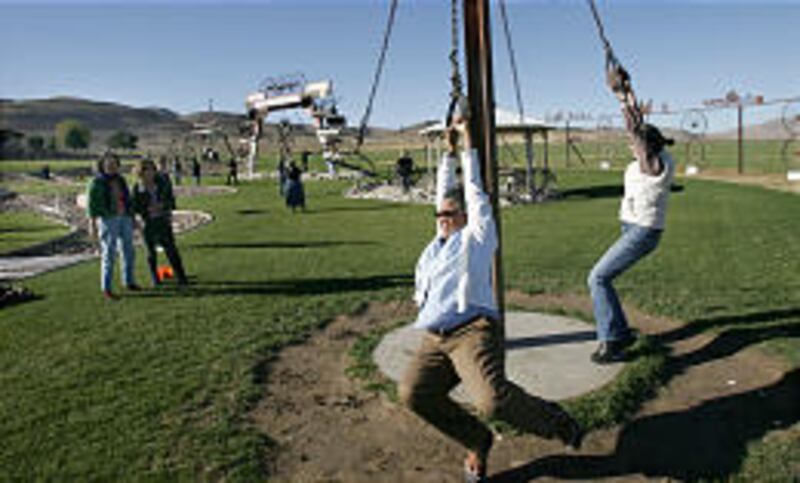
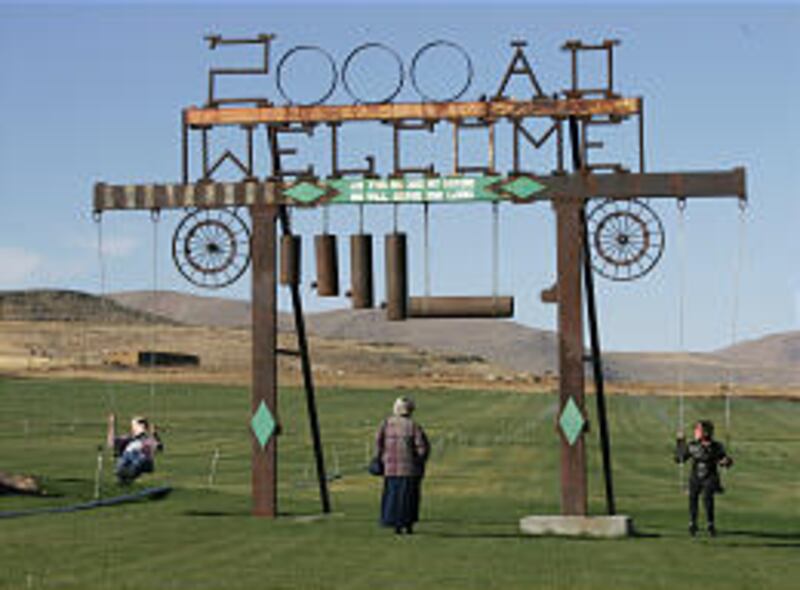
Perhaps some of the equipment that you find at Marble Park in Bothwell, just down the road from Tremonton, originally came from the Imp — and from everywhere else Boyd Marble could find it when he began collecting farm machinery.
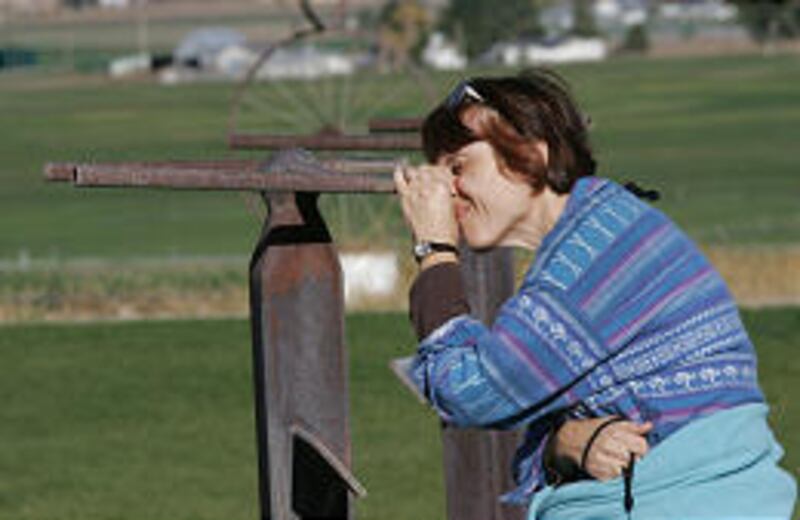
He finally collected so much that, according to local legend, his wife gave him an ultimatum — that or her. So he took a lot of it and fashioned an outdoor museum/playground/park that includes everything from horse-drawn wagons to a display of barbed wire to swings, a teeter-totter and a viewing station made from tractor seats and old milk cans. "He got no financial reward for all this work," said Colen Sweeten, a resident cowboy poet who accompanied the tour. "He was a different kind of man."
Throughout the tour, Sweeten entertained with stories, experiences and poems. He explained how the phrase "arriving with bells on" had to do with old freight wagons and talked about how the "pioneers came West willingly because they had to."
He memorialized growing up on a farm in poems that deal with everything from chasing pigs to listening for "Daddy's Bells," to doing the "Barnyard Ballet" and enjoying the new experience of "rubber robe" (now better known as bungee cord). Poignant moments, too, such as saying goodbye to a well-loved horse are the stuff of cowboy poetry.
"Cowboy poetry's now popular entertainment," he said. "But only the people who lived it really understand the feelings." Still, Sweeten said, he tries to convey some of those feelings. "Painting a word picture is not enough, you have to convey the feelings. I tell people that if they give me 30 minutes I'll make them laugh and I'll make them cry."
And maybe, too, they'll come closer to "understanding agriculture. The problems, the developments, the life."
But, said folklorist Bert Wilson, who recently retired from Brigham Young University, you have to be careful not to over-romanticize the people and places of this Western agriculture tradition.
In a keynote address at the AFS meetings, Wilson shared stories and experiences of his mother, who grew up in the little town of Riddyville in southern Idaho in "grinding poverty" that haunted her throughout her life.
We have to remember, he said, we are hearing individual voices. "My mother was not just a representative of Western homestead women, but a person in her own right."
But that's what has intrigued him in the study of folklore over the years, and what the farming and ranching tour was all about: "Human beings coming to terms with human problems in human ways. Ultimately it leads to a greater understanding of what it means to be human."
E-mail: carma@desnews.com