





A legend tells of how Julius Caesar came upon a statue of Alexander the Great while campaigning in Spain, and the sight moved him to tears.
When asked why he was crying, Caesar, who was 31 at the time, said he felt he had wasted his life since Alexander had conquered the world by the time he was Caesar's age.
Alexander, whose life is explored in a new movie opening Wednesday, left a lasting impression on the world. He is still admired for his courage, military genius and his ability to bring together people of different cultures. His conquests spread Greek ideas, opening an exchange that would lead to the world we know today.
Alexander was a complex figure capable of great mercy and generosity or extreme cruelty. It was not uncommon for him to be seen talking with common soldiers or visiting the wounded after a battle. This, combined with the fact he led his men into battle and fought alongside them, meant he had their almost unquestioning loyalty.
His youth
Born: 356 B.C. in Pella, Macedonia
Education: At age 13, Philip hired the philosopher Aristotle to tutor Alexander. In addition to academics, Alexander was also trained in athletics and the art of war.
At age 16, the charismatic youth took on diplomatic responsibilities for his father. By age 18, he was commanding cavalry at the battle of Chaeronea.
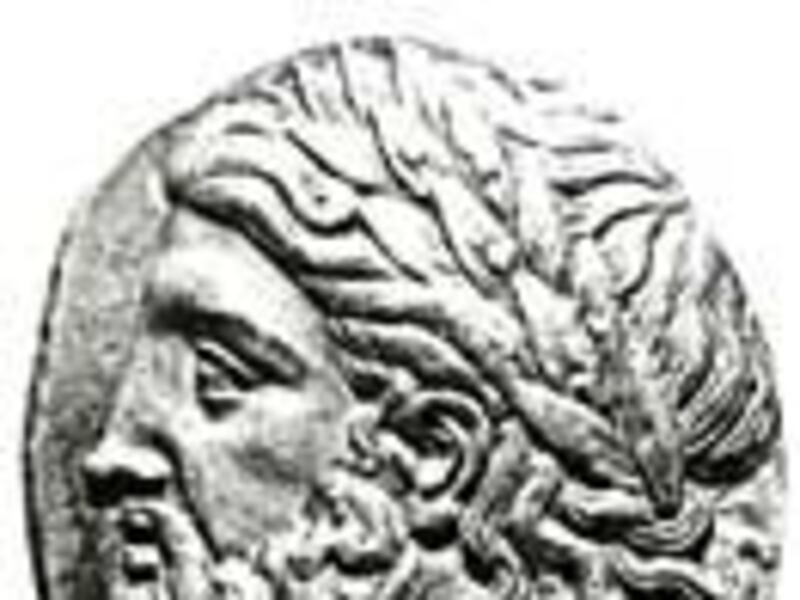
Alexander believed he was a descendant of Hercules (son of Zeus).
Alexander slept with a copy of the "Iliad" near his bed.
The man
Alexander was said to be fair-skinned, handsome and blond with an athletic bulid. Although Alexander promoted men according to ability, he refused to compete against men who were not his social equal. Alexander had a thrist for knowledge and insisted on having geographers, botanists and other men of science on his campaigns.
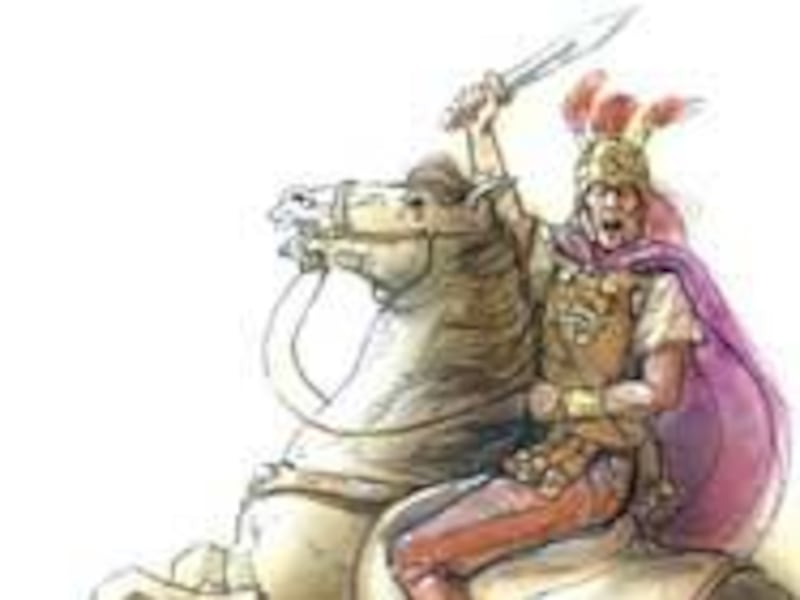
Bucephalus
According to legend, the horse Bucephalus was sold to Alexander's father. The horse proved uncontrollable and was nearly sent away until the young Alexander interceded. A bet was made between father and son: If Alexander could ride the steed, Philip would pay for it; if he failed, Alexander would buy it. Noticing the horse had a fear of its shadow, Alexander turned it toward the sun. After comforting the animal, he leaped on its back. From that point, a bond formed that lasted 18 years.
Legend says only Alexander could ride Bucephalus and that the horse lowered its body to let Alexander mount him.
Bucephalus' final battle was at age 24. He died six years later. (Alexander named a city in his honor, Bucephala.)
Afghan chiefs claim to have horses descended from Buchephalus.
Bridle
Leather device was non-adjustable (buckles not yet invented).
Spiked bit kept horse's mouth open.
Bronze Attic helmet
Alexander's helmet was known for its double plumes.
Cingulum
Protected the groin area
Riding blanket
Cavalry rode bareback or used a blanket. (Saddles weren't invented until 800 A.D.)
Leather legging
Protected the rider's legs.
Leather cuirass
Reinforced with bronze disks.
Parents
Philip II 382-336 B.C.
Philip defeated and then united the Greek states. His dream of defeating the Persian Empire was realized by Alexander. Known as a strong-willed leader, Philip was a seasoned soldier who suffered many wounds, including the loss of an eye. He was assassinated by a bodyguard. His death was blamed on his wife, Olympias.
Olympias 376-316 B.C.
Probably the individual that exerted the most influence on Alexander. She was proud, emotional and protective of her son's birthright. She was executed by Cassander of Macedonia after trying to secure the empire for her grandson, Alexander IV.
Alexander dies suddenly of a fever at age 33 (323 B.C.)
Cause of death is a mystery. Some speculate he was poisoned. He left no clear heir, as his son was not yet born. The ensuing power struggle caused the empire to collapse.
The army
Alexander inherited a seasoned, well-trained army from his father. The Macedonians used their own form of the Greek phalanx (a close formation armed with 13-foot-long spears and shields) in conjunction with cavalry.
The original army of native Macedonians was eventually replaced with mercenaries and various soldiers from all over the world.
Alexander's original army of 30,000 infantry and 5,000 cavalry faced a Persian force of 300,000 troops under Darius III.
Alexander's army used siege towers, battering rams and catapults.
The Gordian knot
The city of Gordium was said to have a chariot tied to a shaft by an intricate knot. It was believed that whoever untangled it would be lord of Asia.
Upon reaching Gordium, Alexander decided to take on the challenge. He examined the knot and then proceeded with the most direct solution — he pulled out the pin it was fastened on and the knot collapsed.
Later versions of the legend have him cutting the knot.
Great King
After his victory over the Persians, Alexander took the title "Great King" and required all to worship him as a god. This upset the Macedonians and eventually contributed to his downfall.
Alexander trivia
Alexander was wounded multiple times, includind a head wound, neck wound, a broken leg and a pierced lung.
Alexander was known to have gone on many drunken binges. During one he killed his friend Cleitus. During another, his close companion, Hephaestion, fell ill and died. Alexander's physician, who wasn't available to treat Hephaestion, was crucified.
Early Christians depicted Christ in the image of Alexander.
It took 4,000 mules and 500 camels to empty the treasury at the captured city of Persepolis.
Alexander named 16 cities after himself.
Alexander's funeral procession consisted of a golden carriage and a jewel-encrusted vault drawn by 64 mules. His enbalmed remains were to lie in Macedonia, but they were hijacked by Ptolemy and placed in Alexandria. The present location of his remains is unknown.
Movie opening
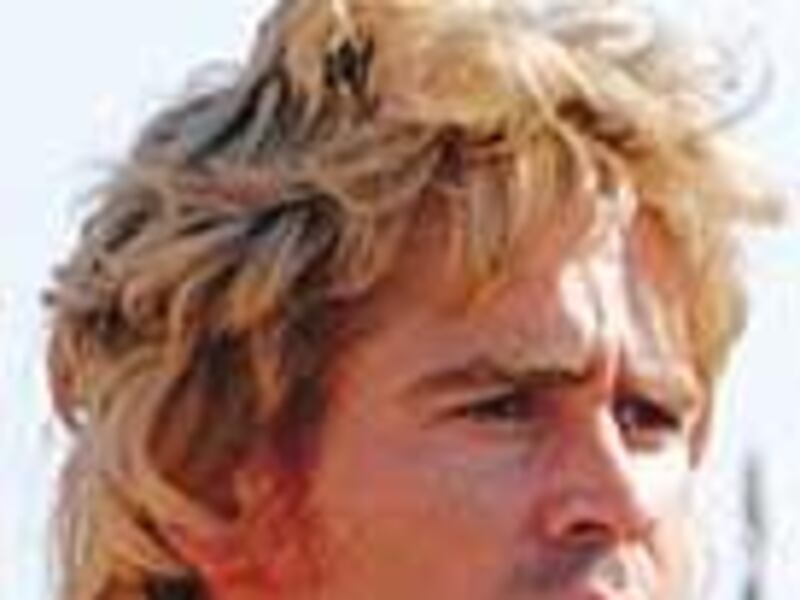
The motion picture "Alexander" stars Colin Farrell in the title role. Look for the review in Wednesday's paper.