

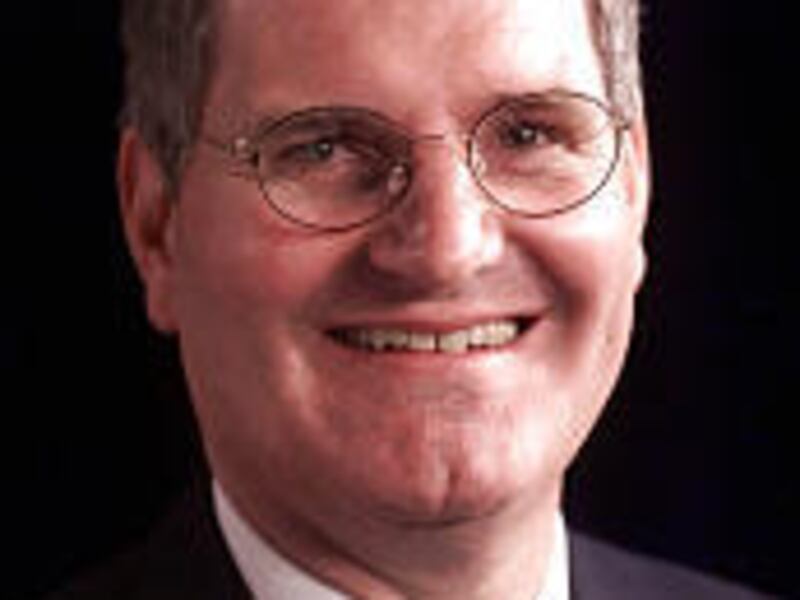
State Superintendent of Public Instruction Steve Laing unexpectedly resigned Friday, citing personal reasons.
The resignation is effective April 1.
Associate State Superintendent Patrick Ogden, who oversees budgetary matters, was named interim superintendent while the State Board of Education searches for Laing's replacement.
Laing, 53, must undergo dual hip replacement surgery. "Basketball too many years," he said.
"That would necessitate quite an absence. I decided, when I do that, I might as well make the break," Laing said, adding he'll take retirement when he leaves. "I've been here five years in this position. That's quite awhile."
Laing, who was an associate state superintendent two years before taking the top job in January 1999, will take a job in Utah State University's Continuing Education Department, working with secondary school educators and the distance doctoral program.
State Board of Education members were notified Thursday evening of Laing's decision.
"I can't think of a person I respect more," said chairman Kim Burningham, praising Laing's characteristic calmness, honesty, knowledge and deliberative decision-making. "I will deeply, personally miss all those attributes. It will be a great loss to us here."
Laing, who in 1983 because Utah's youngest-ever principal, heading Cedar City High, has been superintendent of the Box Elder School District and director of secondary education for the Iron County School District.
His tenure as state superintendent is marked by a state and national turn toward school choice and holding schools accountable for student achievement and teacher effectiveness.
The state's first charter schools opened after he became superintendent in 1999, with 23 schools now approved.
The state's accountability program, the Utah Performance Assessment System for Students, U-PASS, came to fruition under his watch.
The State Board of Education began work on a competency-based education system called Performance Plus, expected to raise the bar for every student and create new graduation requirements. It also has become more involved in the political process on Utah's Capitol Hill.
"I'm proud of the way the board has become a much more vibrant and robust entity," he said. "I hope I've had a part in nurturing that. . . . This is a political animal. It didn't used to be, but I think that's a sign of the times."
Education has become more political in the days of accountability. Laing and his colleagues have become fixtures on Capitol Hill, attempting to guide statewide policy affecting more than 800 public schools and a half-million schoolchildren, as well as thousands of teachers and administrators.
A state board committee will examine a field of candidates for the state's top school job and recommend finalists for board interviews, Burningham said. A new leader should be found by summer.
State board policies don't indicate whether a list of candidates will be made public. The State Board of Regents has opted in recent years to make the names of three finalists for university presidential posts public. The public education board will weigh whether to do so.
Burningham did, however, express a desire for some kind of "an open process" in which board members "will seek input."
"We are determined to find the best person we can," he said.
E-mail: jtcook@desnews.com