

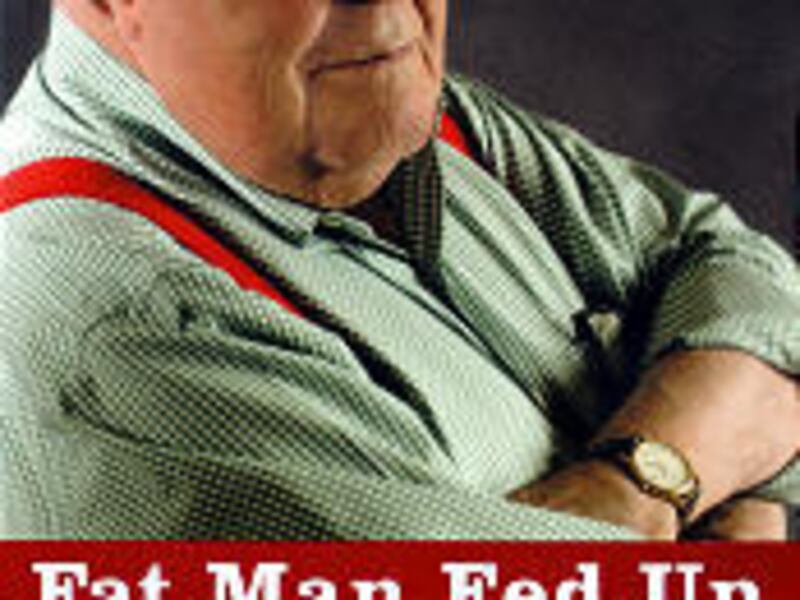
FAT MAN FED UP: HOW AMERICAN POLITICS WENT BAD, by Jack Germond, Random House, 224 pages, $24.95.
As a political curmudgeon, Jack Germond comes close to Andy Rooney — he's candid, he's funny and he's thoughtful. From his 40 years as a political journalist, Germond offers up his complaints about how our political system works, which he says, often results in our getting "third rate presidents." The quotation on the page before the acknowledgments is from Adlai Stevenson: "In America anybody can become president. That's just one of the risks you take."
Germond thinks one of the major reasons for that is the powerful role that television now plays in our political process. Since he is a television commentator himself, he can afford more than most to take potshots at the medium that feeds him. "I have often held forth on camera about issues about which I knew only enough to hum a few bars. Mea culpa."
In reference to local television, Germond calls its political coverage "brutal because it is so unsophisticated — too often little more than some twinkie, male or female, repeating slogans learned from their betters. They do not hesitate to make broad judgments that go well beyond the diligence and skill of their reporting."
He uses former president Jimmy Carter, whom he met in Georgia in 1974, as one example of why presidents are ordinary. When he asked Carter how he got the idea he could be president, he said, "From getting to know the rest of them when they come here to visit." Sen. Ernest Hollings of South Carolina made this reply when asked if he was thinking of running for president, "Jack, all senators think about it all the time."
Germond insists he had no influence upon the election of any president, in spite of public suspicions to the contrary. In not a single election since 1960, he says, has either party nominated a candidate for president he would have preferred to see in the White House. He preferred Adlai Stevenson to John F. Kennedy in 1960, Nelson Rockefeller to Barry Goldwater in 1964, Morris Udall to Jimmy Carter in 1976 — and Howard Baker to Ronald Reagan in 1980.
This, he says, is because he preferred the "personal qualities" of each candidate who lost. "I thought, for example, that the country would have done well to have someone in the White House with Udall's self-deprecating wit and sense of the ridiculous to keep things in some relationship to reality."
According to the author, this suggests the press does a poor job of explaining the candidates for president, meaning that the average voter doesn't know the candidate well enough to vote intelligently. Germond had opinions about these men because he was closer to them than most and picked up on their pluses and minuses — something denied the average voter.
Occasionally, candidates outsmart television journalists, suggests Germond. He remembers when George McGovern became the nominee of the Democratic Party in 1972, then met with reporters for a press conference the next morning in a Los Angeles hotel. There were several rows of chairs pointing in one direction and about 10 television camera pointing in the opposite direction. One cameraman said they didn't want to "shoot over the heads of the people asking the questions."
When McGovern entered the room, he was puzzled — but he took his position directly in front of the reporters, forcing the TV crews to turn their lights and cameras around. "It was one of the reasons," remarks Germond wryly, "we inkstained wretches harbored a secret liking for McGovern . . . he had his priorities straight."
E-mail: dennis@desnews.com