

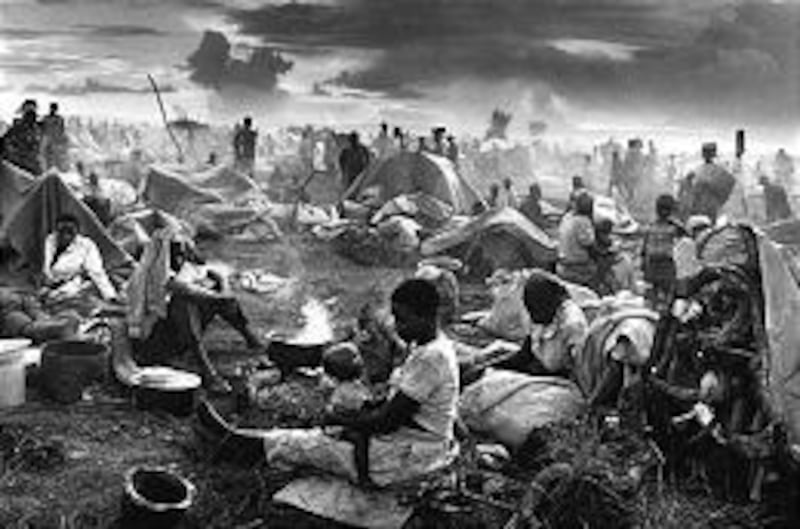
BETWEEN APRIL 6 and July 16 of 1994, a genocide of unprecedented fury and swiftness washed over the African nation of Rwanda. When it was over, more than 800,000 Tutsis and moderate Hutus had been butchered, another 2 million had fled the country, and another million were displaced.
The world witnessed these 100 days of depravity through newspaper and magazine reports and TV news: it was horrific and often unbearable to view, and we wondered at the time, what will happen to the exiles?
Today, the question remains, but is more encompassing; what becomes of all the displaced refugees throughout the world, devastated by not only war, but by famine, natural disasters and the widening gap between the rich and poor?
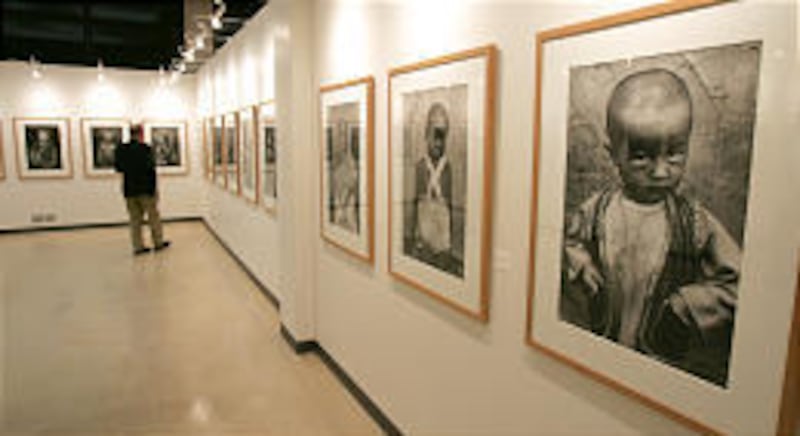
One of the more poignant answers to this query is "Exodus," a visually stunning, emotionally charged exhibit by international photographer Sebastiao Salgado, on display through Dec. 17 at The Leonardo at Library Square.
Presented by the Center for Documentary Arts, Salgado's inspiring black-and-white photographs chronicle the global movement of populations at the turn of the millennium.
Beginning in 1993, and continuing for the next six years, he worked among migrants, refugees and exiles across 40 countries in Africa, the Americas, Europe and Asia. He documented their places of origin, the circumstances of their flight and their uncertain destinations and destinies.
"Exodus," according to the exhibition essay, "is a reflection on the global phenomena that has broken down borders, created slums and refugee camps, and produced conflicts over employment and civil rights around the globe."
Born in 1944 in Aimores, Minas Gerais, Brazil, Salgado studied economics in his country and the United States. In 1971, he earned a Ph.D. in economics at the University of Paris. However, in 1973 — after borrowing his wife's camera — he traveled to Africa. The result of this photographic journey was Salgado changed careers: He became a photojournalist and today is known for his peerless images of man and his relationship to himself and the land.
Assembled and curated by his wife, Lelia Wanick Salgado, "Exodus" features 300 black-and-white photographs divided into five sections:
Migrants and Refugees: The Survival Instinct
The African Tragedy: A Continent Adrift
Latin America: Rural Exodus, Urban Disorder
Asia: The World's New Urban Face
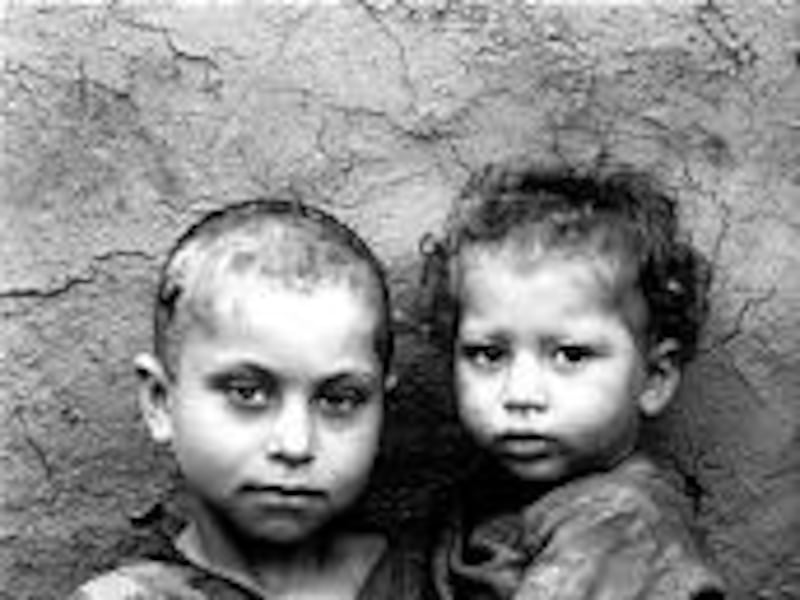
The Children: 40 portraits of migrant, refugee and displaced children under the age of 15 from around the world.
In addition to detailing the aftermath of the Rwanda apocalypse, Salgado's exhibit tackles the displaced hordes in Angola who camp out near railroad tracks, in movie theaters, schools or museums, as well as the thousands of Mozambique exiles living in Tanzania.
"Exodus" also grapples with the Brazilian dilemma of five million rural workers unable to acquire land to work, and poverty-stricken Mexicans displaced by Zapatistas.
In the "Migrants and Refugees" section, Salgado starkly depicts the demise of Kabul, Afghanistan, since the Soviets abandoned the country in the late 1980s. Each armed faction that has conquered the city has provoked an exodus, and the images graphically portray just how little is left.
The same section includes a series of photographs of the Vietnamese boat people. Some 800,000 fled the country and Communist rule, only to wind up in permanent detention centers in some other Asian country.
During the "Exodus" project in 1994 in Mozambique, Africa, children would surround Salgado as he worked, hoping to have their picture taken one more time. According to photographer Kent Miles, exhibit project director, Salgado would "promise the children if they would line up and wait, he would take their photograph later."
Eventually Salgado discovered he had so many good portraits of children they deserved their own section in the show.
As the last segment in the exhibit, "The Children" is a compelling selection of 40 portraits, each with the ability to effect emotion. According to the photographer, the children look "beautiful, happy, proud, pensive or sad."
The artistry throughout the exhibit is superb, and even though Salgado is claimed to have been more interested in the message, each photograph is an extraordinary example of lighting and composition.
Salgado created "Exodus" in the hopes that "as individuals, as groups, as societies, we can pause and reflect on the human condition at the turn of the millennium. In its rawest form individualism remains a prescription for catastrophe. We have to create a new regimen of co-existence."
"Exodus" succeeds on every level, and the Center for Documentary Arts deserves praise for spearheading the two-year effort to bring this major exhibition to Salt Lake City.
If you go . . .
What: "Exodus — Photographs by Sebastio Salgado"
Where: The Leonardo at Library Square, 209 E. 500 South
When: Through Dec. 17
Dates/Times: Tuesday, Thursday, Saturday, 10 a.m.-6 p.m.; Wednesday, Friday, 10 a.m.-9 p.m.; Sunday, 1-5 p.m.
How much: $10 for adults; $7 for seniors, military, students, youths (12-17)
Phone: 531-9800
Web: www.theleonardo.org
Also: Not recommended for children under 12 due to mature content
E-mail: gag@desnews.com