

Third in a four-part series
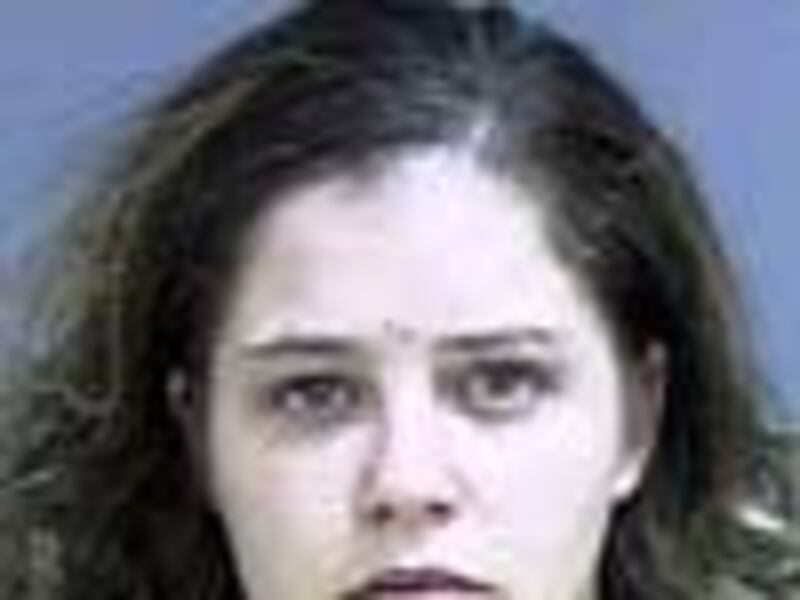
People remember Misty Star Sorensen's crime because of how they found the baby.
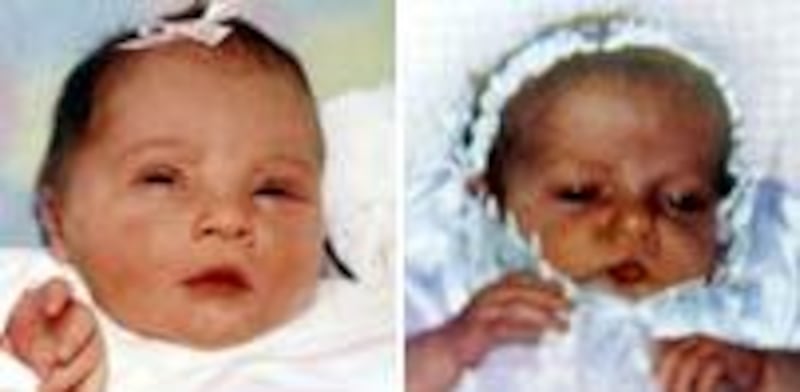
The drugged-out young mother awoke draped over the end of a couch. Her 2-month-old infant was dead beneath her — and the baby girl, named Kalee Ann Jones, had a meth baggie stuck to her cheek.
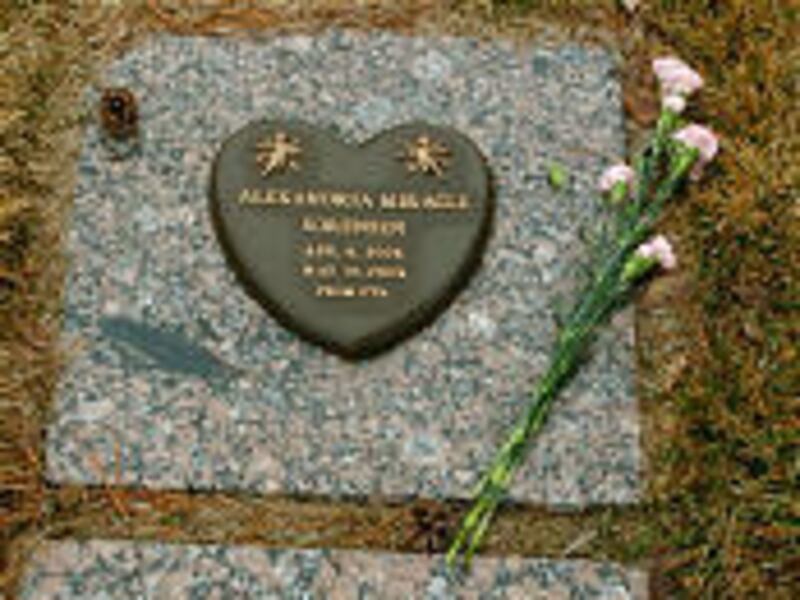
Kalee's obituary, printed on Thanksgiving Day in 1998, calls the girl a little angel who "budded on Earth, to bloom into Heaven." The family used that exact language to describe the death of another Sorensen baby, which occurred last May under eerily similar circumstances.
"Although we won't watch her grow up," the obituary from May 16, 2004, continues, "we will feel safe knowing she is with Kalee Ann now, watching over us and keeping us safe."
Some in the Salt Lake Valley who've had a brush with Misty Star Sorensen and her history say privately they wish someone had watched over these two little girls.
Back in November 1998, the state medical examiner ruled that Kalee Ann Jones died of "compressional or positional asphyxia."
Sorensen told police she fell asleep about 3 a.m. in her South Salt Lake home. Kalee was sitting in a car seat on the floor drinking a bottle, she said. Sorensen said she awoke 12 hours later and found the baby dead but had no idea how her daughter got up onto the couch.
The death raised suspicions immediately.
"I did observe the reactions of Misty and (her boyfriend) outside the residence. Their general attitude seemed to be one of disinterest and bother rather than loss or upset," South Salt Lake police officer Eric Jensen wrote in his police report.
"Both parties were uncooperative with officers and acted unemotional to the baby's death."
Officers also found a bevy of drug paraphernalia.
Sorensen was 20 at the time and pleaded guilty to child-abuse homicide. Third District Judge William Barrett placed Sorensen on three years' probation. He did not send her to prison on the third-degree felony, agreeing with her defense attorney and prosecutors that she had been punished enough.
"I hope she'll do whatever is necessary to make sure this doesn't happen again," Salt Lake County prosecutor Jim Cope said at the time.
But a year after she was released from probation, on May 10, 2004, 1-month-old Alexandria Miracle Sorensen died in just about the same way after being in a twin bed with Sorensen and her boyfriend, according to a Salt Lake County sheriff's report. The state medical examiner documented the cause of death as "undetermined."
Paul Parker of the Salt Lake County District Attorney's Office reviewed the case but decided not to prosecute. Neither Sorensen nor her boyfriend was charged with a crime. Deputy District Attorney Bob Stott said there was insufficient evidence as to Alexandria's cause of death.
But shrinking from a prosecution in a case where the death is "undetermined" raises eyebrows among some in the child welfare community.
"Generally, if it's undetermined, that's a red flag that the death may be suspicious," said Kristin Brewer, director of the 3rd District Court guardian ad litem office, which represents children. With more evidence, she said, the medical examiner could amend his ruling.
Utah medical examiner Todd Grey could not comment specifically on Alexandria Sorensen but said an "undetermined" ruling still provides plenty of room for prosecution. Read the medical examiner's opinion in the report, he said. The details are all there, Grey said.
Salt Lake County sheriff's detective Danielle Mudrock said the circumstances, including Sorensen's past history, raised her suspicions. But she said there was no evidence to support wrongdoing, and no one in the home where the death occurred admitted to any.
"I think it could very well be positional asphyxia, but how do you prove that when you don't have anybody saying this is exactly what happened?" the detective asked.
This case underscores the difficulties investigating and prosecuting child deaths.
Witnesses are rare. Investigators rely heavily on explanations from parents or caretakers. Cases are largely circumstantial and often based on complex medical evidence.
The Utah Department of Human Services' Child Fatality Review Committee examined Alexandria Sorensen's death in June on the assumption she suffocated as her sister had six years earlier. The committee reviews a child's death if the family received child welfare services within a year prior to the fatality.
"The cause of death is pending the final report of the Utah state medical examiner," an executive summary reads, "but is thought to be 'possible suffocation/positional asphyxia.' "
Sorensen has been in the Salt Lake County Jail since Oct. 26, on forgery and theft charges she says are related to bad decisions and drug use.
Because of her history, Sorensen, 26, is in maximum security at the Salt Lake County Jail. She spends 23 hours a day in her cell and sleeps away as much of it as she can. She rises at 6 a.m. to eat breakfast but goes back to bed until noon. The rest of the time she whiles away reading Danielle Steel novels, writing, talking to her roommate and playing cards. In a recent interview at the jail, she said she did nothing to cause Alexandria's death. The baby, she said, was not in bed with her and her boyfriend.
"I never laid down with her," she said. "I would have never, ever slept with another child again."
But Bonnie Vazquez, the guardian of one of Misty Sorensen's other children, said Sorensen tried to keep Alexandria's death a secret.
Sorensen hid out in a motel for a couple days afterward so no one could confront her about the child's death, Vazquez said. The girl's obituary didn't run in the newspaper until after the funeral, the woman said recently.
She suspects Sorensen was on drugs when Alexandria died. Had police taken a hair or blood sample they would have known that, Vazquez said. She also said police were slow to connect the fact that Misty Star Sorensen was the same mother who lost a daughter under similar circumstances a few years earlier.
Sorensen told police she last checked and fed Alexandria about 4 a.m. the day she died. Though Alexandria had been sick and throwing up, Sorensen said the baby looked fine when she put her down to sleep in the car seat.
Sorensen was to enter a drug abuse family treatment center with Alexandria the morning Sorensen found her daughter wasn't breathing about 10 a.m.
Sorensen and her daughter were staying with her mother on Gooseberry Court in Taylorsville at the time.
"I kept thinking, not again, not again. I can't believe this happened again," she said from behind the visitor's glass in the jail, with a small New Testament at her side.
Sorensen knows how her case looks. She knows what people think. She knows she continued to make bad choices after Kalee died — staying on drugs, for one thing.
"People would come by to say how sorry they were she had died, and then they'd get me high."
Although she admits to her bad decisions and says she is done with drugs forever, the idea that people think she's a baby killer upsets her greatly.
"That's a horrible thought," she said, sobbing. "That's not the kind of person I am. I am not abusive of my kids."
Mudrock's investigative report into Alexandria's death points out several inconsistencies in Sorensen's story.
The boyfriend told police he fed Alexandria a bottle between 1 and 4 a.m. Sorensen said she arose later and fed her the rest of the bottle. She first told police she picked her daughter up from an infant seat and held her in her arms. Then she said she picked the child up from the bed where she lay with her and her boyfriend, according to Mudrock's report.
An autopsy revealed Alexandria's stomach was "completely empty" and there was "not much" in the small intestine, indicating the child was not fed when Sorensen said she was.
Sorensen told police she had not been asleep while holding her daughter in bed and that she had not used alcohol or drugs. Mudrock said investigators found no evidence to dispute that statement.
The medical examiner also noticed the girl had a very small thymus, a lymphoid organ in the neck, which could be a sign of stress, chronic infection or malnutrition.
The past history of a mother could also be a factor in determining how the child died.
"It would matter to everyone in terms of taking a closer look," Brewer, the guardian ad litem, said.
Sorensen has given birth to four children, two of whom have died.
"I don't know if we can call two a pattern or not," Mudrock said.
A study of the state Division of Child and Family Services records shows the state had extensive contact with Sorensen both as a child and a parent. There were also state discussions about her ability to parent after Kalee died.
In April 2003, DCFS supported an allegation of child endangerment against Sorensen involving her 6-year-old daughter and 3-year-old son. A drug treatment center reported that Sorensen was using meth again.
After two unannounced visits and interviews, however, the division determined that the children did not need to be removed from the home.
According to the DHS Child Fatality Review Committee report, a caseworker, a supervisor and two assistant attorneys general discussed the ramifications of — and reasons for — exemption from a law requiring a parental rights termination petition be filed if a parent is guilty of child homicide.
"The group decided that a compelling reason to circumvent the law would be that (Sorensen) had completed two years of drug treatment and had sought treatment on her own when she relapsed."
Though Sorensen had agreed to random drug tests, she never showed up, prompting DCFS to place the children with relatives. Sorensen later in 2003 voluntarily relinquished her parental rights, and DCFS involvement ended.
By late summer, she was pregnant with Alexandria.
Documents about Sorensen's case show the Child Fatality Review Committee has some recommendations for caseworkers regarding women who've lost their parental rights or have had a child die due to abuse or neglect. If a woman with this history becomes pregnant, caseworkers should notify the attorney general, according to the documents.
The Attorney General's Office could then send a letter to local hospitals asking them to notify DCFS when the baby is born.
Assistant Attorney General Mark May, who heads the child protection unit, said the state used to routinely send such letters to hospitals but discontinued the practice after a 2001 U.S. Supreme Court ruling in a South Carolina case found it unconstitutional.
Whether it would have made a difference in this case isn't known. But even Sorensen said she was surprised no one from the state contacted her after Alexandria's birth.
Contributing: KSL-TV; E-mail: romboy@desnews.com;lucy@desnews.com