


Frieda Kluth's husband died in 1995 and she was indescribably sad. She couldn't explain how she felt, even to her children and friends.
How could anyone who hadn't been through it understand? She says, "I was married for almost 52 years and at once I am alone."
One day Kluth was at the cemetery, tending to her husband's grave, when she noticed a man nearby, putting flowers around his wife's headstone. They began to talk and he recognized the depth of her pain. He invited her to come with him to a support group for widows and widowers.
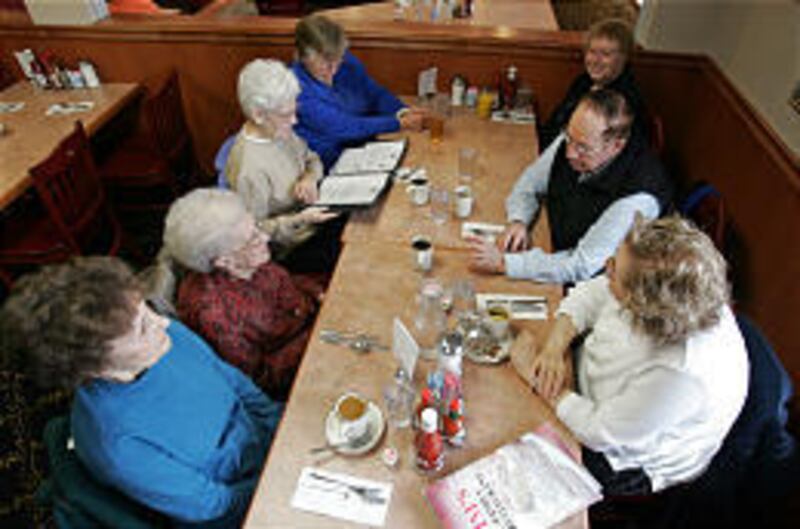
So that's how Kluth met people who came to feel like family. That is how she became part of a group that still gets together every week for breakfast and once a month for lunch, who still want to be part of each other's lives even though they are no longer grieving.
It's also how Kluth met Marie Gooderham, the leader of the group. Gooderham had been widowed and also had seen her children die. Perhaps because of her own losses, Gooderham knew how to help other people get through their grief. Gooderham was retired and volunteering her time to lead support groups at senior centers and libraries.
The meetings were simple enough. Every week, several times a week, in a couple of different locations, 25 or 30 people would gather and Gooderham would pass out information about grief, usually a short article. They'd go around the room, each reading a paragraph aloud.
Then people would take turns talking. They'd remember the good things about their spouses. They'd laugh and cry. After the meeting, Gooderham encouraged them to go out to eat together. They'd eat, and they'd keep on talking.
In the early '90s, Jean Jolly lost her husband and it was hard and she didn't have anyone to talk to. But a few years later she met a new man and became engaged. Then her fiance died. It was 1995 and Valentine's Day was approaching and she was working in a floral shop, seeing love all around her. Her children were so worried about her that they found the grief group and told her to go.
It might have been hard to be around flower-buying lovers, but at the grief group Jolly found it hard to be around people who were crying. Somewhere in the middle of that first support meeting, she told herself she was never going back. But at the end of the meeting, Gooderham came up and put her arm around Jolly and said, "The first time is always the hardest."
Now, a decade later, Jolly says it was exactly what she needed to hear. She believed Gooderham. She believed life would get easier and that being around others in pain would not magnify her loss. So Jolly kept going to the meetings and gradually she became part of the group. She felt their concern and grew to care about them, too. Gradually she healed.
When Jolly first came into the group, Rosemary Alder had been coming for two years. Alder was feeling much better, but she still came to the meetings because she liked being a part of something so vital and necessary.
Looking back on it, Alder marvels at how Gooderham enriched their lives, even beyond helping them with grief. She urged them forward, challenging them to grow and learn.
Gooderham would bring in an attorney a couple of times a year to answer legal questions, Alder recalls. She'd bring in a financial advisor, too.
Gooderham helped one woman who had never worked outside the home apply for a job. Everyone in the group encouraged the woman, who is still happily employed.
Soon the group learned to use their collective skills. When one of their members was cheated by a repairman, everyone in the group called his company. When one of the men said he needed to learn to cook, the women taught him. The men in the group advised the women about car repair.
People left the group sometimes. They got busy and stopped coming. Some remarried. (Some found a new spouse within the group.) But a core of more than a dozen folks kept coming year after year. Many went to several meetings a week.
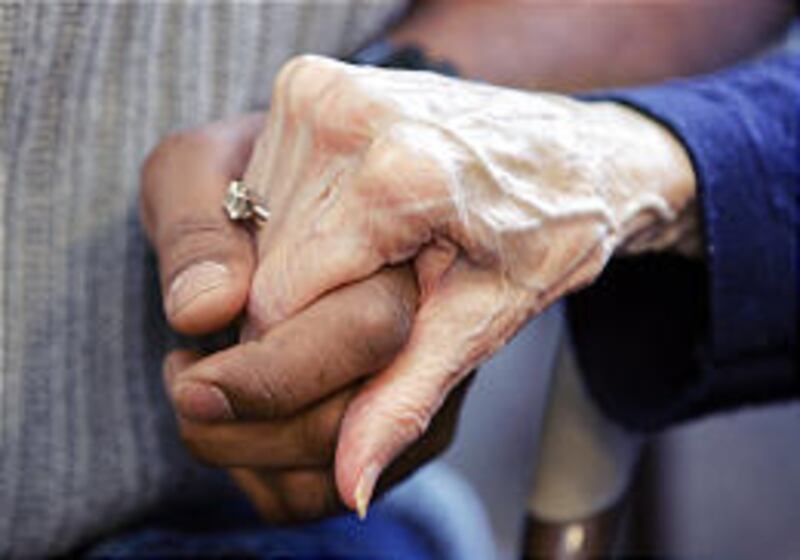
Alder fell in love with a man in the group, Garry Watson. Though they've never married — and enjoy living in their separate homes — he gave her a ring as a symbol of their deep friendship.
About five years after she started this group, Gooderham had to quit. She had too many medical problems.
So the group stopped taking in new members, but they still got together at least once a week to share a meal. They felt like brothers and sisters, by then, and they thought of Gooderham as their big sis, so they kept track of her, too. Watson helped keep her computer running. Jolly and Alder and others visited her regularly as Gooderham tried out several assisted living centers, moving back home between each one.
A few months ago, when Gooderham moved into the Avalon Valley Rehabilitation Center, it was Alder and Watson who decided her life needed to be celebrated. They planned a tribute.
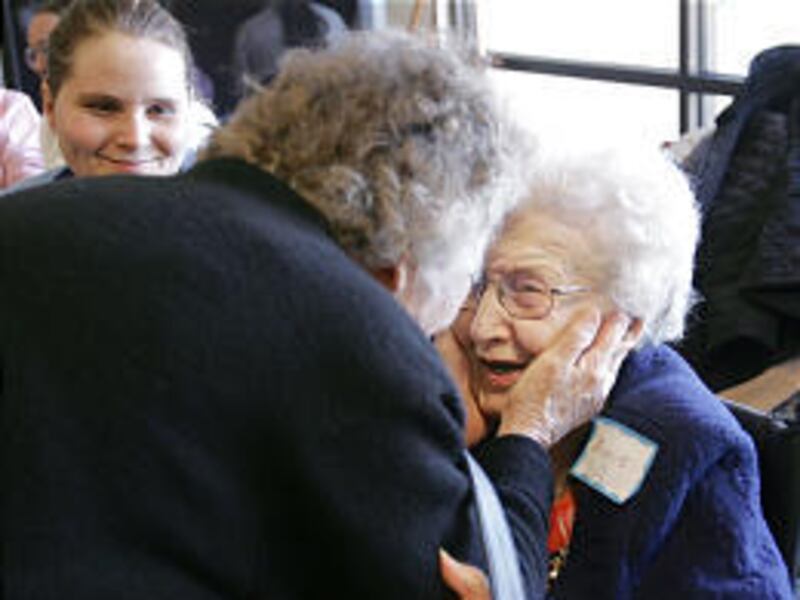
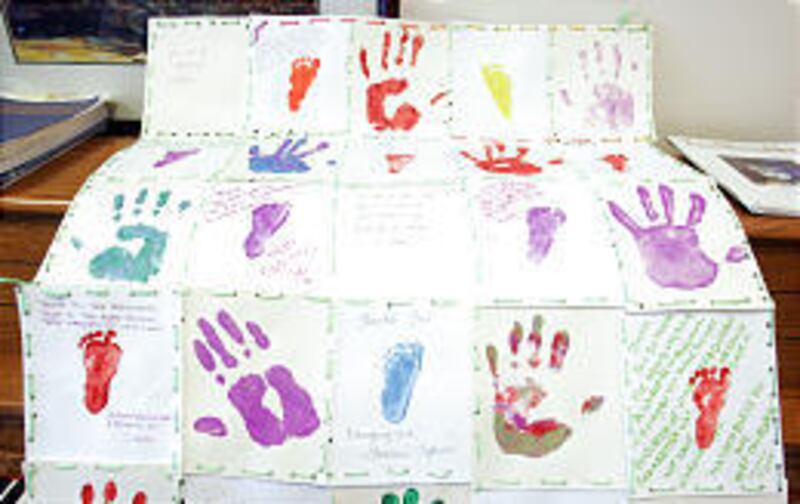
So last month, on her 91st birthday, dozens of Gooderham's friends came to a party for her. Dozens of folks who had only known her since she was 79 or 80 found out that Gooderham had been helping people all her life.
Valerie Fritz, director of the Utah Alcoholism Foundation, came to the party and told a little of Gooderham's history: It seems Gooderham and her husband, Claude, started Alcoholics Anonymous in Utah, in 1946. Claude was a recovering alcoholic. He is recognized as the founder of the University of Utah's School on Alcoholism and Other Drug Dependencies as well as what has now become the Utah State Division of Substance Abuse.
Marie Gooderham is recognized as the founder of House of Hope for women. The program has grown from one residence to a statewide system of outpatient treatment and homes, some of which allow women to bring their children with them.
It was only in her retirement that Gooderham had time to work so tirelessly with widows and widowers. The way she worked for so many years in substance abuse gave rise to the style she adopted with people who were grieving.
She tried to support them in their daily lives, not just at meetings. She'd call them at home, to check up on them. She worried that they were too sad to be eating properly, which is why she urged them to go out for meals together as often as possible.
Alcoholics Anonymous is a spiritually based program, which may be why Gooderham knew exactly how to talk to Ann Mayne, who was the widow of a Methodist minister. Mayne and her husband had been married for 42 years and had lived in Texas all that time. He died shortly after they moved to Utah. She hadn't had time to make any friends.
Looking back on it, Mayne says she'd helped widows and widowers all her life, as a pastor's wife, but she never understood their heartache until her own husband died. Of all the words she heard after his death, Gooderham's were the most important.
It is all right to be mad at God, Gooderham told her. Don't condemn yourself. God understands and will forgive you.
If you ask Gooderham how she learned to help others, she will talk about the deaths of her two daughters, more than 50 years ago. Her voice still chokes as she talks about them, two girls born with a degenerative disease, who lived into their teens and then died within a few months of each other.
Their deaths taught her two things, she says: You have to be able to talk about your grief. And you have to be able to help other people who are suffering.
"You can't just go shopping," Gooderham says. To get out of the rut of your own sorrow, you have to make other people's lives more meaningful.
E-mail: susan@desnews.com