

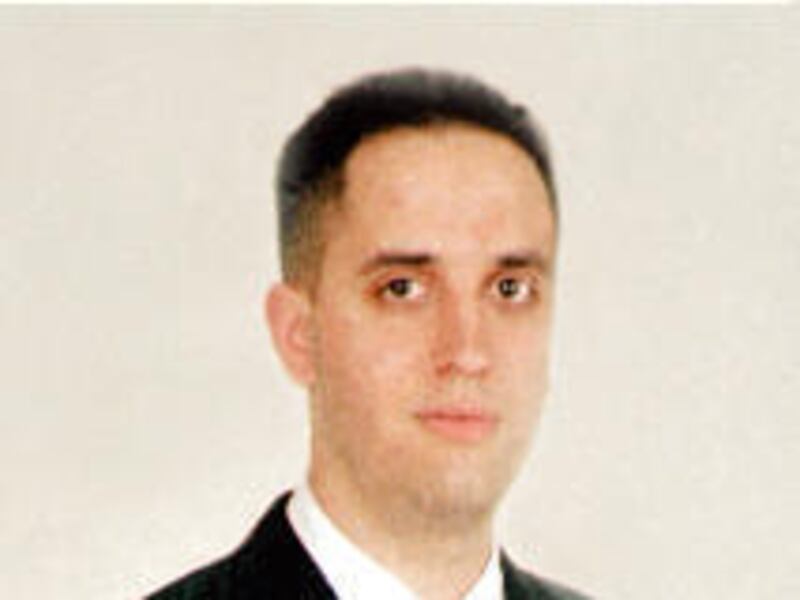
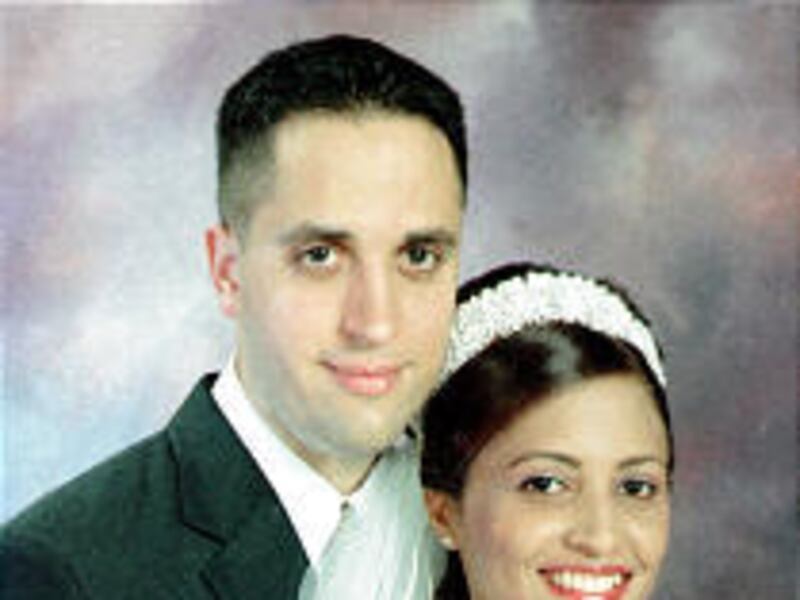

PROVO — A very ill Scott Aston sat on the floor of his new apartment, a cell phone in his hand.
He had started furnishing the apartment for the approaching day his Dominican wife would become a permanent U.S. citizen. On that day, however, the 30-year-old's future was in jeopardy.
Aston had called 911 and told a Provo dispatcher he couldn't move and was dying.
Then, he waited for the ambulance the dispatcher told him was on the way.
He waited until he died.
The dispatcher misheard Aston's address. Aston lived at 915 N. 500 West. Emergency personnel were sent to 950 N. 500 West, a nonexistent address.
And while city administrators insist they acted honorably, Aston's family members say they weren't told about the 911 call until two months after Aston's body was found.
For four days after the 3 1/2-minute cell phone call abruptly ended, nobody knew Scott Aston was dead. Not the two dispatchers who worked on the 911 call, not the rescue workers who searched in vain for him, not family members who tried to call and who pounded on his door.
On Oct. 5, Aston's sister-in-law called police for help opening the door. A paramedic at the scene immediately linked Aston's body to the fruitless search for a dying 911 caller four days earlier but didn't tell anyone until later.
Nobody would tell the Aston family about the 911 call — or the series of mistakes made by dispatchers — until Nov. 29. And city officials didn't inform the public of the blunder until March 7 — five months after Aston died.
The delays have made family members feel that city officials planned a cover-up. They still want city officials to provide more information about Aston's call for help the day he died.
Provo Mayor Lewis Billings said city administrators moved quickly and acted honorably. Stunned by the two dispatchers' errors, he said they pushed to investigate Aston's death and waited to inform the family until city chiefs had gathered all information they could about what went wrong.
"Keep in mind," Provo spokeswoman Raylene Ireland said, "the family found out about the 911 call from the city itself, and not from just anyone in the city, but the mayor."
She added, "Our feeling was that in the course of time, this would all become incredibly public information."
The city provided the family with copies of the 911 call and the emergency center's policies.
Family members found a number of apparent mistakes made by the dispatchers:
The dispatcher didn't ask Aston his name.
When he asked for Aston's address, he didn't repeat it back to Aston digit-by-digit to avoid the sound-alike mistake.
He didn't ask Aston what city he was in. (Dispatchers cannot trace the geographic origin of 911 calls from cell phones. It's also why the Provo dispatchers later would call Orem and Springville to see if the caller might have been at an apartment complex at 950 N. 500 West in one of those cities.)
Another dispatcher who dispatched responders to the scene gave her opinion that the caller "seems to be breathing fine on the phone," although she hadn't heard the call, and the expression of opinion during a dispatch call is strictly forbidden in the policy.
Neither dispatcher told a supervisor about the call when she returned to the office.
The dispatcher who took Aston's call did review the tape after a battalion commander at the scene told him to, but he still heard 950 instead of 915.
Says Billings: "I regret there were errors made."
An avid fight fan, Aston regularly spent weekend evenings in Lehi watching televised boxing matches at the home of his brother, Dale.
Oct. 1 was a Friday, and Dale expected Scott in Lehi on Saturday to watch a fight. On Sunday, when Scott still didn't answer calls, Dale drove to Provo and pounded on Scott's door, but there was no answer.
In California, Scott's identical twin, Todd, had just felt like something was wrong.
In the Dominican Republic, Josefina grew increasingly worried when her husband didn't call her back Friday night like he said he would, and then she didn't hear from him Saturday, Sunday, Monday or Tuesday. He had called her every day.
Her immigration papers, once nearly completed before her husband's death, are stamped null and void. She has stayed with her parents-in-law in Pennsylvania while they try to get her immigration papers through bureaucratic red tape.
Some measure of good has come from the tragedy, however. Provo has improved its dispatch policies, and news reports about Aston's death might help accelerate attempts to add technology in Utah that would trace 911 calls from cell phones.
"The changes that will come about in the 911 system will benefit the students and all of the other residents of Provo," said Aston's mother, Alice.
Understandably, the Astons have had trouble letting go of their son and brother.
"For three days after they found him, I went back and forth between Kearns and Provo, cleaning his apartment," his sister Carol Davis said. "I folded his clothes, I did the dishes, I cleaned the fridge, I packed up things. It was hard to leave there.
"That last day, shutting the door was like the final goodbye. That was hard. Even though I knew he wasn't there, I just wanted to stay."
Why did Provo wait to tell the public about the 911 mishap for more than three months after Billings told the Astons?
After all, when the city did hold a news conference, it stressed the need for residents to be aware that when they call 911 from a cell phone, the call can't be traced.
Such callers should provide their name, address, location and cell phone number.
But wouldn't it have been in the public's best interest to make that point three months earlier, or even five months earlier?
Ireland said the first two months were needed to complete an investigation to determine exactly what had happened. Then, after informing Aston's parents and wife, city officials wanted to give the family space to deal with the shock.
"There was never any sense this would not become public," Ireland said. "We realized the family would have a huge number of questions and there would be a period of time as they thought about it and came to terms that they would have requests for information. We knew those would be sensitive and private discussions. We felt we would try to give them a buffer of privacy and then at that point the city would have to decide how to go forward.
"We don't see that as keeping anything from our own public, but allowing the family to gather information and say to us what they needed to say."
E-mail: twalch@desnews.com