


After the bombing of Pearl Harbor drew the United States into World War II, the country found it necessary to gear up for the war effort very quickly.
Almost overnight, auto factories were converted into aircraft plants, shipyards were expanded and new manufacturing plants were built.
For a country coming out of the Great Depression, this was good news on the economic front. Early on, urban unemployment was able to supply necessary workers, but as the war went on and more and more men went off to fight, jobs became harder and harder to fill.
Enter Rosie the Riveter, premier poster girl of America in the 1940s and symbol of the more than 6 million women who were drawn into the work force to perform jobs in defense plants and manufacturing areas that had previously been the sole arena of men.
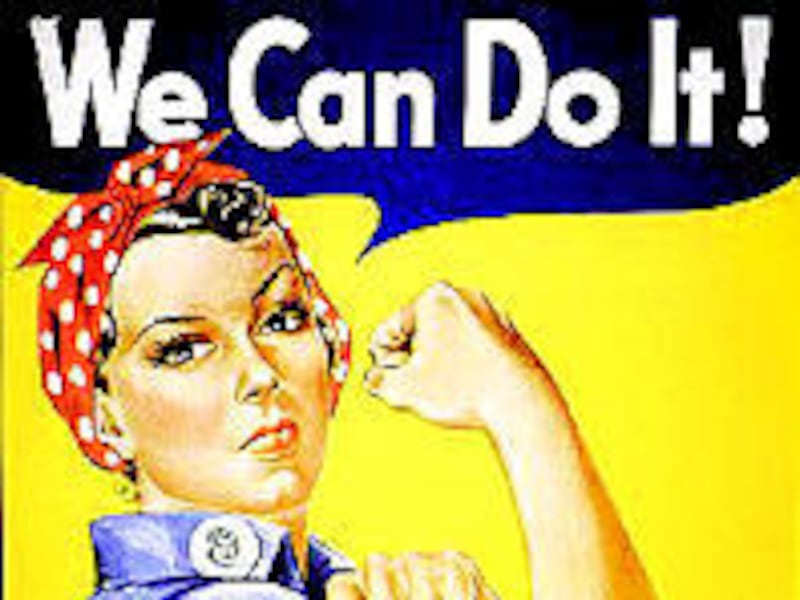
With slogans such as "do the job he left behind," women were encouraged to "drop your apron and take up your toolbox." One widely circulated poster showed a woman in a work shirt and head wrap, flexing her biceps and proudly proclaiming, "We can do it!"
They did do it — not only providing the productivity America needed for the war effort but also challenging widely held notions of what women could and should do. And after the war, while many of the Rosies went back to being suburban housewives, many stayed in the work force, forever changing the face of American industry.
In 2000 then-President Bill Clinton signed legislation creating a Rosie the Riveter World War II Home Front National Historical Park, which is located in the former Kaiser shipyards in Richmond, Calif., to "stand as a lasting tribute to these brave women who played such a crucial role in winning the war."
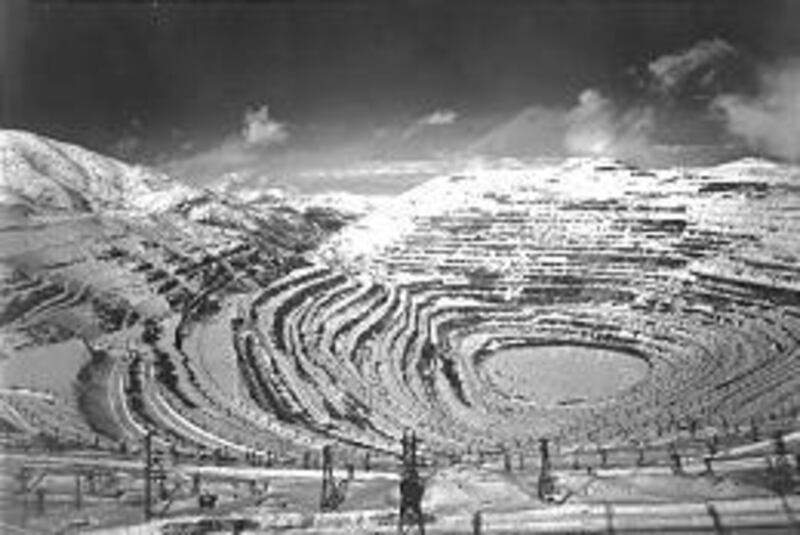
At Utah's Kennecott Copper Mine, "instead of Rosie the Riveter, we had Millie the Miner," said Louis Cononelos, director of government and public affairs for Kennecott Utah Copper Corp.
Known as "the richest hole on Earth," the Kennecott mine had seen its ups and downs in the early part of the 20th century. World War I had given the mine a big boost, but postwar slumps forced it to actually shut down. The copper market revived by 1922, and the reopened mine stayed afloat until the Great Depression caused more cutbacks. In 1936, Utah Copper Co., which had been founded by Daniel Jackling early in the century, was absorbed by its Guggenheim-owned parent entity, Kennecott Copper Corp.
But World War II brought increased demand for copper, which was used in ammunition and other critical manufacturing. It was considered so critical to the war effort that draft deferments were given to many of Kennecott's workers. Still, many left to join the fighting anyway, leaving employment shortages that were filled by women.
It's a little-known period of Kennecott's history, said Cononelos. "Much of what happened in America during the war wasn't documented," he said. The government, the media and most people were focused on the war. People working at home were too busy doing it and then too busy moving on to pay much attention. "Only later, when we looked back, did we see what a contribution it was."
Plus, he said, Kennecott was considered a classified facility; taking wartime photos was prohibited. "The only pictures taken were ones taken surreptitiously by people who snuck cameras in to take pictures for their own use."
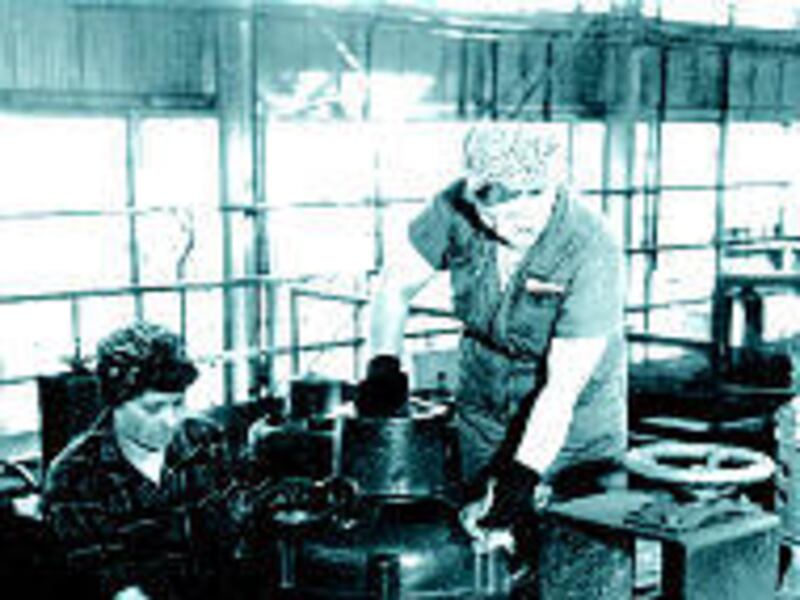
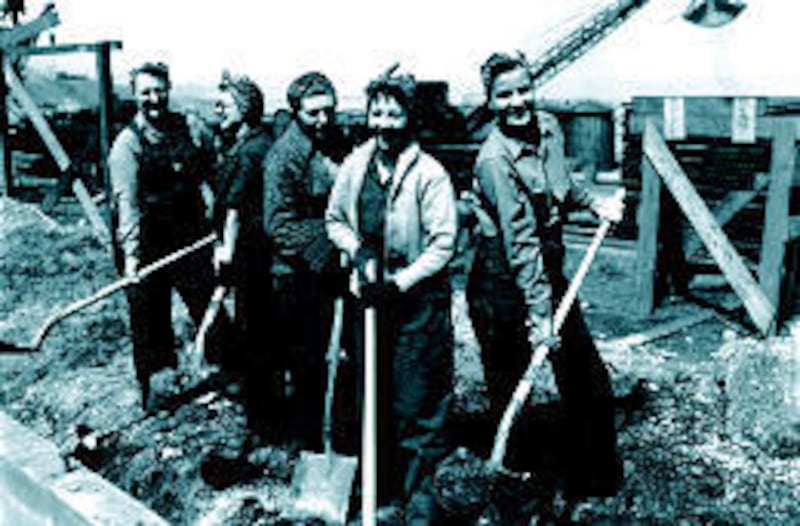
A few years back, when Kennecott officials began to take a harder look at the wartime role of women at their facilities, "we found only a couple of pictures in our files," said Cononelos. "We put some ads in the Magna Times asking if anyone had photos and ended up with a few more." Those pictures show women in coveralls and often bandannas, throwing switches, working with brooms and shovels and performing other labor.
They have collected a few oral histories, but, he said, like the war veterans, many of the Home Front people have died. The young men went off to war, so most of the men working at the mine were older. And most of the women left work after the war, so it has been harder to track them down.
Company records and annual reports indicate that corporatewide, about 23 percent of the work force were women. "My sense is that it might have been higher in Utah," said Cononelos, "but we don't have the records to prove it. I just think that women workers were part of a larger community here, close to extended families. Women with young children would have a greater likelihood of finding tenders for their children while the women were at work."
During the war women would have worked at four facilities in Utah, he said: the mine itself, the Arthur Mill, the Magna Mill and the Garfield Smelter, which at that time was owned and operated by the American Smelting and Refining Co. but has since become part of Kennecott.
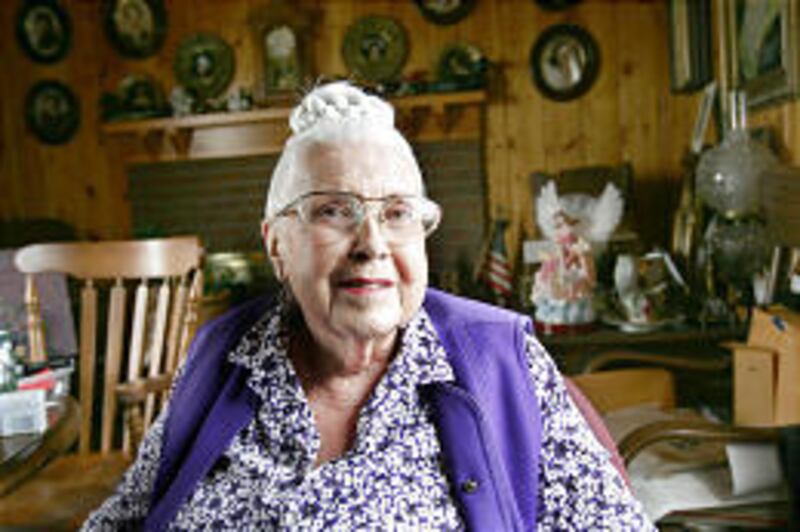
LaRee H. Pehrson, who still lives in Magna, worked at the Arthur Mill. "I started out on the screens and then ended up as an assayer," she said. The screens were where raw ore was mixed with water and then chemicals that made the metals rise to the surface.
"I worked for a time on the tripper, where we dumped ore in the bins. That was a scary place. And I worked on the reservoir. But my favorite was the assayer office. We would get buckets of ore samples that we'd mix with nitric acid and hydrochloric acid to test the metals."
It was a good place to work, she said. "I had a lot of friends there. And at $3 a day, it was the best wage around."
However, some of the men resented the women, she said. "They had to make changes in the restroom, and they didn't like that. We started with a communal restroom, but we finally got our own." It was mostly the younger men, the ones working under deferments, that they had trouble with. "The older guys were glad we were there."
The women worked hard — often harder than their male counterparts. They were particularly conscious of what they were doing and more responsible on the line because it was all new for them, she said.
"We felt like we were making a contribution. And we did. We did a good job."
Pehrson worked there until mid-1944. Her husband also worked at Kennecott under a draft deferment. "I stayed until I got pregnant."
She went on to work for the Green Sheet newspaper for 35 years and later became the first president of the Magna Community Council. "I didn't like the way the council treated women; they wouldn't let them talk." So lessons she learned at Kennecott carried her on through life, she said.
Joe Dispenza, a longtime Kennecott worker and former mayor of Bingham, remembers working at the mine during the war. He remembers a few women working there. "They were electricians, they worked in the oil house, but mostly they were switch-tenders. I'd say 98 percent of the women in the mine were switch-tenders."
He was grateful for their help. "We'd have been short-handed if we didn't have them. They were very important. They kept traffic moving smoothly, without wrecks."
It is easy to look back now, he said, and see how the war and everything connected with it all turned out. "But at the time, we all wondered," said Dispenza. Mostly, they worked — long and hard. "We were working six days a week, sometimes 10-hour days. Copper was very, very important."
The effort of the World War II soldiers was very important, said Cononelos, "and I don't mean to take anything away from what they did. But the efforts of Americans on the home front were just as important in many regards. That labor showed the true strength of America's productivity, and many historians think that productivity is one reason the Allies prevailed."
Women — whether Rosie the Riveter or Millie the Miner or women who worked in countless other areas — were an important part of that, he said. "They deserve to be remembered."
E-mail: carma@desnews.com