


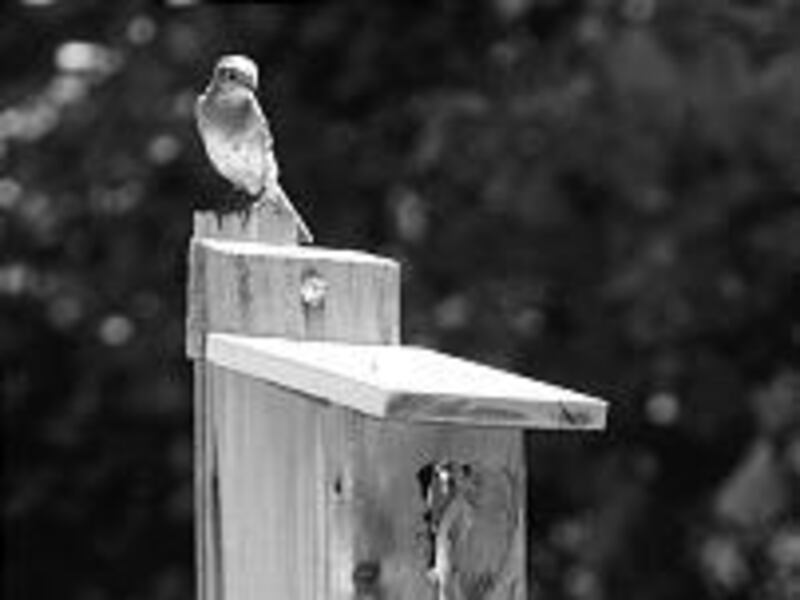
Birds use a nest as an incubation chamber and nursery for the chicks until they fledge. The nest shields the eggs and young from the elements. It provides shade from the sun and shelter from predators. It is a safe haven.
Some birds build their own nests from twigs, branches, grasses and other plant material in a suitable tree or shrub or even on the ground. The hummingbird builds a nest from plant fiber and spider webbing. Its nest can stretch to accommodate the growing chicks. Pheasant and quail build ground nests. The belted kingfisher's nest is in a tunnel that he digs in a stream bank. Burrowing owls use old prairie dog or badger burrows for their nests. Great horned owls use old hawk nests.
Another group of birds, known as cavity nesters, excavate their own natural cavity in a tree, such as the woodpecker. Other cavity nesting birds use abandoned woodpecker nests or other natural cavities to raise their young.
When land is cleared of standing trees, especially old snags, natural cavities are lost. Wooden fence posts no longer offer a cavity for nesting birds since they have been replaced by metal, vinyl or cement. Loss of habitat through urbanization and development has severely reduced the number of natural cavities for birds.
Here is where your family can provide a solution. Place a nest box in your yard. A nest box serves as a replacement for the natural cavity these birds need to raise their young. The nest box also gives us an opportunity to enjoy the birds during this critical time in their lives. Nest boxes have helped threatened bird species like the bluebird recover by an artificially restored natural cavity habitat.
A nest box can become a back yard science lab for the family. You can study and learn about nature through observing the nesting birds. It is a wonderful pathway for children especially to see and explore nature in action. They begin to develop a respect for nature and a value for wildlife through the experience.
Which bird will live in a nest box is determined primarily by the size of the entrance hole. Beyond that, there are recommend interior dimensions for the various cavity nesting birds. You can build the box as a project too. Instructions and plans are available free at the Layton Wild Bird Center. Completed boxes are also available. The following list includes some of the cavity-nester birds in our area that will occupy a back yard nest box: black-capped chickadee, northern flicker and downy woodpeckers, red-breasted nuthatch, western screech owl, house wren, mountain and western bluebird, starling, house sparrow, tree swallow and American Kestrel.
Remember that a nesting bird wants seclusion, away from the hustle and bustle of other birds, animals and people. Locate your nest box in a quiet area of the yard and away from your bird feeder or birdbath. Do not place a perch below the entrance hole. Other birds may use it to harass the birds inside. A mother bird may abandon a nest if she is stressed in such a manner. A nest box needs to be cleaned out in the fall after each nesting season. More than two broods may be raised within a season, so wait until fall to clean it out. Hang the nest box with the entrance hole facing east so that it gets morning sun. Place clean wood shavings or chips in nest boxes for chickadees or nuthatches. Woodpecker boxes can be filled with shavings or chips so that the birds can excavate the box.
Most boxes can be hung at "Grandpa's hoisting height," or the height grandpa can lift his grandkids, so that they can see what is happening in the box without needing a ladder.
Feel free to visit the Layton Wild Bird Center for answers to any questions you may have about starting this back yard family adventure. The Layton Wild Bird Center is located across from Old Navy and Barnes & Noble in the Layton Market Center. Call 801-525-8400, or visit the Web site www.wildbirdcenter.com/layton.