

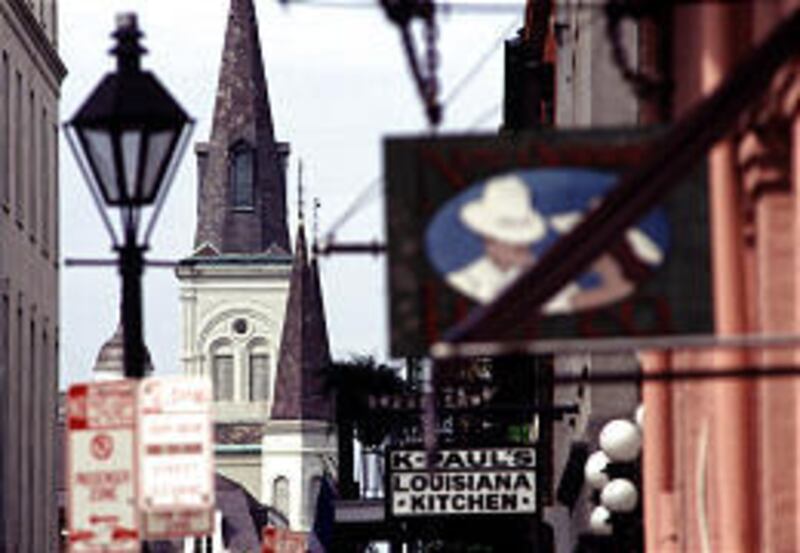

Tourism is by far New Orleans's biggest business — 8.5 million visitors in 2003. Mammoth chain hotels dominate the lower central business district. Conventions and big meetings follow one another like cars in rush-hour traffic. Living in a tourist bubble, partying too much and inquiring too little, you could have a . . . of a time in New Orleans and never really experience the city at all.
But there are better alternatives. This old city on the Mississippi, well established as a debauched playground for the incurably juvenile, is also the most exotic travel destination in the United States. The challenge is to visit at an off-peak moment, when the crazed and drunken crowds on Bourbon Street are small and the actual city, a splendid historic artifact, can be discovered and savored. New Orleans should be approached as a cultural oddity that sits alone at the bottom of middle America. It is not part of the stable heartland populated for many generations by the same stock, Americans of Northern European and African origin. Nor does it belong to the more cosmopolitan cities and their modern offspring, the suburban communities accessed by the Interstate highway network. Like the Mexican Southwest, Louisiana and New Orleans are misfits.
Partly as a result, New Orleans can quench a traveler's appetite for a "foreign" experience without leaving the country. Here the influences are still more French and Spanish than English. Here the natives really care about good food, still go out to support jazz played in clubs, still take their Catholicism seriously, still flaunt a Creole sensibility that really sets them apart from the rest of us. Here a rich, unique history can still be seen and felt.
History is perhaps New Orleans' greatest attraction. The city is one of those special places that can transport a 21st-century visitor to earlier eras. Just by walking, you can sense palpable roots — old buildings, old families, old recipes and old traditions. Though its modern leaders often sell New Orleans' history short, there is no escaping its influence on the present, beginning with some of the most interesting domestic architecture in America.
Here are four approaches to discovering New Orleans.
1. Eat
Etoufee, jambalaya, gumbo, po'boys, muffalettas, beignets, alligator pie — New Orleans is a food lover's paradise. The signature dishes all reflect the history that has shaped contemporary New Orleans cuisine (as it shaped the city's architecture, sensibility and political culture). The French influence is easily tasted all over town, but so are the Italian, Spanish and German culinary approaches brought here by immigrants over three centuries. New Orleans must be the anti-fast food capital of America.
When I visited with my wife and two grown daughters and their men, our approach was to avoid the famous tourist restaurants (though a few of them are truly historic) and try to sample a range of establishments, from luxe to neighborhood scruffy. Every meal was a good one, from an elaborate dinner at the snazzy New Orleans Grill in the Windsor Court Hotel to a simple comfort-food breakfast (candied praline bacon!) at Elizabeth's in Bywater, east of the French Quarter. Elizabeth's motto could be New Orleans' in general: "Real Food Done Real Good."
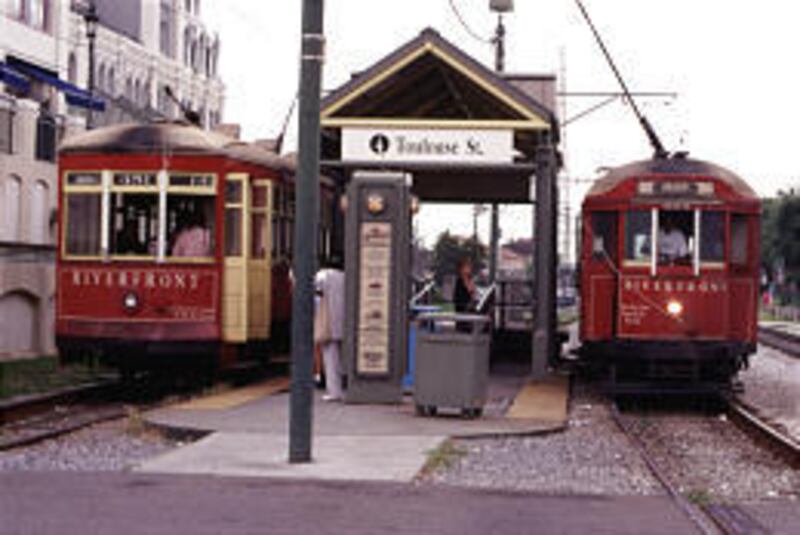
One of the places we liked best was Upperline, which occupies an old house on the edge of the Garden District, easily reachable on the famous St. Charles Avenue streetcar. Upperline is a New Orleans institution, presided over by one of the most generous restaurateurs in town, JoAnn Clevenger. She gives her customers sheets of paper with suggestions for other good restaurants to try, bookstores, art galleries and antiques shops.
Better yet, especially for a visitor with limited time, she offers a menu of New Orleans favorites that allows for a broad sampling of the traditional cuisine at just one meal. Upperline's "Taste of New Orleans," a seven-course tasting menu for $35, provides memorable samples of Cajun and Creole cooking. It begins with samples of three delicacies: a duck etouffee, or stew, with corn cakes and pepper jelly; an oyster stew; and a gumbo prepared with house-made andouille sausage. These cousins are all examples of the local dishes that fall somewhere between stews and soups in traditional European cooking. Each has a strong personality; each is awfully good.
Next come two small portions of two other favorite shrimp-based appetizers, fried green tomatoes with a shrimp remoulade, and spicy shrimp with jalapeno cornbread. Again, the tastes are strong and memorable. Sixth is a slice of Upperline's justly renowned roast duck with ginger peach sauce, wonderfully cooked with a nearly crisp skin.
Then dessert: warm, dense bread pudding with a toffee sauce. The main ingredient must be butter and the pudding has been cooked for hours, or so it seems.
Even farther off the beaten track for tourists is Ralph's on the Park, a handsome restaurant in a fine old structure in the Mid-City neighborhood. This is about 3 1/2 miles north of the French Quarter, easily reached by taxi, in a neighborhood that is part of the real city, not the tourist attraction.
Here good food and history are combined. The first restaurant in this balconied, two-story building opened in 1860. In the early 20th century its owner, Frank LaMothe, advertised his eatery in the Blue Book, the directory of whorehouses in fabled Storyville, New Orleans' red light district on the edge of its oldest black neighborhood.
Ralph is Ralph Brennan, a member of the restaurant family whose flagship establishment is Brennan's on Royal Street in the French Quarter, which entertains diners 550 at a time. The smaller Ralph's opened at the end of 2003 and is a big favorite with locals. Nearly every seat appeared taken on the Sunday night we were there.
The chef, who has his own 40-acre farm, offers original variations on familiar New Orleans themes and relies more on the tastes of his ingredients than on the sauces and spices applied liberally elsewhere. His Oysters Ralph were a good example: simple broiled local oysters topped with a little jalapeno cream on a bed of spinach. Delicious. He breads drum, a Gulf of Mexico fish with moist flesh, in buttered crumbs and bakes it to juicy perfection. Desserts are magnificent as well, such as the fresh pineapple crisp, in a butter-crumb crust, with vanilla bean ice cream and a sweet rum sauce.
2. Walk
See the town, and look at it carefully. There is no richer collection of domestic architecture in the country.
If you're making a first visit, start with the most famous bit, the French Quarter, laid out by a French engineer named Adrian de Pauger in 1721, more than half a century before Pierre L'Enfant drew his plan for Washington. With a good guidebook, you can spend many happy hours here. Similarly, the Garden District west of the Quarter, out the St. Charles Avenue streetcar line, can absorb a long day of walking and gaping at Greek Revival mansions built by the newly rich of early 19th-century New Orleans.
But there is a great deal more to New Orleans than these famous areas. We rented a car for two days, which made it easy to look with some care at half a dozen neighborhoods, from Bywater in the east to Uptown and Riverbend (home of Tulane University) in the west, to City Park and Lake Pontchartrain in the north.
I particularly recommend the Treme District, the old black neighborhood to the north of the French Quarter's eastern half, and Faubourg Marigny and Bywater to the east, along the levee that marks the bank of the Mississippi.
The Treme District, sometimes called Faubourg Treme, is the oldest black neighborhood in America. The many free blacks who lived in the city, beginning in the 18th century, migrated to this neighborhood during the 19th. Many owned property — something permitted to New Orleans' black residents but denied to African-Americans in most parts of the country, particularly the South, of course. Until the 1960s, the main thoroughfare, Claiborne Avenue, was a kind of black Broadway, according to Lolis Eric Elie, columnist for the Times-Picayune and a student of his city's past. Lined with fine old trees, busy with commerce and social life, home to restaurants and clubs, Claiborne Avenue was the happening place. Then all this was torn down to make way for an elevated interstate highway, the curse of 1960s-style "progress."
Treme is still a black neighborhood with an interesting architectural mix. Shotgun houses predominate — narrow one- and two-story wooden structures whose small ends face the street. The original shotguns had no hallways, just a series of rooms from front to back; the kitchen was usually the last one. Now finely restored and gentrified houses sit cheek by jowl with dilapidated ones.
Many of the inner-city neighborhoods that are still home to the working class are scruffy, though in Treme and Marigny you also see lots of gentrification. Some blocks and some houses look fine; many need a coat of paint. New Orleans is a city of badly paved streets and inadequate sidewalks, or none at all in these poorer areas. Even so, the old houses and atmosphere make these neighborhoods well worth a visit.
3. Listen to Live Jazz
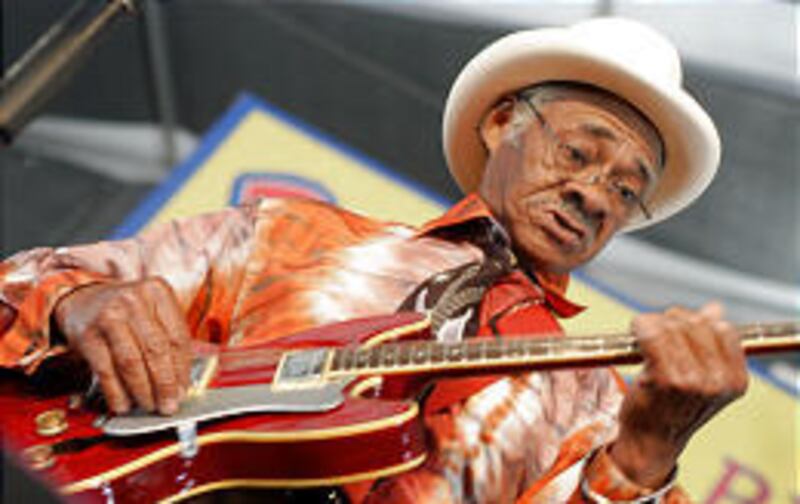
New Orleans remains an important center for jazz, the great American art form that was invented here. The Marsalis family has again made the city's music famous around the world, but there's a constant stream of new talent. Jazz here seems to hang on by its fingernails, but it does hang on, as we learned on a Monday night at Donna's.
Donna's is a small club on the nondescript northern border that marks the boundary between Treme and the French Quarter. It's a well-known landmark, a stone's throw from the spot where Economy Hall once stood. This was the clapboard dance hall that was a popular venue before 1920, when Kid Ory's band — including a young trumpeter named Louis Armstrong — played there.
Most of the music at Donna's is played by New Orleans brass bands, a special local genre that is loud and fun, familiar to anyone who knows Dixieland jazz. But Mondays are for a more modern strain of jazz, often built around a popular local drummer named Bob French. By the best of good luck, we happened into Donna's on a Monday that was French's birthday. The place was jammed with his fans and friends.
One was Kermit Ruffins, a famous New Orleans trumpeter, who came this night to sing. So did Sister Teedy, aka Tricia Boutte, another beloved local musician who now spends much of her time in Scandinavia. Both sang old standards accompanied by a jazz quintet: piano, bass, drum, trumpet and trombone.
The club is tiny, perhaps 20 by 40 feet, with a bar in back and a bandstand in front, along the longer wall. There are some tables, but most of the crowd stands throughout, most drinking $4 bottles of beer. Admission is $10, but the band also passes a tub for contributions. No one is getting rich on Monday nights at Donna's.
Yet it's hard to imagine a more enriching experience. When we called to make a reservation, Donna herself answered the phone. She responded to my question about whether food was served with a grunted yes, but added: "Come for the music." Good advice.
The crowd this night was a mix of white and black, young and old, long-haired and business-suited, all swept up in the music and the fun. A great place to hang out in New Orleans.
And keep an eye out for Jamel Williams, who played the trumpet when we were there, a handsome young man with a big talent. Perhaps one day he will make some New Orleans history.
4. Get Out of Town
New Orleans was once surrounded by plantations, the backbone of the local agricultural economy. Indeed, the Garden District was built on the land of former plantations. But to get a sense of that life today, you've got to drive for a while.
Our most interesting experience was in Thibodaux, a couple of hours southwest of New Orleans in the Cajun Wetlands country. You drive to Thibodaux across the absolutely flat Mississippi Delta; occasional bayous, or bodies of sluggish water, are the most interesting visual attraction.
Outside the town can be found the remains of what was once Laurel Valley Plantation, a big sugar operation. According to Paul Leslie, a professor at nearby Nicholls State University and a leader of local efforts to preserve Laurel Valley, it is the largest 19th-century sugar operation still in existence in the United States.
The plantation was built by J.W. Tucker, who came to Thibodaux in 1832, married a local girl and started his business, which grew dramatically during this lifetime. When he died in 1852, he owned 5,200 acres and 135 slaves, and produced more than 1 million pounds of sugar a year, according to Leslie.
The nonprofit that is preserving the place has a little store on Highway 308 about two miles east of Thibodaux. It's only open from 10 a.m. to 3 p.m. on weekdays and noon to 3 p.m. on weekends, but if you arrive when it's open, someone will direct you to the most interesting local sight, the 60-odd, well-preserved cabins once inhabited by Tucker's slaves. We arrived after closing time but found the cabins with the help of a local; they're down the side road just beyond the store.
If you've seen the movie "Ray," about the life of Ray Charles, you've already seen these cabins, which were spiffed up and used in the film to portray the community of Georgia sharecroppers' cabins where Charles grew up. They've been used in other movies, too. But visited in person, they are empty and eerie. The preservation group has protected them with wire fencing, but from the dirt road it's easy to imagine children running from house to house, women hanging laundry, men slipping into the neat outhouses behind each chimneyed cabin. Slavery has never felt quite so real to me as it did the afternoon we walked along this dirt road.
These little shacks aren't exactly as they were for the slaves; they were used to house plantation workers long after the Civil War, and by the beginning of the 20th century most of those were European immigrants, according to Leslie. During World War II they were used to house, briefly, displaced East Europeans. The corrugated tin roofs date from that time. But Leslie says his research indicates that the frames of the old cabins, their chimneys and other features are original.
Beyond the cabins, a little farther down the dirt road, is the formidable brick structure that housed the plantation's sugar mill. It is falling down now but still impressive. Records show that 366,000 bricks were laid in 1844, all of them made on the plantation.
You can combine a visit to Laurel Valley with a stop at one of the more touristy restored plantations, such as Oak Alley Plantation on the edge of the Mississippi, on Highway 18 near Vacherie. Here you can see magnificent rows of old oaks and a fine planter's mansion and furnishings, but the slave quarters — the homes of the people whose unpaid labor made the owner's grand life possible — have not survived.
Of course, it was slave labor that made 18th- and 19th-century New Orleans wealthy and created the heritage we can enjoy today. Reducing the slaves to a brief narrative on a sign — Oak Alley plantation's choice — reinforced for us the poignancy of those shacks outside Thibodaux. New Orleans could use a good museum of its own African-American history.