


The Deseret Morning News on April 17-22 published a series on the 30,000 to 50,000 refugees who now call Utah home. Read "Refugees reborn."
Carol Krause has a new friend.
Krause and Elizabeth Gatwech both have infants, and in recent weeks the two women have spent time doting on their little ones and getting to know one another.
Krause, a 31-year-old South Jordan mother, is part of a larger Utah community that jumped to action after a series titled "Refugees reborn" was published last month in the Deseret Morning News. The women's friendship is a result of that action.
The series included stories from the population of 30,000 to 50,000 refugees who now call Salt Lake City home. Most — like Gatwech — were displaced by dictators and civil war, chased from their homelands and persecuted for their politics, religious beliefs or ethnicity.
They are not immigrants. They are not illegal aliens. They are refugees.
The "Refugees reborn" series revealed a community that has delivered richness and diversity to Utah but one still struggling to learn how to live, work and prosper in its new home.
"This was a great way to bring attention to a cultural treasure in our city. I hope the community will want to learn more about each group that finds its way to Salt Lake City and sincerely welcome them to town." — Jane Pasimeni Willie, family involvement coordinator for the Salt Lake City School District
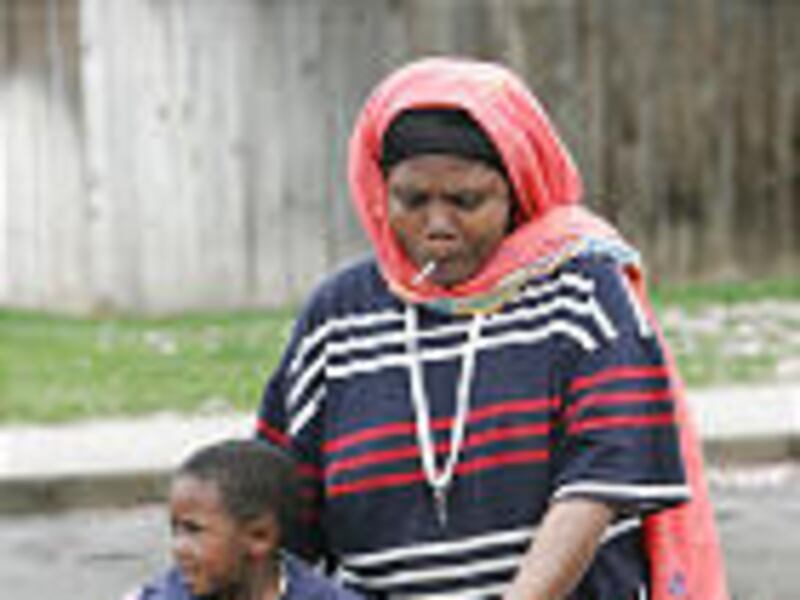
One Morning News article told the story of Elizabeth Gatwech and her five daughters — and detailed how the Sudanese woman was to be homeless at the end of April due to a misunderstanding with the Salt Lake City Housing Authority.
Krause isn't sure what motivated her to act.
"I just remember reading the article and not being able to fathom the thought of this family being homeless with a brand new baby . . . ," said Krause, who has two children.
"The whole situation affected me so emotionally," she said. "I actually held my baby every night and just cried as I rocked him to sleep, wondering why I had won such a lottery ticket in life."
But Krause did act. She delivered to Gatwech diapers and supplies to last a month. She took dinner to the woman and her daughters. And Gatwech's LDS Church ward and some of her friends scraped up enough money to keep her family in their west-side house through May.
The six-day "Refugees reborn" series was published April 10-15.
"I think it really opened up a lot of people's eyes to their plights," said Lina Smith, director of the Utah Refugee Employment and Community Center.
After the series was published, her agency received calls from people wanting to volunteer in the refugee community. Some college students want to work as mentors. Someone else dropped off blankets and pillows.
"How can you not do something? That's the bottom line for me. How can you not do something?"— Carol Krause, South Jordan
The newspaper received dozens of phone calls and e-mails from people asking how they could help refugees in need. Most Utah readers said they had no idea about this growing but fragile segment of the population.
"I had no . . . NO . . . idea that Utah had this wonderful program for these unfortunate people," wrote Carolyn Kissel.
"The series on refugees is just terrific. Enlightening, educational, moving. It opened up a world I really did not know was so rich and varied. Everything a newspaper should do," wrote Nancy Borgenicht, producer for the Salt Lake Acting Company.
Mary Mostert of Provo was a single mother with four children 30 years ago when she sponsored a Vietnamese family in her California home.
"Your description of the resettling of African refugees brought back memories — not only of the Vietnamese, but of my African connections and experiences."
"I think that one really important aspect of your series is that it gave voice to people who are struggling to be heard within a system that marginalizes them," said Ellie Brady, whose English as second language class at Northwest Middle School is often the first school stop for refugee children.
"Many refugees are still working so hard to acquire English, and our society is so generally bereft of adequate translation that many of their deepest thoughts and sentiments are rarely heard," Brady said. "It told personal and moving stories, yet it gave an overall social framework so that people who are not refugees can begin to understand the challenges all of these families and individuals face."
Utah readers say they got that message.
Advocates for members of the refugee community say people are volunteering their time, money and skills in an effort to ease the transition for Salt Lake City's newest residents:
This week, a professional investment officer at A.G. Edwards dropped off professional clothing for the Sudanese Lost Boys.
A retired cardiologist now picks up a couple of refugee children on Fridays when school gets out, takes them to Salt Lake City downtown library and reads with them for an hour. As a reward, the children get 30 minutes of computer time and a snack.
College students have committed to hours of tutoring and homework help.
Thousands of diapers have been donated.
A foundation operated through Qwest Communication Foundation donated $5,000 to the English Skills Learning Center (ESLC) to fund free English-language and skills training for those in need throughout Salt Lake County. "The funds received will help open the door to a better future for many area immigrants and refugees," according to a company statement.
"We serve mostly low-income families that are unable to attend ESL classes offered by school districts because of issues with transportation, lack of child care and work schedules that conflict with class times," said Barbara Fish, ESLC executive director.
Qwest's funding will help ESLC provide English-language training, Fish said, "and other skills to help immigrants and refugees acquire job skills, find employment, participate in their children's education and be active citizens."
Aside from making donations, Smith said people seem to be seeing refugees in a new light. Employers appear more likely to open doors to refugees, which should be good for her center, which expects to place 500 refugees in jobs this year.
Smith said she also has overheard people saying they had no idea what refugees endured to get to this country. "I think people are looking at refugees in a way they didn't before."
Joanne Milner, community relations program manager at Horizonte Instruction Center, calls herself an advocate for this "unique and beautiful" population.
"It is my hope," she said. "that the community will continue to expand their outlook on refugees."
"Every Somali needs help, because we are a nation robbed of basic human rights by warlords and corrupt politicians. Basic rights such as life, liberty and the pursuit of happiness have been deprived of the Somali nation. . . . I myself, would also like to emigrate from this country, but I am stuck in it."— E-mail correspondence from Ali Ahmed Aman, who lives in Berbera, Somalia. Reprinted with permission.
There are still many opportunities for people to help make the transition to American culture easier for refugees, said Susan Quaal, a longtime volunteer in the Sudanese refugee community.
Job applications are challenging for some refugees, and they can use coaches who will help search for jobs, fill out job applications and prepare for interviews.
Quaal, who has worked with the refugee community for more than 15 years, detailed one refugee woman's experience.
Quaal helped the woman fill out an online application at the University of Utah. After no response and multiple follow-up phone calls, Quaal and the woman discovered her application never was electronically transferred from the university's human resource department to the appropriate person doing the hiring.
Consequently, the refugee job seeker was never called for any interviews. "I had to advocate for her," Quaal said.
"Finally I got her an interview and staked my professional reputation at the university on her as a great worker."
The woman now works part time in housekeeping in the U.'s new orthopedic hospital. The young woman has received three letters of commendation and is on the waiting list for full-time work.
And "buddy friends" much like the relationship between Krause and Elizabeth are also needed.
"These are volunteers who would agree to get acquainted with a family or two and then check in with them weekly to see how they are doing and what they need," Quaal said.
For example, if a refugee saves enough money to buy a used car, he or she might need help getting the inspection done, navigating the motor vehicle department process or getting a quote for repairs from a mechanic.
If a refugee child brings a letter home from school, a parent may need help understanding the letter.
E-MAIL: lucy@desnews.com; romboy@desnews.com