





Casinos, race tracks and lotteries sing a seductive siren song all along Utah's borders, seeking to lure its residents — and their money — out of their no-legalized-gambling preserve.
Local bingo and poker clubs go a step further, quietly offering casino-style wagering inside Utah — despite the state's supposed ban on all gambling. Such clubs are aided by perceived legal loopholes and lack of enforcement. So is the Internet gambling that Utahns find easily at home on their computers, also technically against state law but a ban essentially not enforced.
Perhaps never has so much gambling been so available in or near a place that supposedly outlaws it.
In fact, a new Deseret Morning News/KSL-TV poll by Dan Jones and Associates finds that 75 percent of Utahns say they have gambled (not counting office pools or friendly wagers) in their lifetimes — and 45 percent of those gamblers have wagered on commercial gaming within the past year.
Perhaps even more interesting, the poll finds that a majority of Utahns see gambling as an acceptable activity — at least for others, if not themselves. The poll shows 4 percent say gambling is a harmless form of entertainment; 38 percent say it is an acceptable form of entertainment that could present danger if not monitored closely; 11 percent said it is "acceptable for others but not for me"; and a minority of 43 percent said it is an unacceptable activity because of potential harms.
That may be startling because President Gordon B. Hinckley, leader of the Utah-headquartered Church of Jesus Christ of Latter-day Saints, spoke at length against gambling at its last general conference in April. "It becomes addictive. In so many cases it leads to other destructive habits and practices," he said. Utah politicians also have overwhelming opposed gambling through the years.
The Deseret Morning News today begins a five-day series looking at gambling's allure and impacts in Utah — where it exists, how much Utahns spend on it, who benefits and the social costs for problem gamblers.
Today we focus on the legal temptations Utahns find along their borders.
Luring Utahns pays well. Wasatch Front residents spend an estimated quarter-billion dollars a year gambling in border states. The casino industry figures that one of every four Utah adults gambled in a casino last year. Most Utahns can find forms of gaming legally within a two-hour drive, often literally inches over the state line. For example:
Morning News research reveals that the top six Idaho lottery sales sites are on the Utah border — and they sell up to 27 times as many tickets as the average Idaho lottery site.
The city manager of West Wendover, Nev., says his town would not exist without gambling by Utahns.
Wyoming Downs racetrack near Evanston says 85 percent of its gamblers come from Utah, as do most of its horses and jockeys.
Money from Utah gamblers, among others, helps Nevada avoid all state income taxes and sales tax on food. It helps Idaho, Wyoming, Colorado, Arizona and New Mexico raise extra millions for schools or building programs — while Utah moans about its worst-in-the-nation school spending per pupil.
Utahns' gambling also helps its neighbors raise money for programs to treat their own "problem gamblers" — and their extra crime and social problems. But none of that money flows back to Utah to treat its problem gamblers and the ills they bring home.
Following is a look at those border gambling operations, how they enrich border states, and what they do to attract Utahns.
WEST WENDOVER, NEV.
"If it weren't for gaming, West Wendover would not exist," says City Manager Chris Melville. "Ninety percent of our economy is based on tourism" — with the lion's share coming from Wasatch Front residents who make the two-hour-or-so drive there to briefly escape Utah's ban on gambling.
An economic development study the city commissioned has estimated, based on surveys, that Wasatch Front residents spent $218 million a year on gaming in 2000; other data suggest it has increased steadily since then.
The West Wendover study indicates the Nevada city captures 60 percent of it.
The new Morning News poll bears that out: It shows that 42 percent of Utahns say they have gambled in West Wendover sometime in their lives, including 21 percent who did so in the past year.
Melville said West Wendover itself spends about $150,000 a year on advertising, focused mostly on Utah. While casinos spend even more than that to advertise, they did not respond to requests for information about their advertising budgets.
The five casinos in Wendover offer plenty of perks for customers who accumulate enough points for money spent: free hotel rooms, free dinners, free cigarettes, free drinks, free golf, free gifts, free concert tickets, and even free round-trip limousine service.
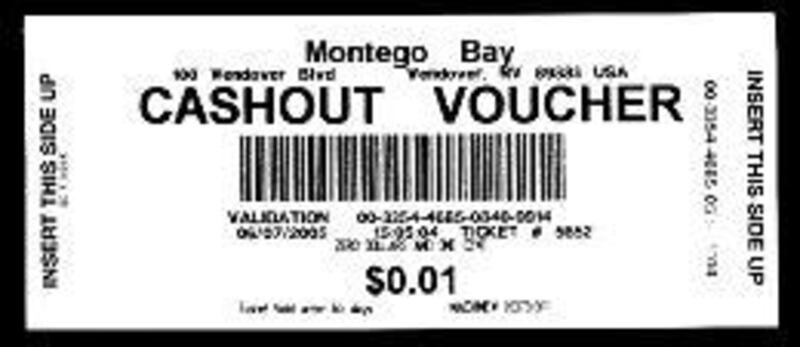
The sister Peppermill, Montego Bay and Rainbow casinos even are offering a drawing for a free home valued at $260,000 that television ads said could be built in Utah. Gamblers earn more tickets to put in the drawing based on how much they spend.
In addition, cheap "fun buses" offer transportation to Wendover, with a buffet included in the price plus cash back for gambling.
To try to expand its base away from Utah, West Wendover casinos have started a program to fly in high rollers from other states for free. Ironically, they fly into an airport on the Utah side of the border.
Such incentives helped Elko County, where West Wendover is located, bring in $232.4 million in gambling last year, according to the Nevada Gaming Commission. That does not include additional money from hotel rooms, restaurants, gas stations and other tourism-related businesses.
Of note, a 2004 survey by Harrah's, a casino company, estimated that 402,000 Utahns visited casinos during 2003 — or 27 percent of the population over age 21. It said they made nearly 1.5 million trips out of state to casinos that year. That was high enough for the Salt Lake metro area to rank No. 44 among the nation's cities for generating casino trips.
Stephen Perry, mayor of Wendover, Utah, where gambling is not allowed, envies all that money spent just over the state line from his city. He owns a motel on the Utah side and says that even though his rates are cheaper than in West Wendover, "people choose to spend more there anyway to be closer to the casinos."
He said gambling in West Wendover causes crime and social ills in both Wendovers. But he said West Wendover retains all the gambling money that could help handle such ills, while the Utah side of town struggles.
"We have the same extra crime, and things like extra drunken driving. Their (West Wendover's) police department has a staff of 25 with all kinds of clerks and a chief. We, however, have a staff of five. If it weren't for (gambling) in West Wendover, we would probably only need a staff of one," he said.
Making it even tougher for Wendover, Utah, to survive is that Perry says most of its residents have abandoned the Utah side over time to live in Nevada — it charges no state income taxes because of its gaming revenues.
"I think about 50 percent of the people who live in West Wendover lived on the Utah side at one time or another, but moved to get away from income tax. Also, if you live in Utah but work in Nevada, you pay income tax on that money. . . . In fact, if you live in Nevada and work in Utah, Utah also charges you income tax. People try to escape that," he says.
Perry says Wendover, Utah, petitioned the Utah Legislature to allow gambling there to put it on even footing with West Wendover, but the proposal never progressed. Congress has also considered annexing Wendover, Utah, into Nevada, but that idea has stalled.
MESQUITE, NEV.
Mesquite is just 37 miles from Utah's burgeoning St. George area. Mesquite figures that about 30 percent of its visitors, and gamblers, come from Utah. That is actually down a bit. In 2000, Mesquite figured that 41 percent of its business came from Utah.
The reason for the percentage drop is interesting: "It's mostly because the percentage of people coming from Las Vegas is up. Las Vegans increasingly view Mesquite as a getaway spot," said Kevin Bagger, research director for the Las Vegas Convention and Visitors Association, which also works to increase tourism in Mesquite. Las Vegas is 80 miles from Mesquite.
Mesquite City Manager Bryan Montgomery said that even though the overall percentage of his city's business from Utah has dropped, "the number of Utahns is probably higher than before."
He adds, "Visitors from Utah are very important to Mesquite, not just for gaming but also for golf. Those interests here advertise heavily along the Wasatch Front."
The new Morning News poll shows that 39 percent of Utahns have gambled at casinos in Mesquite at one time or another, including 16 percent during the past year.
The Las Vegas Convention and Visitors Association spends $362,000 to advertise Mesquite in Salt Lake City, said Lisa Jacob, spokeswoman for R&R Partners, the advertising agency that handles the work.
Casinos in Mesquite spend much more than that to advertise their own businesses. They did not respond to requests about their advertising budgets.
In 2004, Mesquite reported more than 1.7 million visitors — and figured that 86 percent of them gambled during their stays. They spent $122 million on gambling, a 9 percent increase from 2003.
Mesquite figures that the average visitor spends $216 in gambling per stay — and just $53 on food and drink, $7.31 for transportation and $7 for recreational activities.
Mesquite — which began its existence as a small LDS farming community — has boomed since the first casinos opened there in the early 1980s. Mesquite has grown from a mere 922 people in 1980 to 17,000 today.
LAS VEGAS
A study for West Wendover, Nev., found that Salt Lakers spend about a quarter of their gambling money in Las Vegas — or likely more than $60 million a year there. While Las Vegas is not on a Utah border, it is close — only about 117 miles from St. George.
The new Morning News poll shows that 54 percent of Utahns have gambled in Las Vegas at one time or another, including 16 percent during the past year. Las Vegas, with its glitzy Strip and high-end hotel/casinos, is the only venue that has persuaded a majority of Utahns to gamble there sometime.
The Las Vegas Convention and Visitors Association says it does not have information about the exact number of visitors it attracts from Utah — nor does it spend extra money advertising in Salt Lake City beyond its national ad buy.
But it does have information about how important gambling is there overall.
It said the city attracted 37.4 million visitors from around the world last year. Gambling revenues were a staggering $22.3 billion last year.
It said the average Las Vegas visitor spends $545 on gambling per trip there and stays an average of 3.6 nights (helping to fill the 131,503 hotel and motel rooms in the city).
Southern California supplies about 27 percent of the city's visitors. International tourists supply about 13 percent. The rest come from around the country.
The National Gambling Impact Study Commission noted in 1999, "Roughly 85 percent of Nevada's gambling revenues come from out-of-state tourists. Thus, Nevada receives the economic benefits of the dollars lost to gambling, while the attendant social and economic impacts of unaffordable gambling losses are visited on the families and communities in the states from which those individuals comes. Every other gambling venue in the United States is far more reliant on spending by citizens in a far more concentrated geographic area."
IDAHO BORDER TOWNS
Idaho has nearly 1,200 stores that sell lottery tickets. The top six locations are all on the Utah border in tiny towns, according to computer-assisted analysis of data obtained through public documents laws by the Deseret Morning News.
The top-selling location in all of Idaho is the Kwik Stop in Malad on I-15 just north of the border. It sold $2.54 million worth of tickets in fiscal 2004. That is 27 times more than the $92,000 average for all Idaho lottery sales locations.
"About 90 percent of our business is from Utahns," estimates Bobby Green, the assistant manager of the Kwik Stop.
"You see a lot of regulars from Utah," Green says. "You see a lot of them every five weeks. That's because you can get 10 plays on one ticket," so a ticket lasts for five weeks' worth of the twice-a-week drawings held by the lottery.
The new Morning News poll shows that 33 percent of Utahns surveyed say they have played the Idaho lottery sometime in their lives — including 12 percent who played it within the past year. Another 14 percent have played lotteries in other surrounding states, including 7 percent who did so within the past year.
Green notes, "We only get 5 percent of what we sell (plus a 10 percent bonus for selling top-prize tickets). So the lottery itself isn't that lucrative. But it's a big draw. And people don't just buy a lottery ticket when they come in. They buy a drink and a candy bar — and other things that we make more money on."
Others among the top six lottery sites in Idaho are: La Tienda in Franklin (near Logan), $1.88 million in 2004 sales; Top Stop Chevron in Malad, $1.25 million; LW's Chevron in Malad, $831,854; Betty's Lounge in Malad, $681,330; and Glady's Place in Fish Haven, just over the border on Bear Lake, $675,437.
The tiny Idaho border towns of Malad, Franklin, Fish Haven, Preston and Weston have a combined population of only 7,900 people. But they sell 8.5 percent of all lottery tickets in Idaho — a state with a population of 1.37 million — thanks to the help of Utahns.
Those border towns sold $1,080 worth of lottery tickets per resident in 2004. For all of Idaho, the state sold about $80 in lottery tickets per resident.
Of note, the Idaho Lottery says it has provided more than $275 million to that state since it began in 1989. Half goes to its public schools, and half goes to the Permanent Building Fund.
Based on last year's data about border sales, it appears Utahns contributed possibly 8.5 percent of that profit — or about $23 million. Only 22 percent of the total amount gambled ends up going to the state as profit — so Utahns may have spent more than $106 million on the Idaho lottery since it began in 1989.
On the plus side, a 1998 study conducted for the National Gambling Impact Study Commission found no correlation between gambling problems and lotteries. "It does not appear that the availability of a lottery has an impact on (problem gambling) prevalence rates," it reports.
The lottery is not the only gambling available in Idaho. The state also offers pari-mutuel betting on horse races, and the Shoshone-Bannock Tribe operates a casino on the Fort Hall Indian Reservation near Pocatello.
Liberty Toledo, with the tribe, says that 25 percent of all Fort Hall Casino patrons who have signed up for "Buffalo Club cards" are from Utah. "Our Buffalo Club card is a players incentive program where players can earn points for their play and redeem those points for cash and other items," she said.
However, she estimates that only 5 percent of the casino's total business comes from Utah. But it advertises heavily on radio and TV in Salt Lake City. "We spend approximately 18 percent of our advertising budget in Utah. This percentage is high because of the increased advertising rates in that market," she said.
The new Morning News poll shows that 12 percent of Utahns have gambled in Indian casinos at one time or another, including 5 percent who did last year.
Meanwhile, the Idaho Racing Commission reported that $21.3 million total was wagered at three pari-mutuel sites featuring simulcast races last year. They operated every day of the year. Those simulcast sites are the Sandy Downs Fairgrounds in Idaho Falls; the Les Bois Park in Boise; and Greyhound Park in Post Falls.
It reports that another $1.7 million was wagered on live horse races in the state. Two-thirds of that was bet at the Les Bois park in Boise, which held races on 46 different days. The rest was bet on a circuit of county fairground races statewide.
EVANSTON, WYO.
About 85 percent of visitors, and gamblers, at the Wyoming Downs racetrack in Evanston, Wyo. are from Utah, according to Joan Ramos, director of corporate operations. It is about 80 miles from Salt Lake City.
Last year, the Downs attracted about 30,000 people over 18 days of races. The track spends $30,000 to $40,00 to advertise in Utah, mainly on TV and radio, Ramos says. She adds that according to a 1999 study by the University of Wyoming, the track generates $6.6 million in economic benefit to Evanston during its short race season.
Ramos notes that of the 1,146 licenses issued at the track for horse owners, trainers, jockeys and others, 605 were from Utah — or more than half of all race participants. By comparison, only 317 licenses were issued to Wyoming residents participating there.
She says the track depends heavily on the Utah horse industry, in part, because the track cannot offer purses as large as in some other Western states. "Other places have other gaming to supplement their purses," such as slot machines or casinos, she said. "We don't."
So horse owners from many Western states will travel to where the purses are larger — but many Utahns still make the short trip to Evanston.
In the 18 days of races last year, gamblers wagered $1.19 million at Wyoming Downs — up 6 percent over 2003, according to the Wyoming Pari-Mutuel Commission. By law, 80 percent is returned to bettors.
The new Morning News poll shows that 8 percent of Utahns say they have gambled at Wyoming Downs at one time or another, including 2 percent who did so in the past year.
Utahns need not wait for the race season in Evanston to bet there. An off-track betting site there features simulcasts from other tracks, allowing visitors to bet nearly every day of the year. Similar sites are found in Rock Springs, Casper and Cheyenne.
Those facilities received $10.2 million in wagers last year, according to the Wyoming Pari-Mutuel Commission.
Those sites also advertise "instant racing" machines. Ramos says, "They have all the bells and whistles of a slot machine, and run off the same computer technology."
However, she says they are not slots but machines based on past actual races — which follow the same rules of pari-mutuel betting.
The Morning News poll shows that 6 percent of Utahns say they have participated in pari-mutuel betting in states surrounding Utah at one time or another, including 3 percent who did so last year.
Wyoming also came close this year to authorizing a state lottery. A bill to do that — and offer some competition to Idaho for Utahns' lottery gambling — failed on a tie vote in the Wyoming House of Representatives. Other unsuccessful bills there sought to expand electronic bingo machines, electronic pull-tab machines and Indian gaming compacts for casinos.
COLORADO
Casinos are available over the Colorado border for residents of southeastern Utah. The Ute Mountain Casino is near Cortez, and advertises that it is two hours from Arches and Canyonlands national parks, three hours from Lake Powell and 15 minutes from the Four Corners monument.
Tribal officials declined comment about how many Utahns it attracts, its advertising budget and how the tribe spends its profits.
The Sky Ute Casino in Ignacio, Colo., also advertises somewhat to Utahns, noting it is 433 miles from Salt Lake City.
As of last October, Colorado had 45 gaming establishments, from Indian casinos to commercial casinos the state authorized in the mountain towns of Black Hawk, Central City and Cripple Creek to revitalize them. The Colorado Division of Gaming said $66.9 million was wagered at such establishments statewide last year.
Colorado also offers a lottery, with sales sites just over the border. Colorado sold $409.9 million in lottery products in 2004, a 6 percent increase over 2003. The state says $101.6 million of that went to state schools, parks and building funds.
Colorado also offers gambling on horse and greyhound races and off-track betting — but most are far from the Utah border and are generally clustered around Denver. The state reports that $206.7 million was wagered on pari-mutuel betting in Colorado in 2003.
ARIZONA
Arizona offers maybe the lone example of where gambling trying to attract Utahns did not pay well.
The Kaibab Band of Paiute Indians opened a casino several years ago near Fredonia, not far off the main highway between the north rim of the Grand Canyon and Kanab. But it failed within a couple of years.
"At first, it was open 24 hours a day," says Danny Bulletts, vice chairman of the tribe. "But we didn't have the traffic we needed to maintain it. . . . Toward the end, it was open only eight hours a day. We had to cut back on workers. . . . Finally, it just wasn't making money, and we closed it."
Bulletts says the tribe still has a gambling compact with the state, but is not currently considering opening another casino.
However, Arizona has 22 other Indian casinos statewide, according to the Arizona Department of Gaming. None are very near to the Utah border.
Arizona has a state lottery, with some sales locations not far over the Utah border — but all are far from Utah urban centers. Gamblers wagered $366.5 million on the Arizona lottery in 2004. The state received $107.8 million from that, which it divided among its general fund, health funds, mass transit, health funds and other programs.
NEW MEXICO
New Mexico shares only one map point in common with Utah. But it offers some gambling options not far from the border — although they are remote from Utah's major urban centers.
The New Mexico lottery, with some sales locations near the border, sold $148.7 million in tickets last year. Of that, $35.9 million went to state education programs and scholarships.
Also, the state has 15 tribal casinos, but all are distant from Utah. The state also offers horse racing and off-track betting — again at sites that are all distant from Utah. The state says $108.7 million was wagered on pari-mutuel betting there in 2003.
E-mail: lee@desnews.com