

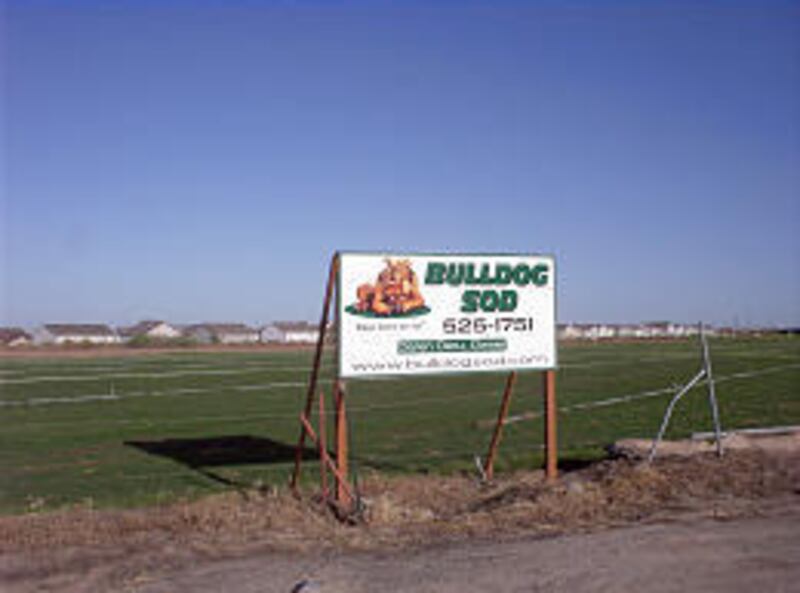
LAYTON — The Layton area is seeing more and more new houses built with bright green lawns, and it's killing the local sod industry.
The land farmers grow sod on is being bought up by housing developers and the turf laid for lawns of the new homes is being shipped in from Idaho.
"In 10 years this area will fill up pretty well and the sod market will be pushed out. I give it 10 years at best," said Daren Deru, owner of Bulldog Sod in Layton.
Troy Thompson, owner of Canyon View Sod Farm in Syracuse since 1998, lost 30 acres this year to a developer.
"The guy who owned it made more selling it than from farming it," he said.
It's tough to retain the plots he farms on because of the developing craze. He can't afford to buy the land himself because it has become difficult to make a profit with sod farming.
Business for local growers is so poor that many, like Thompson, farm sod only as a side job to supplement their income, or as a hobby.
Deru also pointed out that the development boom has increased competition for pressurized water. Farmers have to work around restrictions on their use because domestic use is a higher priority for the water companies.
Idaho farmers own their land and can get all the water they need. The reduced cost of growing the turf means they can harvest it and move it up to 150 miles at the same cost it takes to grow it here, Thompson said.
The grass from Idaho is less fresh, but large quantities can be bought for a few cents less per square feet than from local farms.
Ned Nalder, who manages Aspen Sod in Layton for his brother Bruce, says he's tired of the competition. Over the past 30 years they've sold off 25 acres to developers and are now entertaining offers on their remaining six acres.
To keep his business going Deru said he has to be creative with his leases. Farmers need at least a five-year commitment from the owner, so Deru asks to be compensated in the lease if the owner decides to sell before the lease is up.
He also tries to maintain several different plots so he doesn't have close shop if an owner does decide to sell. This means more work but he has few options. When Deru loses a plot, finding a new one is difficult.
The Adams family, of Adams Acres Sodding Farm, owns their land and isn't worried about the future. According to John Adams, son of the owner, the family's farm land, originally purchased by his grandfather more than 50 years ago, is held in limited partnership by his aunts and uncles.
John's brother, James, said the family gets offers all the time to sell the land to developers but the family hasn't formed a consensus to sell.
"Land keeps going up in value. The price is right, just not the timing," John said.
Even if their relatives decide to sell in the future, his father's portion is enough to continue farming sod, John said.
Adams Acres stays in business by accepting the smaller jobs that other farms don't bother with. Because they own their land, the farm can afford to harvest and deliver sod for only 50 or 100 square feet, James said.
Because they turn profit by serving a niche market, John said, his family can go on growing sod indefinitely.
E-mail: akirk@desnews.com