

Screens and fences, glass walls and deep trenches — guests to the zoo might think the barriers are their protection from the wild animals. But zoo security sees it differently. The most dangerous species in the zoo has proven time and time again to be the homo sapiens.
From theft, fights, accidents and even lost kids, it's the human guests that take up the majority of security's time. And while the zoo's permanent residents have veterinary care, the animals' safety relies largely on the watchful eye of trained staff.
"Perimeter fences are federal law. But they're there, one, to keep people from getting in. That's the primary thing," said Jane Ballentine, spokesperson for the American Zoo and Aquarium Association (AZA).
November marked the two-year anniversary of the death of Hogle's only polar bear, Andy, after he ingested a blue fleece glove that was either intentionally or accidentally tossed into his exhibit. The still-vacant enclosure serves as a reminder to guests that even a common leaf could be a deadly snack in a wild animal's diet.
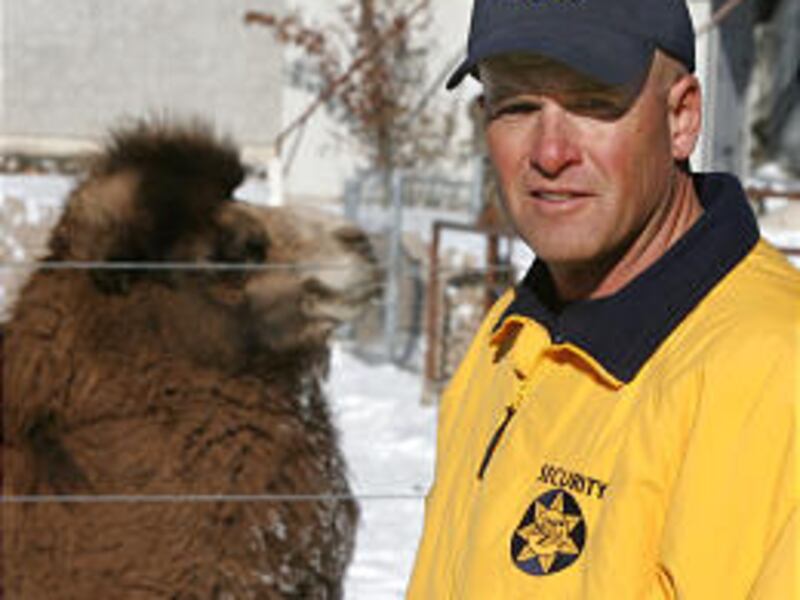
"I've seen all kinds of stuff," said Mike Johnston, head of security at Hogle Zoo. Things like a doll and a knife dropped into the hippo enclosure and kids sneaking into the big-cats building past hours. "We have to have someone here 24 hours a day."
Monitoring 720,000 guests a year on 42 acres can be quite a task. The majority of security officers at the zoo are on bikes, a program Johnston implemented about 1997.
But even with a full and mobile force, it's near impossible for security to see everything. So in each department, employees are taught how to deal with emergency situations, like problem guests, injuries, fires, evacuation, power failure, flood, animal escape and bomb threats.
"We're still working on one for an earthquake," Johnston said. "That's one of our biggest fears."
"More departments are working together to protect the safety of the animals and guests," Johnston said. "We want to protect the animals and prevent these senseless deaths."
As far as a new polar bear, the zoo plans to update the exhibit before getting a new bear. And, as zoo spokesperson Stacey Phillips says, "It's tragic because it's preventable."
"When we saw these signs and symptoms (in Andy), if someone said something or reported it, we could have saved him," Phillips said. But if there is any sort of silver lining to the tragedy, it has been increased awareness by zoo patrons. "We've seen a dramatic increase in reports now; people are reporting things like that a lot more."
Signs pointing out the dangers of feeding animals and even a posting summarizing the circumstances of Andy's death remind guests not to interact with the animals while visiting the zoo.
But still, before and after the zoo's busy season, the crocodiles are X-rayed to remove pennies guests often throw in their exhibit. And enclosures that have been built so humans can get up close to the animals, like the giraffe building, must be monitored continually because of guests' urge to feed the creatures.
"People will pick up anything and feed it to them. They don't know they're causing problems," Phillips said, noting that not too long ago, it was a popular tradition for zoos to allow people to feed the animals peanuts and popcorn. "Some people remember that's how zoos used to be. But (the animals) have very specialized diets."
Hogle Zoo is not alone. Zoos all over the world must deal with vandals. Recently, vandals caused panic at three zoos:
After vandals cut a hole in the cage of Bill, a 59-year-old male chimpanzee, the primate escaped the Sequoia Park Zoo in Eureka, Calif., roaming through neighborhoods until zoo staffers caught him that night.
At the Welsh Mountain Zoo in the UK's Colwyn Bay, three young vandals took the white rabbit from the zoo's children's farm area and threw it into the gator enclosure, where it was eaten alive by a 13-foot alligator.
Mani, a red-tailed hawk who lived in the Illinois Henson Robinson Zoo for 25 years, is still missing after a trespasser stole the hand-raised bird before releasing it into the wild.
Last summer — one of the hottest seasons for zoogoers — also had more costly incidents of vandals terrorizing zoos:
Penguins, parrots, monkeys, falcons, kangaroos, flamingoes and a vulture were prey to animal thieves last summer in zoos throughout France. Zoos were plagued by rare animal robberies that officials believe were committed to earn money reselling the unique creatures on the black market.
In July, security at the Rockhampton Zoo in Queensland, Australia, was upgraded after the trespassing and subsequent brutal beheading of an 18-month-old Joey.
Lincoln Park Zoo's ape Kien lost his right arm after he got stuck in a screen reaching for a tube of ChapStick a guest tossed into his exhibit.
Because of incidents such as this, all zoos accredited by AZA must follow a strict set of security rules and guidelines. AZA-accredited zoos are no longer allowed to sell balloons, straws or lids on drinks because the small, light-weight objects can easily land in an animal enclosure.
"Each exhibit has to be designed," Ballentine said, "so it's good for the animals, people can see the animals and also to stop someone from getting in or throwing something."
E-mail: astowell@desnews.com