

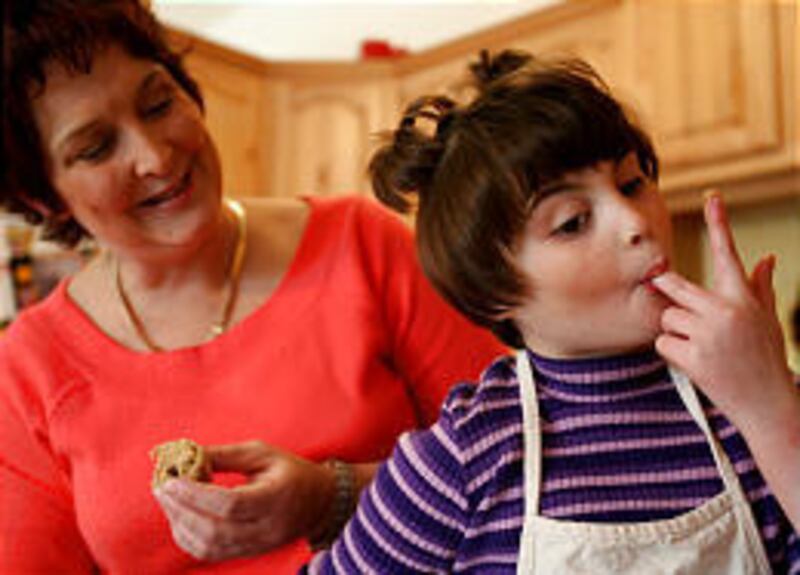
WEST VALLEY CITY — With three young daughters, one of them developmentally disabled and requiring regular, expensive medical treatments, Kim Ingledew and her husband reached a breaking point last summer.
"It was to that point," Ingledew said. "We were ready for divorce."
The Ingledews had been forced to cut out their daughter's speech and physical therapy sessions, which, at $50 a pop, had been too much for the struggling family to handle. Finally, in July, word came that Marissa Ingledew had been approved for services from the state's cash-strapped Division of Services for People with Disabilities.
"I truly believe it is because they knew what crisis we were in," Ingledew said.
Within four months, Marissa Ingledew's name was removed from a list of nearly 1,900 Utahns waiting for assistance. The 8-year-old girl began receiving Medicaid benefits, which cover her medical expenses, and her parents became eligible for home help and respite care.
But it took almost seven years, and the near-dissolution of her parent's 12-year marriage, to get to that point.
"That's the crux of the issue," said Andrew Riggle, with the newly formed Disability Community Alliance. "You have to have a family crisis to get anywhere near getting the services you need."
The Alliance, which is supported by some two dozen Utah organizations, was formed to raise awareness about the DSPD waiting list. Riggle has met with legislative leaders to encourage them to fund the waiting list, a long-simmering source of frustration for advocates and lawmakers.
The list has provoked a federal lawsuit by the Disability Law Center, alleging the current policy of awarding services to those in the most dire need increases unnecessary institutionalization and violates the Americans with Disabilities Act. The 2003 case is scheduled to go to trial in Utah's U.S. District Court later this month.
During the upcoming legislative session, the Disability Community Alliance will take a new course in encouraging lawmakers to fully fund the list for the first time ever. Rather than appealing to their morality with the "it's the right thing to do" argument, Riggle said advocates will appeal to the bottom line.
"The big argument that we are trying to make is that it makes economic sense for the state to . . . address those who may not have such critical needs but require relatively inexpensive support," he said.
Things such as respite care and day support make a huge difference in the lives of the disabled and their caregivers, Riggle said. The Alliance believes that addressing those needs early on would head off more expensive future needs.
"We can postpone or entirely prevent future need by investing relatively small amounts now," Riggle said.
Ingledew agrees that early intervention is key. Marissa will soon begin speech and physical therapy again and hopefully learn the skills necessary to get a job and support herself some day.
"We have those chances now of maybe being able to give her what she deserves," she said. "We have a chance."
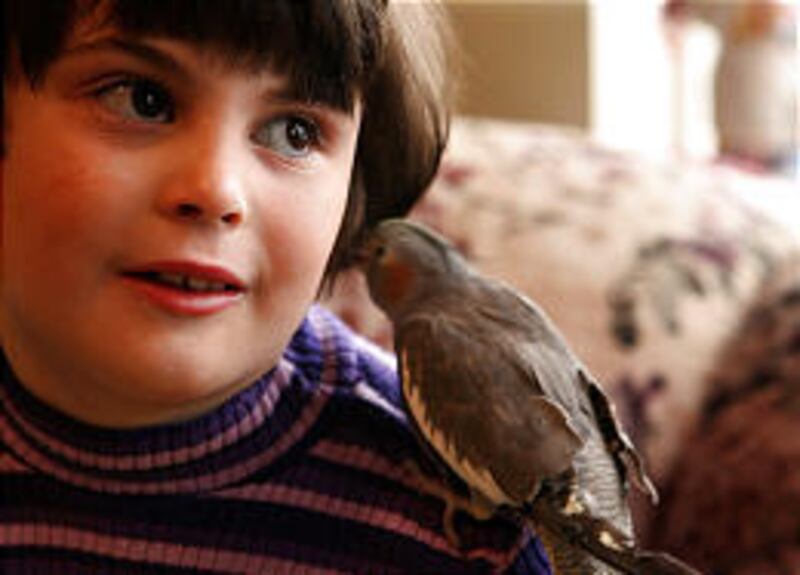
Marissa was diagnosed with the chromosome disorder, tetrasomy 18p, when she was a year and a half old. She has vision and speech problems and is prone to seizures. She didn't sit on her own until she was 1 and was 3 years old before she could walk unassisted.
Addressing lawmakers in July, Lisa-Michele Church, director of the Utah Department of Human Services, said re-evaluating the current needs assessment was one of several options to address the waiting list option.
And though the department hasn't taken a position on any one option, DSPD director George Kelner said it makes sense that offering services earlier would save state dollars.
"It seems true to me," Kelner said. "If we can prevent people from going into crisis and really focus on less expensive services earlier, we can prevent some more expensive services early on."
In his proposed 2006-2007 budget, Gov. Jon Huntsman Jr. recommended allocating an additional $1.6 million in ongoing funds to the DSPD waiting list. With federal matching funds, which would raise the amount to nearly $5 million, the amount is estimated to provide services for 285 individuals currently on the list.
The Disability Community Alliance, however, is looking for more. Nearly four times more, in fact.
Riggle said the alliance will press lawmakers to appropriate enough money to fully fund the current list — recently estimated by the Legislative Fiscal Analyst to be $8 million in general fund monies.
And although lawmakers have been supportive of the spirit behind the effort, the high dollar figure remains a sticking point.
Even in a flush budget year, like this one, there are often overwhelming monetary demands placed on lawmakers, said Sen. Sheldon Killpack, R-Syracuse.
"It's not as though people are wanting to turn a blind eye or that there is a lack of consideration, there's just a hefty request to keep everything whole as it currently stands," said Killpack, co-chairman of the Health and Human Services Appropriations Subcommittee.
Many of those on the DSPD waiting list also qualify for Medicaid, which will need $70 million for 2006-2007 just to keep in line with past years, said the Davis County lawmaker.
Additionally, Killpack said, pouring money into the division does not assure a fix once and for all.
"From a simplistic point of view, it becomes very easy to say, 'Put the money in, all of our problems will be solved,' " he said. "It's just simply more complicated than that."
E-mail: awelling@desnews.com