

PS device? Check. Camera? Check. Camcorder? Check. MP3 player? Telephone? Personal computer? Check, check, check.
For Jim Barry, those are all in the bag.
One bag.
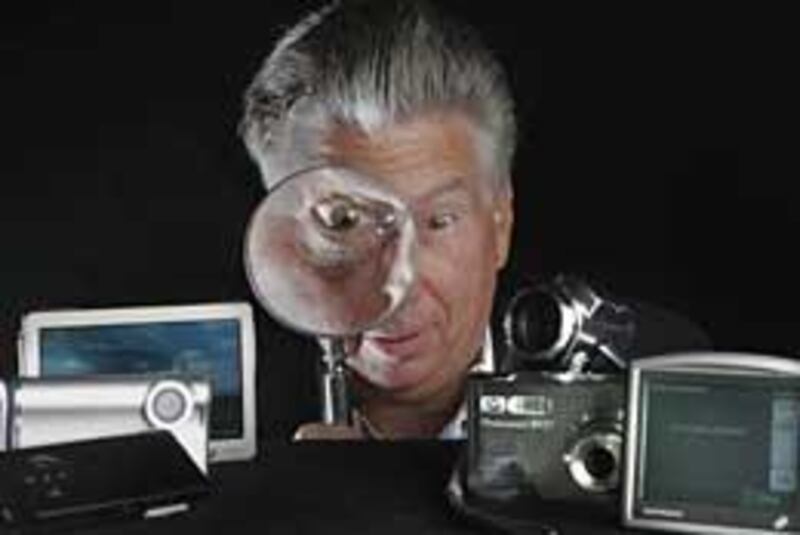
That's how much of today's tech gadgetry will fit in a single satchel, just like the one carried by the Consumer Electronics Association's spokesman during his annual nationwide media tour. What once could accommodate only a laptop computer now can tote a whole lot more, emblematic of an industry looking to pack power, productivity and flexibility into tiny devices.
"I have a bunch of things that can do just about anything you want to do," Barry said as he emptied the bag of its gadget gold.
"In this little package here, you can make calls, you can take pictures, you can take high-definition pictures, you can get on the Internet, check your e-mails and send letters. ... When you look at what you have here, which is in this case a briefcase or backpack, you have everything you need to carry on the road with you for either entertainment or information. So if you're out on vacation or a business trip, you can put all this stuff in it."
Most of the mini-but-mighty machines Barry carries epitomize some type of technology trend, often involving size, simplicity, inexpensiveness or style.
"And what allows that to happen is digital technology," he said. "It lets these get smaller, lets them get better, lets them get more power. We're into really the absolute warp speed of digital transition."
So, let's travel with Barry. Warp Factor Five should do.
Decades ago, computer geeks bragged about a single computer taking up the space of a building. Well, the OQO "ultra personal" computer is the next step toward computers virtually vanishing because they're so small.
The OQO, which is the name of both the computer and the company producing it, is a full-featured, palm-sized Windows XP computer priced at about $1,800. It's got a 30-gigabyte hard drive and 512 megabytes of RAM packed in a 14-ounce, 4.9-by-3.4-by-0.9-inch body.
A tiny keyboard slides out, but "full-fingered" folks might find a stylus or touch screen easier to use. A tiny trackball helps. And the OQO — with Bluetooth and Wi-Fi capabilities — can connect to full-size keyboards, monitors, projectors, optical drives, printers and speakers.
"I put speeches on one of these, and with PowerPoint you're in business," Barry said.
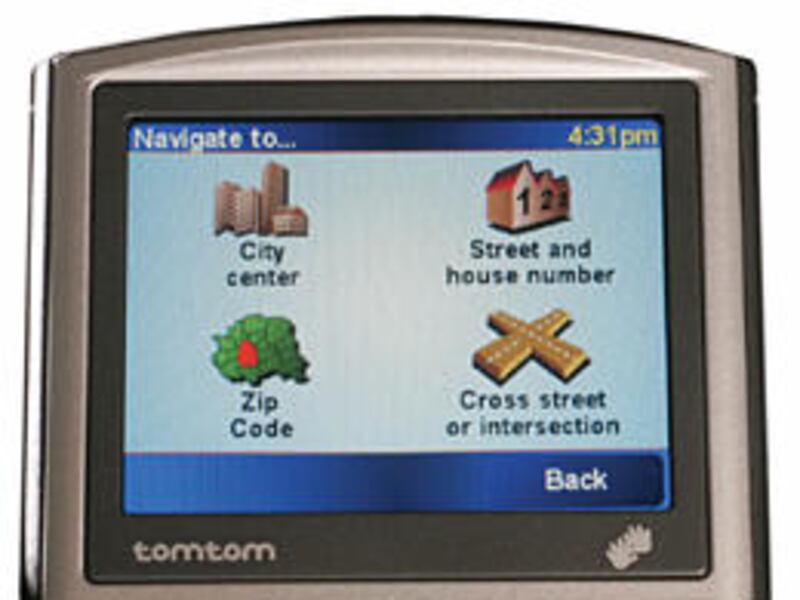
The TomTom One portable GPS system ($499) can direct you anywhere in North America.
"It's thin, light, mobile," Barry explained. But the device can speak for itself, literally, letting the user know: "You have reached your destination."
The Sanyo Xacti ($800) is a high-definition camcorder that's also a 5.1-megapixel still camera. Easily fitting in the palm, the Xacti sports a fold-out screen, the ability to record directly onto an SD storage card, a 10X zoom (100X digital zoom) and connectivity to a TV, VCR, PC or DVD recorder.
The LG Chocolate ($130) is a telephone, music player and camera designed to look a little like an iPod and a lot like — duh — chocolate. Less than 4 inches high and 2 inches wide, the Chocolate has a 1.3-megapixel picture resolution, a memory slot and Bluetooth capability.
Barry said the Chocolate has "the electronic Swiss Army knife effect," meaning it can handle phone and text traffic, music and several other tasks.
But enough about what it does. The Chocolate is all about looks.
"It's what Apple did with the iPod. It looks like an iPod," Barry said. "When you think about what Apple did to the MP3 market when they introduced the iPod, and it was essentially marketing fashion plus the simple and inexpensive software with iTunes.
"We're in a stage now where wireless phones — most of us call them cell phones — they're doing fashion and other functions to sell them. Most of us still use them primarily to talk to one another, unless you're under 21 and then you text one another."
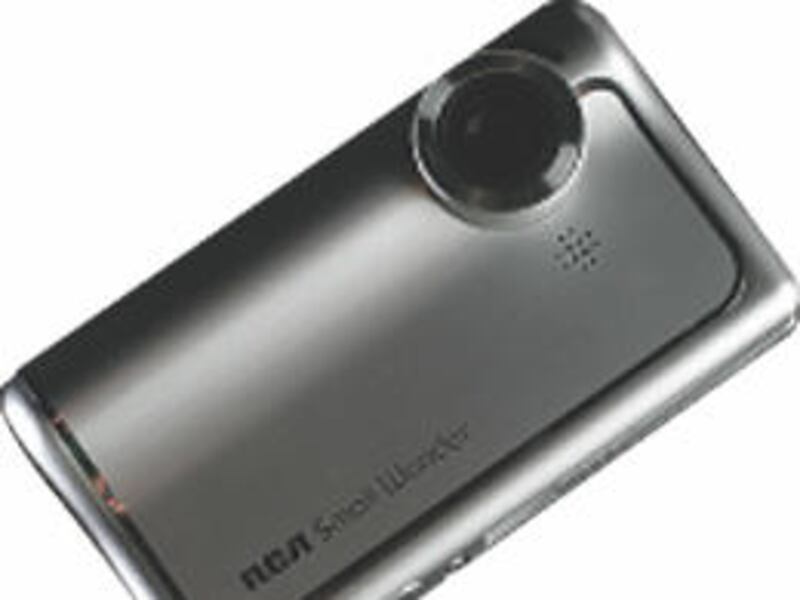
The RCA Small Wonder ($129) is a "tapeless" camcorder that uses flash memory. But it looks more like a digital camera than a camcorder, and it has very few buttons — on, off, play, delete, record — that allow the user to capture up to 30 minutes of video at a time.
"It's not for stills, and it's very simple," Barry said. "It comes with no software or anything — you just plug it into your computer. You take 30 minutes, then download it and delete it (from the camera) and then do another one."
Another option is to take it to a drug store or camera store, which can quickly burn a DVD.
The camcorder runs on a pair of AA batteries and has a 2X zoom. It automatically compresses video to make it easy to e-mail.
"This illustrates the point of being simple, inexpensive, easy to use," Barry said. "The whole idea is for it to be light enough and small enough so people will actually carry it around with them and take pictures of kids down in the park on the swings and that kind of stuff."
Another still camera option is the HP Photosmart R927 ($400), an 8.2-megapixel camera that's 3.8 inches long by 2.4 inches tall and an inch deep, weighing only 1.4 pounds. It also has an impressive 3-inch display.
"The story about this is bigger screens, more pixels, lower prices," Barry said.
Other items being touted by Barry on his 2006 tour include:
iPod speakers from Altec Lansing ($150) and iPort ($120).
The JVC Everio ($600), a hard drive camcorder. With an impressive 25X optical zoom, the Everio with 30-gigabyte memory can hold about 20 hours of video.
Slingbox ($250), which allows people anywhere in the world with an Internet connection to watch their home TV channels on their portable computer or a growing number of handheld devices.
The way-cool Celestron SkyScout "personal planetari-um" ($400). This handheld uses GPS technology to identify more than 6,000 stars, planets and constellations and provides information about the most popular ones, including more than 200 audio descriptions.
Running on two AA batteries, the SkyScout identifies the object it's pointed at, or, using small directional arrows, it will guide the user to a particular object. What's more, it includes text defining popular astronomy terms, text biographies of great astronomers, text descriptions of man-made items sent into space, and a USB port allowing access to a database updated with new celestial objects as they are discovered.
Tiny tech dynamos such as these are expected to boost the consumer electronics industry to $140 billion in U.S. sales this year — about $1,300 per household. Barry noted that services for those devices — satellite or cable TV, wireless phone, Internet and such — will push that overall figure to $250 billion.
"It's been up 6 or 8 percent each year the past several years, which reflects a couple of things," Barry said. "One is how integral to the way we live all this stuff has become. It has to do with how much we like what they do for us and how inexpensive some of these products have become. ... Simple, small, portable. And connected is really what a person can be now, no matter where they are."
E-mail: bwallace@desnews.com