



Playground games weren't as fun for Don Beatty as they were for other children.
Beatty, now the principal of Sunset Elementary in Davis School District, spent a number of his elementary school years as the only Caucasian student on the Crow Indian reservation in Montana.
"I was the only white kid. It was two miles from Custer Battlefield, and I'm blond — so guess what game we got to play," Beatty said.
In their playground games to conquer Custer, Beatty said he got consistently creamed.
"They were brutal, they would put rocks in their fists, and I would get punched and pushed down. Today they would be safe school violations," he said.
But Beatty did become a fast runner and a great hider. He spent a lot of time underneath the skirting of a portable classroom at the school.
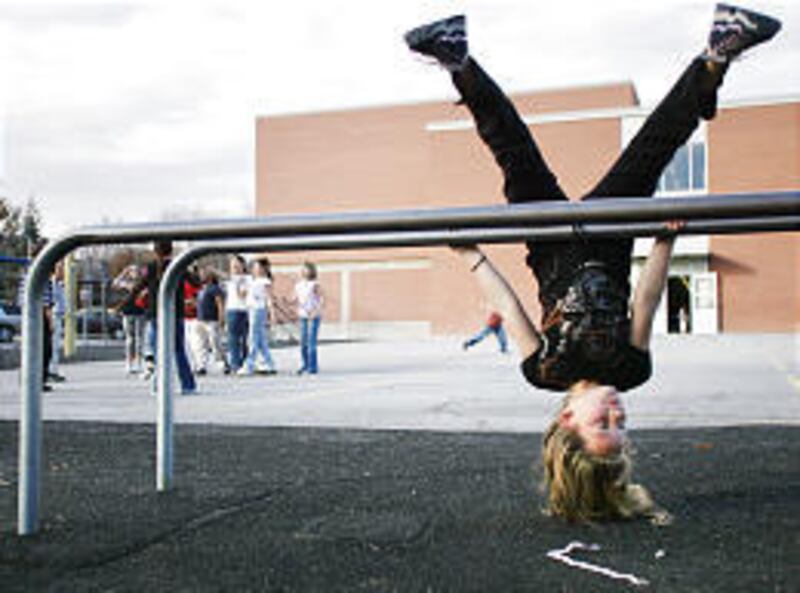
Now more than three decades later, playgrounds are a lot safer.
"Antiseptic would be the word for it," said John Erlacher, principal at Mountain View Elementary.
With cushy playground floors, encased slides and safer jungle gyms, students are less likely to incur cuts, bruises and broken bones. Swings on school playgrounds have also become rare because of safety issues.
But now school officials have started banning traditional games in the name of keeping students safe.
Officials at a number of schools both nationwide and along the Wasatch Front feel that tag, flag football, dodgeball and even Red Rover carry safety risks that they don't want to take.
"Tag becomes hit, and hit becomes fight," Erlacher said. "We try and encourage as much as possible those non-contact games."
JoAnn Price, principal at Washington Elementary in Salt Lake City where contact games are also avoided, said it takes monitoring to keep children from engaging in sports like tag, since it is one of the favorite games.
"What usually happens is they start out with kids running after each other and that's fine, but when they actually start touching each other, that is when we have a problem," she said. "A student misinterprets a touch for hit, and someone wants to strike back — it's really fun until they strike back."
But other education leaders say contact playground games can be managed and are an important part of growing up.
Beatty said when schools take the games away, they rob students of the opportunity to learn life skills like socializing, good sportsmanship, getting along with others and playing with some restraint.
"We don't want them playing extreme volleyball off the roof or extreme dodgeball on top of the building, but if you don't give kids a chance in school, when will they ever get it?" Beatty said.
He said if students don't play nice, you don't take the game away — you teach them how to play nice.
"Now playground equipment is better, there is more supervision, and if anything we should be giving kids more opportunities to play those types of sports, not taking them away," Beatty said.
Though opinions vary among school leaders about playground rules, they say the games haven't changed much over the years.
Though many schools have added running tracks, and students do more jogging or walking for exercise at recess, the old school games are still alive and well.
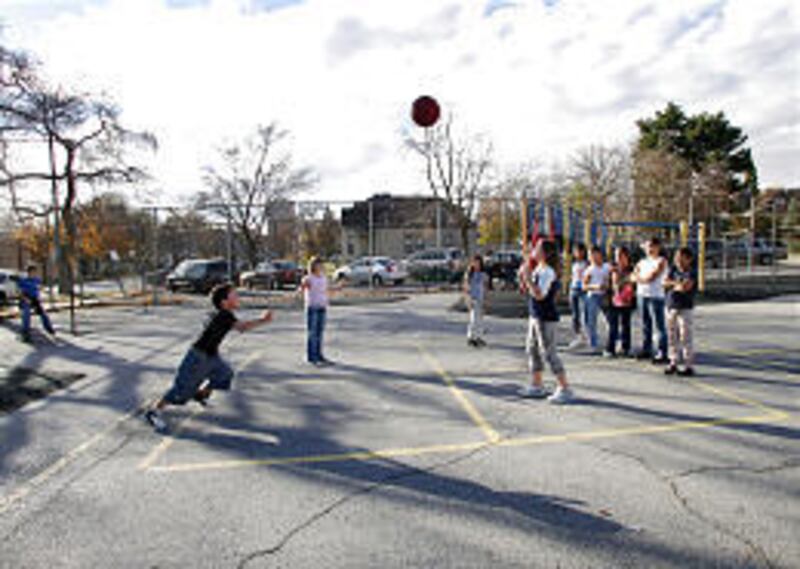
Tetherball is still one of the most popular. Four-square and soccer are still big favorites, and tag, "boys chase girls" and other variations of the game are still common at those schools that allow it.
Beatty said at his school it will continue to be game-on when it comes to a few of the traditional contact games.
"Sure there are risks, but risk is manageable," he said. "It's all in terms of management of that risk —schools who ignore it pay the price. Schools who manage it do really well."
E-mail: terickson@desnews.com