

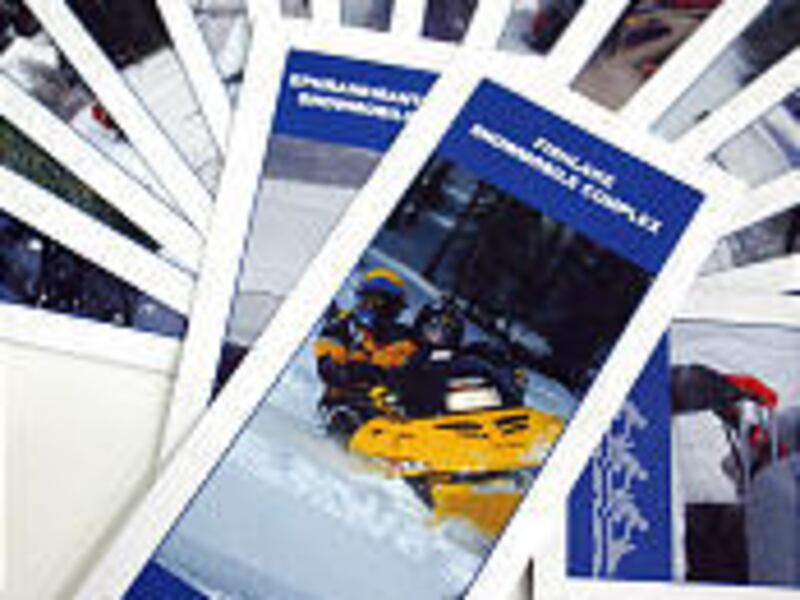

Going snowmobiling? Want to make sure you're on the right trail?
There are 17 new snowmobile trail maps that have been redesigned, reprinted and are now being reissued — for free.
The new maps show the 1,200 miles of state-groomed trails, along with some of the trails being groomed by others, such as the U.S. Forest Service.
The old maps, nine of them, were bulkier, harder to read and cost $2 each.
"The new ones, in order to get the detail we wanted, and to get all of the areas covered, we had to increase the number of maps. They're also a little smaller, so they'll be easier to handle while out on the trail," said Fred Hayes, off-highway vehicle manager for the Utah Division of Parks and Recreation.
There were some problems late last season with disabled groomers. Some of the trails were being groomed less frequently than they should have been.
Hayes said steps were taken over the summer to correct the problem.
A new, larger groomer was purchased for the North Slopes of the Uinta area.
"This one is the same as on the south side, which will make for more seamless trails," he explained.
The machine that was grooming the North Slope trails will be used as a rover to fill in for any of the machines that might go under repair.
According to Hayes, the most popular riding area in Utah is the Monte Cristo area east of Logan. Second in popularity is the Strawberry Valley area and third is the Uintas.
He also noted that those going out riding should be aware of the rules.
Snowmobile drivers must be at least 8 years old. Those between 8 and 16 must have completed a training class in order to operate a snowmobile. Those 16 and older must have a valid driver's license.
All riders and drivers under the age of 18 must wear a helmet when riding on a snowmobile.
All snowmobiles must be registered for the current year they are being operated.
And, when riding, there are a few simple but important rules to follow. They are:
Always stay away from steep, open slopes. Stay in timbered areas where the snow is more stable. Ride ridges and tree lines.
Don't ride in areas with a history of avalanches.
Avoid crossing steep sidehills. If you must, go single file and don't ride below another rider.
Be aware of weather conditions and realize that they can change rapidly. Even if weather conditions are good, go prepared for a blizzard.
Always carry survival gear, even on short rides. This would include things like a map, compass, flashlight, extra food, extra clothing, first aid kit, pocket knife, waterproof matches, candle or fire starter, space blanket, tarp or shelter, whistle or some other signaling device and a rope or cord.
Dress for bad weather. That is, wear layers of clothing that can be removed under good conditions and put back on under cold conditions.
Never ride alone. Follow the buddy system and always know there the other rider is.
Watch the gas gauge. When it registers half-full, it's time to begin the return ride.
Always tell family members or friends where you are going and when you expect to return. Also tell them the type of vehicle you're traveling in and its license number.
People should not ride beyond their ability, not only at safe skill level but also with respect to physical conditioning.
All riders need to practice "zero tolerance." The penalty for drinking and riding is no different from that of drinking and driving and no less dangerous.
A single call to the state's information line — 1-800-OHV-RIDE — can offer specific information on snowmobiling as well as give current avalanche information.
E-mail: grass@desnews.com