



A California murder convict working as a car salesman at a Salt Lake dealership had his parole revoked for a local arrest, but it was months before Utah officials knew.
Cleon Jones was arrested Feb. 15 on multiple first-degree felonies after an 18-year-old woman said she was raped at gunpoint in her West Valley apartment. Originally police believed the former car salesman learned the woman's address from her credit application she filled out while purchasing a car.
Investigators later learned that the two had a prior relationship and the attack was not completely random.
However, the case does raise questions about the reliability of background checks and how quickly the paperwork catches up with the criminal.
An investigation by the Deseret Morning News shows that while the system used by the state for background checks works well, it is not foolproof. And for the system to work as well as it can, several different entities all need to work together and communicate constantly, as well as keep their records up-to-date and accurate.
"Online systems are as good as the information you put into them," said Bryan Mower, president of Western Reporting, a private Utah company that does background checks for businesses.
That information starts with the name and birthdate of the person being checked.
If an applicant misspells his name on an application, either accidentally or to be deceitful, it could change the outcome of the check.
Mower's company first conducts a Social Security check for each applicant to verify a person's name and birthdate before it runs that name for a criminal history.
"It's not a matter of just information, it's a matter of good information," he said. "We are in the job of catching people in lies when they put it on their application."
That surfaced publicly this past week as an issue in the state health department's closure of a day-care center in Herriman. Among the violations officials listed were the owner's alleged fabrication of employees' background applications to the state and her failure to submit some applications at all.
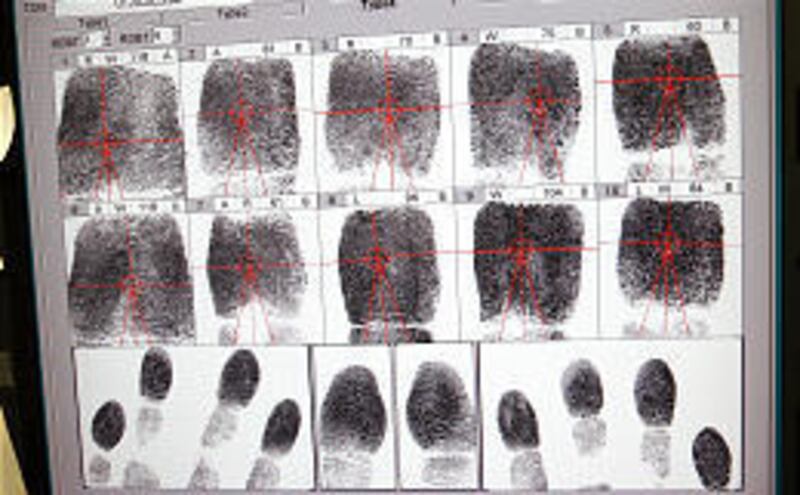
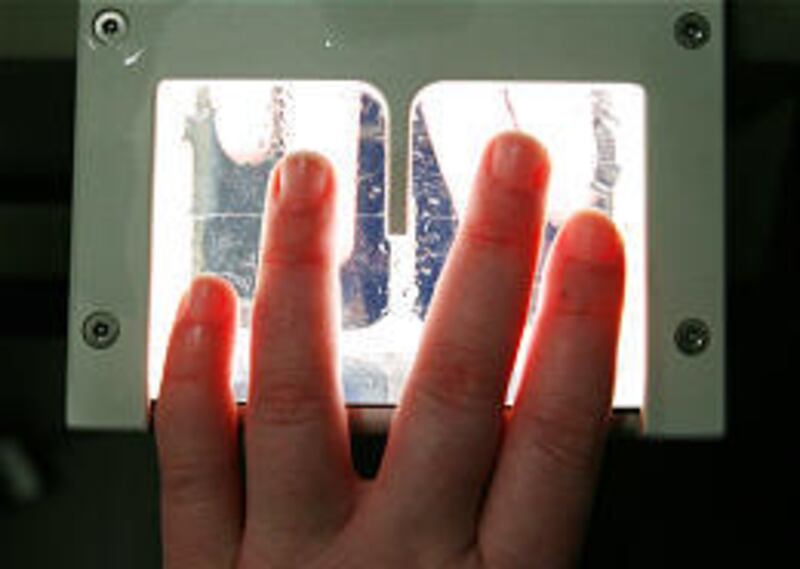
Eventually it is fingerprints — which are used by the state to find a person's criminal history and confirm identity — that can help authorities catch up with the deceit.
In the case of Jones, his application information was correct. His employer was aware of his homicide conviction. Regardless, homicide is not among the criteria for having a car salesman application rejected or license revoked.
According to state statute, a license to sell cars can be denied or suspended if the applicant has committed a registered sex offense, fraud, a drug offense or has a motor vehicle law violation such as car theft, altering a VIN plate, turning back an odometer or running a chop shop.
In November 2005, Jones, who was on parole out of California, was arrested by Salt Lake City police for investigation of simple assault. California authorities apparently became aware of the arrest almost immediately and revoked his parole. For an unknown reason, however, Utah corrections officials did not receive the paperwork notifying them of the revocation until February, after his parole was believed to have been terminated.
That incident highlighted one of the biggest problems of background checks: lack of communication among agencies.
One former Salt Lake City man who now lives in Minnesota was incensed that he was denied his renewal of a concealed weapons permit because there was an outstanding warrant for another man with the same first and last name in Taylorsville Municipal Court. The new Minnesota resident insists the Utah Bureau of Criminal Identification was primarily at fault in clearing up the situation, forcing him to correspond repeatedly via numerous letters, e-mails and phone calls — all for a crime he never committed. He eventually obtained the renewal, but not before months of delay.
His "name" remains part of the Taylorsville court's publicly accessible online data base of warrants that has not been updated since Jan. 12.
Jack Morgan, Taylorsville's city administrator, said because of the backlog he, the judge and prosecutor have developed what he termed "an action plan" to have the city prosecutor go through all outstanding warrants, identify those that can be dismissed and others that should be pursued.
Morgan said people "have to be accountable for the things they do" and must show up in court when summoned, but he said no one should have a warrant on his or her record if a case has been cleared.
"If we have inaccurate information, usually we can clear that up in a day or so, but we need to have somebody prove to us that it's inaccurate," Morgan said.
The 'honor' system
Another potential pitfall in the system is that some employers require only an initial background check.
When car salesmen renew their licenses, there is no additional background check as long as two years have not elapsed since the last renewal. They are expected to truthfully answer questions on their renewal applications whether they have been arrested recently.
Teachers and other public school district workers must undergo hiring background checks, but secondary checks are not required unless someone gets work in another district. Theoretically, someone with a clean record could get a job working with children, begin committing crimes and go unnoticed in the educational system until police and the court system raise red flags.
"Since we don't do a secondary background check, we rely on police departments to inform us about that," said Jason Olsen, Salt Lake City School District's spokesman.
"Typically what has happened in the past, when a police agency learned this person is a teacher and they have it in the back of their minds this might affect his or her job, they usually communicate with the Salt Lake City Police Department and they communicate with us."
Mark Peterson, public relations director for the State Department of Education, said educators and others within the education system who might have "significant unsupervised access to a student" must be fingerprinted for a background check as a condition of employment.
"That includes a teacher, teacher's aide or anybody working for a school district," Peterson said.
This also applies to student teachers, substitute teachers and employees at certain private schools who enroll students who get Carson Smith scholarships (funds for special needs).
Olsen added that the type of checks often relate to the duties required of the job.
"There are certain areas of state law we have to look for, but we also look for things that are job-specific," Olsen said. "Take a bus driver. Besides looking for felonies, which we have to look for, we'll look into information that is relevant to a position. A speeding ticket isn't going to stop you (from getting hired), but multiple tickets or accidents are something we'll take a look at."
One Salt Lake private school, McGillis School, a culturally Jewish educational facility that serves grades 1-8, conducts fingerprinting and background checks on all employees, any new hires and "frequent" parent volunteers every three years.
Meg Leonard, the lower school director, said this precaution fits the school's philosophy and also is necessary for insurance purposes.
Fingerprints and technology
Depending on who is making the request, there are three types of background checks made by the Utah Bureau of Criminal Identification, the official keeper of criminal history information for the state's courts and police agencies.
The most basic probe searches for an individual's criminal history in Utah, as well as any outstanding warrants — both local or anywhere in the country.
The second tier seeks criminal history in Utah and six additional states. Among the kinds of background checks this is used for are car salesmen licenses, licenses for car dealerships, salvage yards operators and auto crushers.
BCI's most thorough scan for wrongdoings incorporates a full FBI background check. When it is conducted on a person for a non-criminal justice issue, it is because it is required by state law. These probes delve into the criminal history of educators, real estate agents, mortgage loans officers, security guards, pharmacists, nurse practitioners and massage therapists.
"We compile information sent in to us by police and sheriff's offices," said BCI manager Alice Erickson.
BCI does not reject a person's license application because of a mark on his or her criminal record. That is up to the employer. BCI simply compiles and distributes the information that is given to it.
"They send in a fingerprint card or a misdemeanor citation with fingerprints on it. They're put into a criminal history," Erickson said.
If there is not a record of previous arrests, BCI creates a file that retains the fingerprint.
"If (an individual) doesn't have one, we'll establish one in that name. If they have an existing one, then we verify it and add it to the record," Erickson said.
Erickson said BCI won't add a criminal history unless verified by fingerprints, noting that people often provide false names on warrants.
Despite the accuracy of fingerprints, Erickson concedes that mistakes do happen.
"There is human error. There can be 'fat fingers' where numbers are mixed up on the keyboard. On our records, we do have a stamp that says this is up for review and challenge," she said.
Although Mower's company does not conduct fingerprint-based checks, he contends businesses like his have embraced the current technology available, even more so than the state. His background checks include 41 states as opposed to Utah's seven-state check.
Western Reporting has more than 1,200 clients, mainly businesses or corporations. In addition, he has a lot of "walk-in" customers seeking information, for instance, about a nanny they may be hiring or someone they met through Internet dating.
Mower stressed private companies like his are not in competition with BCI but act as a supplement. Both have the same goal of keeping criminals away from places where there is the potential for them to commit more crimes, such as child sex offenders out of schools or Little League sports or fraud and forgery convicts away from jobs where credit card numbers and checks are frequently available.
The paper trail
Aside from fingerprints that are used to track criminal history, warrants issued on unresolved criminal justice problems often become part of the background check.
They, too, rely on a system that requires expedient record keeping and timely communication. BCI receives updates regularly from the state and justice courts on warrants, either electronically or in a few cases, via "snail" mail.
Officials concede that failure to keep those records updated can mean a trip to jail even after the person has satisfied the demands of the court.
"I can't say they won't be arrested," Erickson said. "It's up to the police agency whether they arrest them on a warrant. We're just the keepers of record. We compile them and make sure to the best of our ability that they're updated."
Weber County Sheriff's Capt. Klint Anderson said he recalls a few instances over the past couple of decades in which the paperwork failed to keep up with the person who paid a fine for a traffic ticket or other offense. The warrant still showed up on the state computer.
"Normally if a person has it taken care of, they're smart enough to keep the receipt on them."
Of course, a lack of information can also backfire on law enforcement. Just last weekend, a delayed background check in Washington County led a sheriff's deputy to unknowingly assist a fugitive in possession of a stolen car. The man was eventually arrested after a 41-mile chase involving agencies from two states.
While not without flaws, authorities say background checks are intended to serve as a quiet guardian for public safety and provide peace of mind for potentially vulnerable residents — from parents of preschoolers enrolled in day care to a single woman who opens her home to a real estate agent.
"It's improved so much from the days when I started when they sent you a book every once in a while and you had to look up the warrants," said Layton Assistant Police Chief Craig Gibson. "As long as the computer is working, we can pull it up from our cars."
E-mail: preavy@desnews.com; lindat@desnews.com; bwinslow@desnews.com