
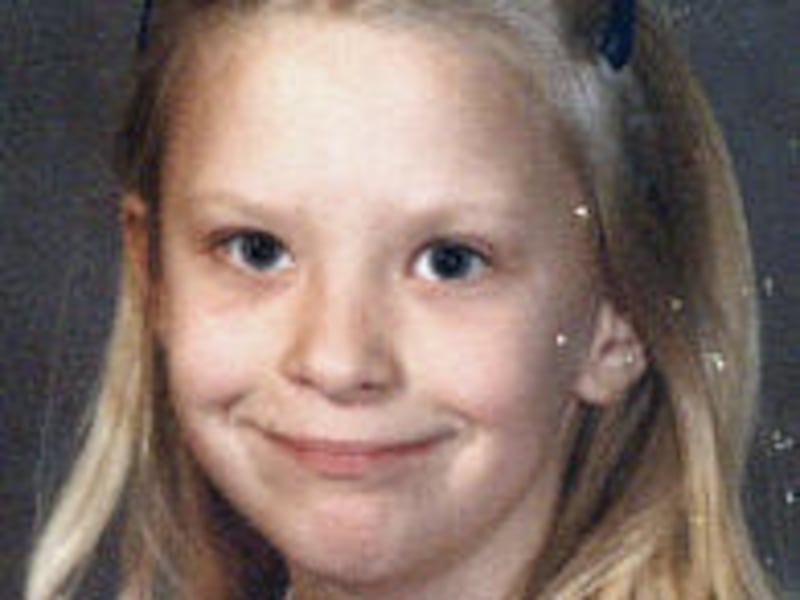
MIDWAY — Ten years after John Albert Taylor was executed for the murder of 11-year-old Charla Nicole King, detectives who investigated the case are sharing the lessons they learned.
Urging police agencies to put aside egos and turf battles and focus on the child victims, Weber County Chief Deputy Sheriff Chris Zimmerman and Lt. Doug Coleman recounted investigating King's horrific murder and what led them to her killer.
"This was a boogie man-type homicide," Zimmerman said Wednesday.
The two police officers spoke at the 2006 Children's Justice Symposium, hosted by the Utah Attorney General's Office. More than 500 police officers, child protective services workers, victim advocates and prosecutors gathered at the Zermatt Resort to discuss issues related to child victims.
"It's critical they have ongoing training so we can better serve children," said Tracey Tabet, an administrator for the Children's Justice Centers in Utah. "They're learning from their peers about what worked — what didn't — in an investigation."
In 1989, King was found dead in her mother's Washington Terrace apartment. She had been raped and then strangled with a phone cord.
Police investigating the murder got a pair of breaks that led them to Taylor, an ex-con who had been in the Ogden area just four days. His fingerprints were on the telephone, and his sister came forward to tell police about his criminal history of assaults and rapes. Taylor, who had lived in Florida where he served time for attacking a woman, was living with his sister at the same apartment complex as the victim.
Investigators questioned Taylor, who never confessed but was caught in a series of lies. He was ultimately convicted of capital murder and sentenced to die.
His method of execution became an international sensation: Taylor died by firing squad. Even today, Coleman bristles at the focus being taken off of Taylor's victim. "Nobody heard about this until the (expletive) execution, then it's a big deal," he said. "This is the kind of case that will happen in their city. They're not going to have a 30-year serial killer. But they will have a Charla Nicole. It will happen in their cities."
Using crime-scene photos, interviews with King's mother and interrogations with Taylor, the officers recounted successes and failures in the case. They urged multi-jurisdictional cooperation to solve crimes.
"Ninety percent of rural Utah doesn't have crime-scene investigation units. They're trying to do it themselves. It doesn't work," Zimmerman said.
A homicide task force and a crime-scene investigations unit came out of the King murder, with experts from different departments pitching in to help out on any death investigation. The victim advocate program also came out of the case, Zimmerman said.
"It's a team approach," he said, acknowledging that police egos still get in the way. "There are still detectives that don't want to ask for help. There are still chiefs and sheriffs that think they can handle it on their own."
People who work directly with children and victims were urged to build a rapport with families. Tabet said Utah's 15 Children's Justice Centers can help as they are set up to provide a comforting environment for a child. Professionals at the centers can help law enforcement and social workers facilitate interviews with child victims.
"Before a Children's Justice Center, a child could be taken back to a police station, to a hospital, to a CPS worker's office, back to a police station for another interview. They may end up being interviewed six, seven, eight times," she said. "Imagine how much room there is for the story to change and compounding the trauma to a child."
In 2004, the Children's Justice Centers handled about 5,000 cases involving child victims. Tabet said the cases have increased in part because of population growth as well as more education and increased reporting of crimes involving children.
E-mail: bwinslow@desnews.com