



Last week we covered flower bed problems, including powdery mildew on zinnias. This week, the focus is on disease-resistant zinnias that take the heat and avoid powdery mildew. Powdery mildew strikes zinnias worse than almost any other annual. Zinnias with the disease lose their bottom leaves, and their upper leaves are covered with gray powder, which is the mycelium of the fungi growing on the plant.
For centuries, zinnias have graced gardens and spread their glorious colors throughout flower beds and in vases, but they were not always as highly prized. When the Spanish first saw zinnia species in Mexico, they thought the flower was so unattractive they named it "mal de ojos," or "sickness of the eye."
Although I have never shared their opinion, I admit that the gray mold covering the leaves does make a sick-looking flower.
If you want to grow zinnias, you have a few choices to make.
You can grow them and let the fungus take its course, but the zinnia beds will start looking bad about mid-August. As an alternative, you could buy expensive fungicides and spray your zinnias every couple of weeks to control the disease.
If neither of these has any appeal to you, there is another choice. Resistant varieties make a good integrated pest management tool for controlling diseases and insects. These varieties naturally resist pests and they require no sprays to keep them looking good.
While there are not resistant varieties for all pests, there are excellent choices for zinnias. Interestingly enough, many new varieties owe their resistance to older varieties from remote locations. Zinnia angustifolia is considered by some to be the original zinnia that the Aztecs grew in their gardens.
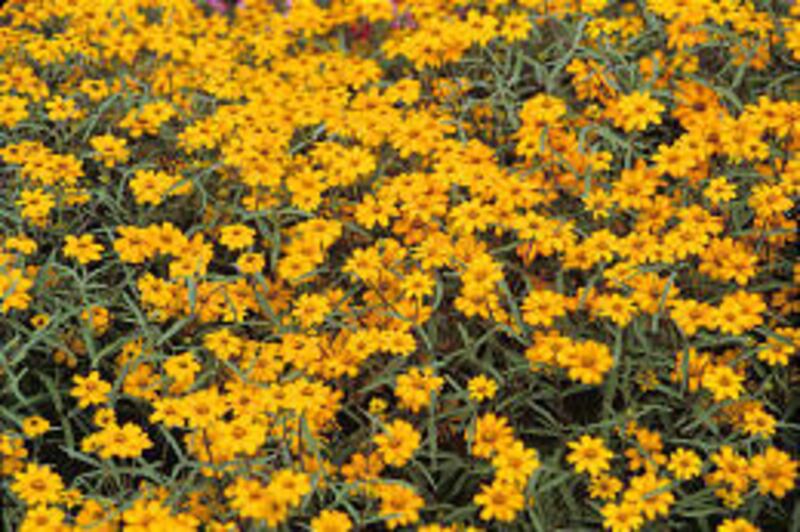
Zinnia angustifolia Orange Star (sold as Z. linearis), Star White and Old Mexico (Z. haageana) have narrow ( 1/2- to 1-inch-wide) leaves with 1 1/2- to 2 1/2-inch-wide daisy-like flowers. These spreading plants are less formal-looking than the other zinnias, but all of the narrow-leafed varieties are considered disease resistant.
One of the first was Rose Pinwheel, a mildew-resistant zinnia released in 1988. It has 3 1/2-inch single dusty-rose flowers on tidy 12-inch-tall plants. The Pinwheel series was expanded to include gold, orange, pink-on-white and white flowers.
While most tall zinnia varieties flunk the powdery mildew test, the Blue Point series seems to buck this trend. These grow 40-50 inches in height and have large, double flowers that get 5-6 inches across. Look for apricot rose, lilac, orange, bright pink, dark pink, purple, dark red, dark red with pink, white and bright yellow colors. It also comes as Blue Point Formula Mix.
In 1999 this plant was voted the Cut Flower of the Year by the American Association of Specialty Cut Flower Growers for its mildew tolerance and long vase life. Look for the seed under Giant Dahlia Blue Points, Benary's Giant, and Park's Picks.
Interspecific crosses use these as parents. Growers breed them with other varieties to get even better mildew resistance. Many new low-maintenance zinnias have been introduced in recent years. These combine the flower colors from garden zinnias with the durability of spreading zinnias.
The best new mildew-resistant zinnias were introduced in 1999. Sakata Seed Corporation released the Profusion zinnias, Cherry and Orange, and won gold medals from All America Selections — the first in 10 years as a breakthrough in breeding for zinnias.
These interspecific crosses, which came from crossing Z. angustifolia and Z. elegans, are excellent flowers that take the best characteristics from both parents. They tolerate heat, humidity, mildew and are easy to maintain as they need no deadheading of spent blooms.
Since the introduction of the first two varieties, Sakata has added White, Double Cherry, Apricot, Deep Apricot, Fire and Double Pink. The seeds also come in a Five Color Mix and in an All America Mix.
If none of these mildew-resistant varieties appeal to you, there are still ways to defeat the disease. When you plant susceptible varieties, allow extra space between the plants. Good air circulation can discourage mildew. As with any disease, avoid getting the foliage wet as that increases disease problems.
My guess is that looking at dying, mildew-covered plants will be enough motivation for you to check out these resistant varieties.
Larry Sagers is the horticulture specialist, Utah State University Extension at Thanksgiving Point.