


PROVO — For the record, BYU's final scoring drive in the Cougars' 49-24 victory Saturday afternoon over Tulsa took four minutes and 31 seconds of play-clock time.
In real time, however, the Cougars had possession of the ball for more than an hour, given that the drive was interrupted by a 53-minute lightning delay at LaVell Edwards Stadium.
With six minutes remaining in the game and a downpour in progress, referee Steve Barth of the Conference USA officiating crew suspended play and sent both teams to their respective locker rooms, citing National Weather Service reports of local lightning strikes and an approaching storm.
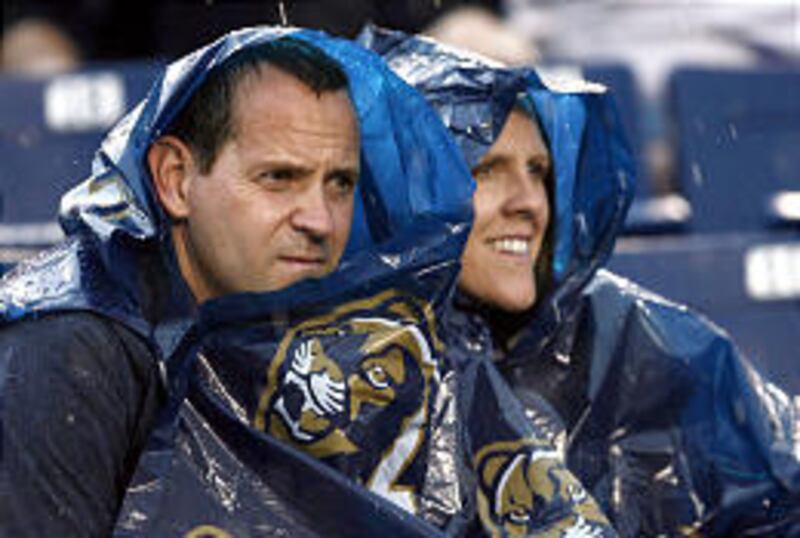
Most of the 56,000-plus fans scurried to leave the stadium, with a few thousand seeking cover under the stands and several hundred brave student-type souls content to remain in the rain. Some passed the time creating designs and messages out of portable rental chairs, while scores rushed midfield to create a momentary makeshift mosh pit — jumping, cheering and mugging for cell-phone cameras.
While the Cougars have experienced similar delays in road games (including a 1993 game at Colorado State and a 1999 contest against New Mexico), few can remember delays at games in Provo.
BYU media relations director Jeff Reynolds said a mid-1990s home game against Hawaii resulted in a similar lightning delay, but the delay came at halftime and wasn't publicly announced. Instead, the normal halftime period was merely extended to accommodate the required time off the field.
NCAA policy requires a 30-minute waiting period once lightning is considered close and a possible threat, said BYU director of football operations Duane Busby. Repeated strikes resulted in the 53-minute delay — less than half of the NCAA maximum delay of a two-hour wait.
Busby said he and other team officials meet with the referee before each game, reviewing delay policies and forwarding weather data. Also, storms are tracked by press-box monitors, showing where recent strikes have hit and their distance from the stadium.
Busby and football trainer Kevin Morris receive the in-game updates and are responsible for keeping the referee in the know. They had alerted Barth 10 minutes before the suspension.
"It's always the referee who makes the decision," Busby said.
As the delay progressed, BYU athletics director Tom Holmoe and Tulsa AD Lawrence Cunningham talked about the possibility of calling the game. However, the two schools would have to later review respective conference policies on how to handle suspended games — resumption, statistics, counting in standings and the like.
However, weather monitoring showed a half-hour window before a possible follow-up storm, so the two teams were able to conclude the final six minutes of the game.
E-mail: taylor@desnews.com