

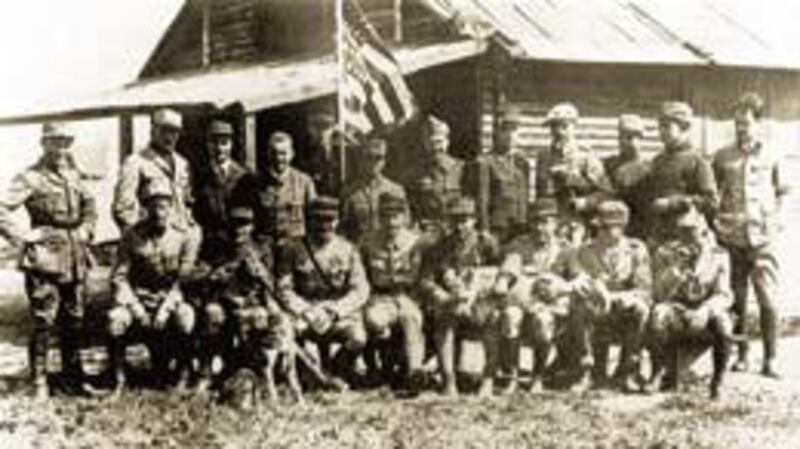
They were a group of young Americans looking for a way to contribute to the French war effort. Many were former members of the Foreign Legion or the American Ambulance Service, and a few were already serving as pilots in the French Air Corps. They seemed to embody the romantic image of a war of chivalry coupled with living the high life. This would become the trademark of the Lafayette Escadrille, which is portrayed in the current movie "Flyboys."
Origin
1916
The Escadrille American was established in April 1916. It was the brainchild of Dr. Edmund L. Gross (American Ambulance Service) and Norman Prince (French Air Corps). They persuaded the French government to form a volunteer American squadron in an effort to rouse interest in the European conflict. At this point, the United States was still a neutral nation and would not enter the conflict until April 6, 1917. The name of the American squadron — "Escadrille American" — so offended the Germans that a formal complaint was filed with the then-neutral U.S. government in December. It was soon changed to the "Lafayette Escadrille."* The original unit was commanded by Capt. George Thenault (French) and was composed of seven American pilots — Victor Chapman, Elliot Cowdin, Bert Hall, James McConnell, Norman Prince, Kiffin Rockwell and William Thaw. The unit would last for 20 months, and eventually the squadron would be assimilated into the U.S. Army's 103rd Pursuit Squadron.
*Lafayette was the French general who served with the Continental Army during the American Revolution.
 | Deseret Morning News graphic AircraftRequires Adobe Acrobat. AircraftRequires Adobe Acrobat. |
Slang
Archie: antiaircraft fire
Sausages: observation balloons
Flaming onions: antiaircraft flack protection for observation balloons
Joy stick: aircraft control
Dogfight: shoot-out between two aircraft
The mystic
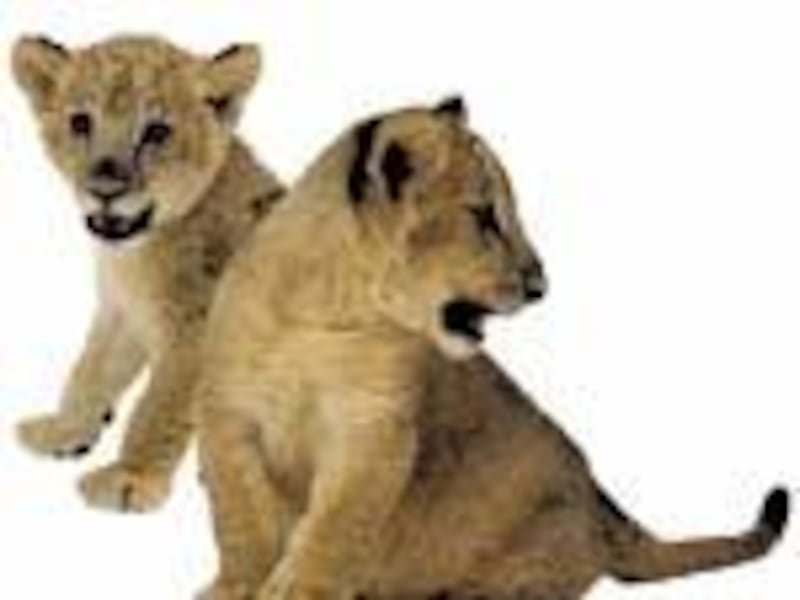
The Lafayette Escadrille would be known for its country-club lifestyle. Poker and dice games were said to be common. The headquarters at Cachy, near the Somme, had a reputation for its fine cuisine provided by a French chef who once worked at the New York Ritz. A gramophone would play an incessant combination of ragtime, fox-trot, operas and Hawaiian music. The unit's mascots, a pair of lion cubs, Whiskey and Soda, roamed the airfield.
Facts
Lafayette Escadrille
Commander: Capt. George Thenault
Total squadron victories: 57
Top ace: Raoul Lufbery (17 victories)
French pilots in the squadron: 5
First victory: Kiffin Rockwell (May 13, 1916)
First fatality: Norman Prince (June 23, 1916)
Deseret Morning News graphic UniformsRequires Adobe Acrobat. UniformsRequires Adobe Acrobat. | |
Squadron makeup
Original volunteers: 38
Previous service to France: 28 (seven as pilots)
Eastern states natives: 23
New Yorkers: 9
Western states natives: 2
Average age: 26 (ages 20 to 40)
Sons of millionaires: 11
Some college or a degree: 30
Harvard alumni: 9
Prewar flying experience: 9
Life expectancy for a pilot on the western front: 3-6 weeks
Eugene Bullard, the only black pilot, kept a pet monkey in his suit during missions.
Pilots didn't have the benefit of a parachute. An aviator's only option after being hit was to land the aircraft. Many pilots decided to jump to their deaths rather than burn in a flaming cockpit.
Raoul Lufbery
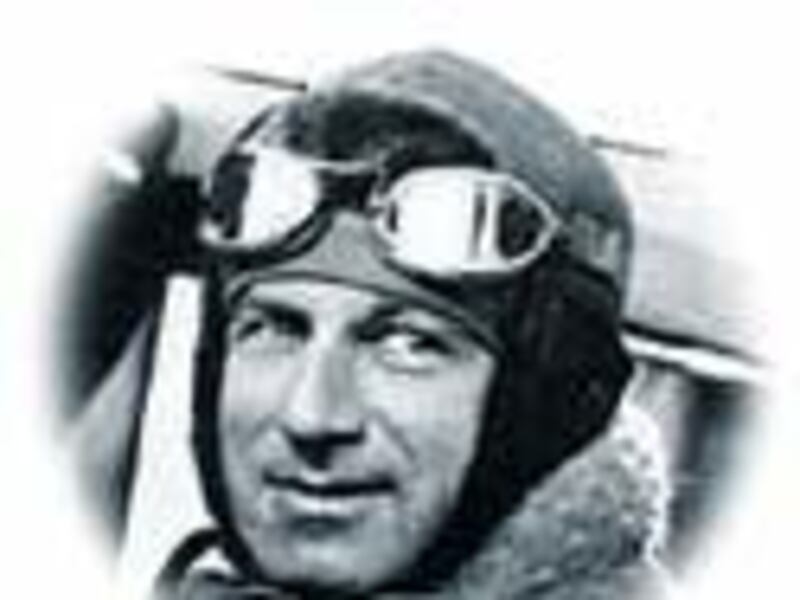
Many of the pilots who served in the Lafayette Escadrille had colorful pasts. Raoul Lufbery, the top ranking ace, was an American with French parents. He served with the U.S. Army in the Philippines and later became an airplane mechanic. His skills landed him a job with barnstormers who toured India, China and Egypt. The outbreak of WWI, in 1914, motivated Lufbery to join the Foreign Legion and later the Air Corps as a mechanic. Within a year he completed pilot training. He began his flying service with bombing sorties. Lufbery was responsible for training many American pilots, including Eddie Rickenbacker, the top U.S. ace. Lufbery was shot down in 1918 and jumped to his death from his burning plane.
Top aces, victories
France: Rene Fonck, 75
Germany: Manfred von Richthofen, 80
Canada: Billy Bishop, 72
United States: Eddie Rickenbacker, 26
Great Britain: Edward Mannock, 61