

Seventy years ago last month, the King of England, Edward VIII, gave up the throne to marry a twice-divorced American, Mrs. Wallis Warfield Simpson. I was in London at the time, and in the small office where I worked people crowded around the radio to hear his abdication speech. Two young secretaries listened to the king with tears streaming down their faces.
The king had been carrying on with Mrs. Simpson for two years, and newspapers around the world had been reporting on the affair. The English newspapers kept mum, but in the streets as well as in the drawing rooms, Edward and his mistress were a hot topic of gossip. Hundreds of U.S. newspapers arrived every day at the London offices of American companies and were read by their British employees who naturally spread the word among their families and friends. The other Americans in my office and I liked to read our newspapers on the buses and the underground, making sure we held them high enough for our fellow passengers to gaze over our shoulders at the latest stories on the king's romance.
One evening in Euston station I saw a woman pick up a copy of Time magazine at the news stand and leaf through it until she found a torn-out page. "They've censored it again," she exclaimed. Noting her American accent, I introduced myself and learned that she lived in Cumberland Terrace across the street from Mrs. Simpson. At first she and fellow residents had been excited to see the king walking around the neighborhood, but now it had become routine.
Once when I visited the Black Star picture agency on Fleet Street, I noticed a group of photos of the king's recent vacation cruise on the Adriatic Sea. "We can't use these pictures yet," the manager told me. Most were shots of Edward and Mrs. Simpson mingling with other cruise guests. Only one picture showed the two of them together—he was pulling the oars in a large rowboat while she enjoyed the ride. "Here's the picture the newspapers published," the manager said, and handed me a clipping of the king all alone in the boat. Mrs. Simpson had been airbrushed out of the picture.
A couple of weeks before the abdication story broke, I went to see "Mr. Deeds Goes to Town," the Gary Cooper film. At one point Cooper announces, "I've got to go down to Mrs. Simpson's." The audience howled. Years later when I saw the movie on late-night TV, I was surprised to discover the line was no longer there. I figured a Hollywood jokester had inserted the line to amuse British audiences.
Ipswich, a small seaside town 75 miles from London, was the focus of attention when Mrs. Simpson appeared in Crown Court to give testimony in her suit for divorce. She was granted a "decree nisi," which meant her divorce would become final after six months. Mrs. Simpson eluded reporters by ducking out a side door and getting a head start on the road back to London.
On Wednesday, Dec. 3, the English press ended its self-imposed censorship, with newspapers carrying headlines like this one in the Daily Mirror: "King Wants to Marry Mrs. Simpson But Cabinet Advises No."
At first it looked like the country might be heading for a showdown. Prime Minister Stanley Baldwin adamantly opposed the marriage, and Winston Churchill and Lord Beaverbrook, owner of the Daily Express, proposed a compromise — a morganatic marriage in which Mrs. Simpson would be the king's wife but not his queen.
Less than a week after the story broke, it became apparent that government forces were gaining the upper hand, even though Mrs. Simpson had drawn front-page headlines when she announced she was willing to call off their engagement.
When she left the next day to stay with friends in France, a small army of journalists followed right along. After her departure it took a couple of days to arrange the legalities of succession to the throne by Edward's younger brother, the Duke of York. As George VI, he reigned for 16 years, succeeded by his 26 year-old daughter Elizabeth II when he died of lung cancer at 52.
Many historians believe Edward's abdication after a week of negotiations was a lucky break for Britain and the House of Windsor. Had the whole thing dragged on, the public might have lost confidence in their rulers.
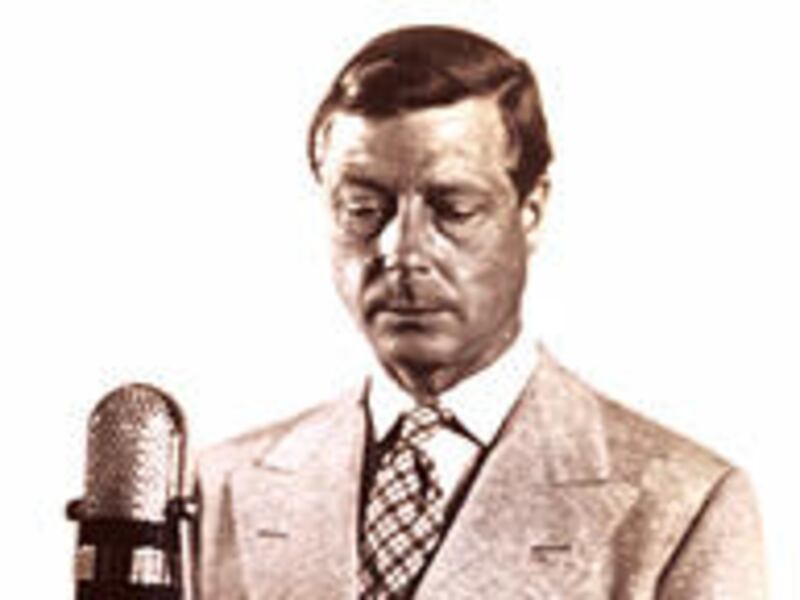
At 10 p.m. Friday, Dec. 11, just nine days after the story broke, Edward made a farewell speech that was carried by radio stations in every part of the world. Lowell Thomas described it in these words: "Take all the great speeches in history, of the stage, of impassioned orators, of great statesmen — there is nothing approaching the poignancy of a man who spoke to the Empire for the last time."
"At long last," Edward's three-minute speech began, "I am able to say a few words of my own. I have found it impossible to carry the heavy burden of responsibility and discharge my duties as king without the help and support of the woman I love.
"I have made this, the most important decision of my life, upon a single thought of what in the end would be best for all. The decision was made easier because my younger brother, the Duke of York, will be able to take my place forthwith. And he has one matchless blessing enjoyed by you and not bestowed upon me — a happy home with wife and children. ...
"And now we have a new king," he concluded. "I wish him well, and you, his people, happiness and prosperity with all my heart. God bless you all. God save the king!"
Although it was never officially acknowledged, Winston Churchill was generally credited as the author of the farewell speech.
Shortly after the abdication, word leaked out that months before the crisis Prime Minister Baldwin had ordered M15 of the British Intelligence service to make a thorough investigation of the life and loves, past and present, of Wallis Warfield Simpson. M15's report included an FBI investigation of the woman who was born in Baltimore in 1896 and christened Bessie Wallis Warfield.
After a divorce from an alcoholic Navy pilot by the name of Spencer, the future Duchess of Windsor had a two-year affair in Washington with an Argentine diplomat. Then she spent a year living with rich friends in China, where she became involved with a Chinese official. When she later took up with the king, the Chinese official tried to blackmail her.
In 1929 at age 33, Wallis Warfield Spencer married the recently divorced Ernest Simpson, the son of an American mother and British father. Simpson had quit Harvard to join the British Army as an officer in the Coldstream Guards during World War I, and after the war joined his father in a prosperous ship brokerage business.
His service as a Coldstream Guard officer gave them entree into London's Mayfair social circles. It was there that Mrs. Simpson first met the future king, who was then known as the Prince of Wales. The Simpsons soon became favored weekend guests at the Prince's Fort Belvedere lodge near Windsor Castle.
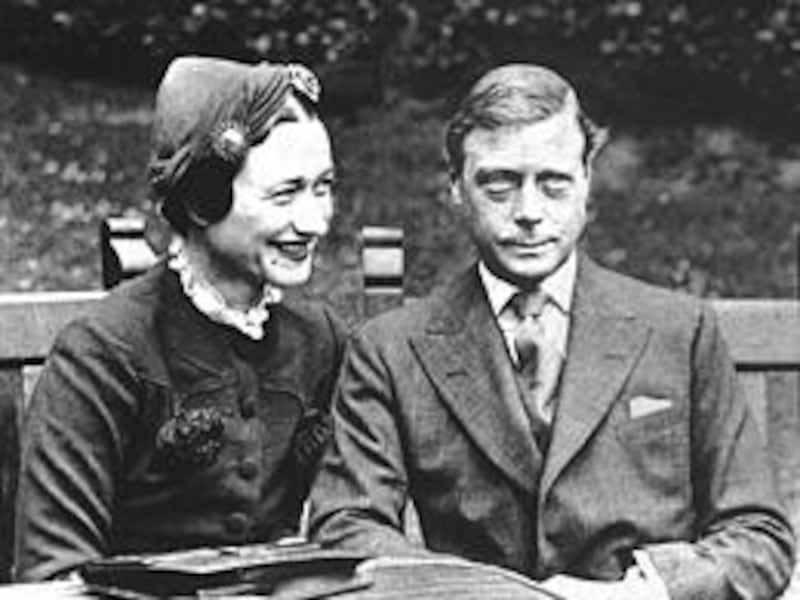
One summer when her husband was in America on business, Mrs. Simpson joined a group of guests for a fateful cruise with the king. In her biography, "The Heart Has Its Reasons," she noted that it was about this time she realized she and Edward had "crossed the line that marked the indefinable boundary between friendship and love."
Mrs. Simpson was now determined to eat her cake and have it, too, confessing to her aunt, "It requires great tact to manage both men. I shall try to keep them both."
Needless to say, Mrs. Simpson showed enough tact at least to manage Edward VIII. Less than an hour after his abdication speech, the ex-king, now the Duke of Windsor, was on his way to a six-month exile in an Austrian castle owned by the Rothchilds. His wife-to-be was living with friends across the border in Cannes, France, waiting for her divorce to become final. They held lengthy telephone conversations every day, making plans for their marriage in June.
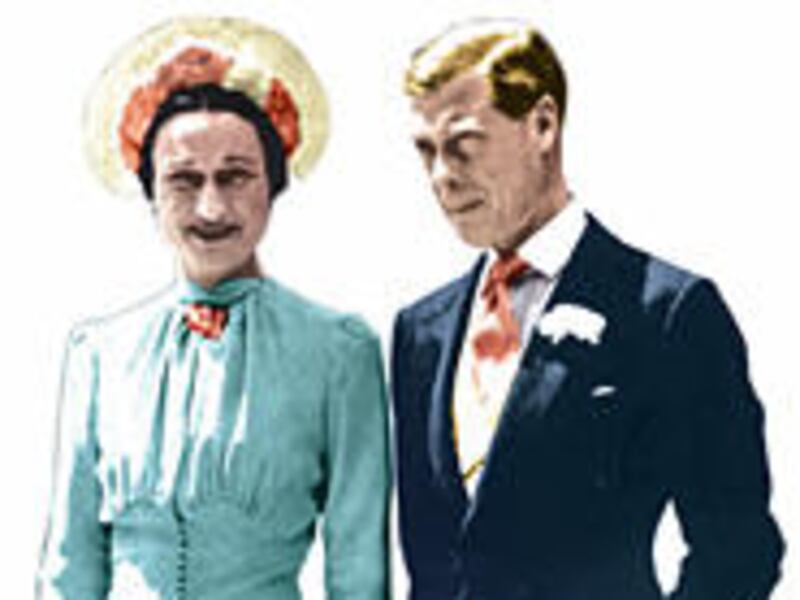
Members of the royal family were conspicuous by their absence when the Duke and Duchess of Windsor were married on June 30, 1937, in Montes, France.
The Church of England had refused to sanction their union, but a clergyman from a small Yorkshire congregation traveled to France to perform the full church service. The duke tried to have her given the title of "Her Royal Highness," but was told on the eve of their wedding that she would be known only as "Her Grace." Though he persisted over the years, the duke was never able to persuade the royal family to promote his wife from Grace to Highness.
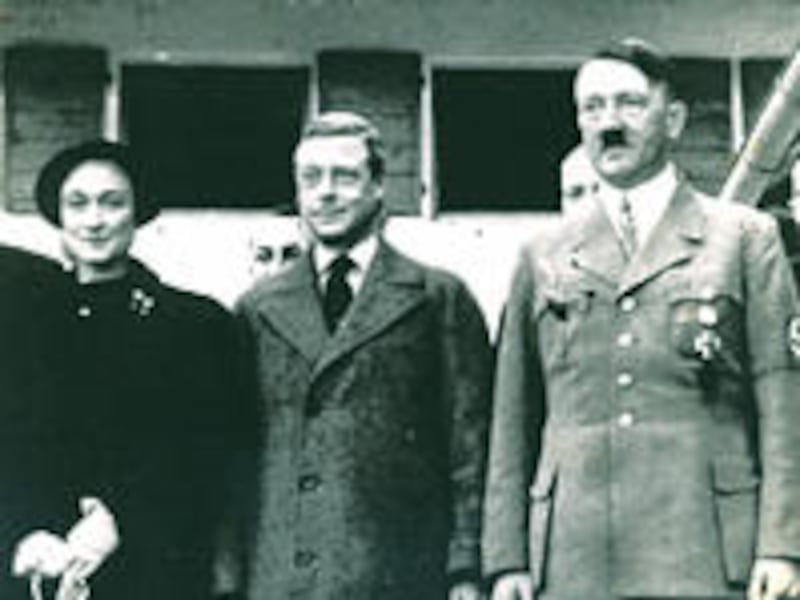
The newlyweds lived in France for the next three years, once visiting Germany as the personal guests of Adolf Hitler. The visit strengthened rumors that the duke, and especially the duchess, harbored pro-German sympathies. When World War II broke out in 1939, the duke was given a position as a liaison officer between the British and French armies. When the Nazis overran France, the Windsors fled to Portugal.
The duke was next named governor of the Bahamas. A British warship was dispatched to ensure safe passage for the Windsors across the Atlantic, where German U-Boats were operating.
When the war ended, the Windsors set up housekeeping in a showplace home in the fashionable section of Paris and another house in a suburb. It took 31 workers to run the two places — 18 in the households and 13 for the grounds. On their trips to the United States they were always accompanied by at least six staff members. Their expenses were estimated to be at least $500,000 a year.
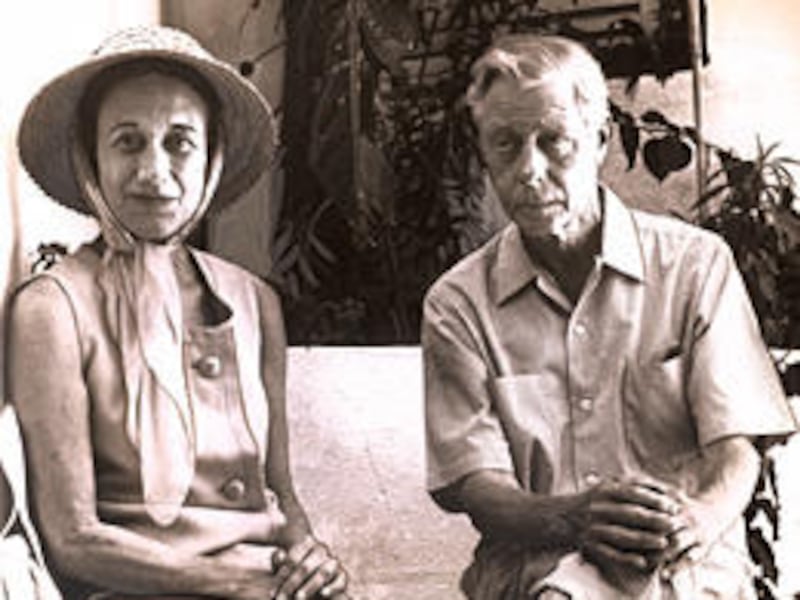
In later years the duke's health problems necessitated the addition of his personal physician to the traveling staff. In 1964 the duke had heart surgery, and eye surgery a year later. He died of throat cancer on May 28, 1972, less than a month before his 78th birthday.
On the queen's invitation, the duchess stayed at Buckingham Palace when she came to England for his funeral and burial in the Royal Cemetery at Frogmore, a few miles from Windsor Castle.
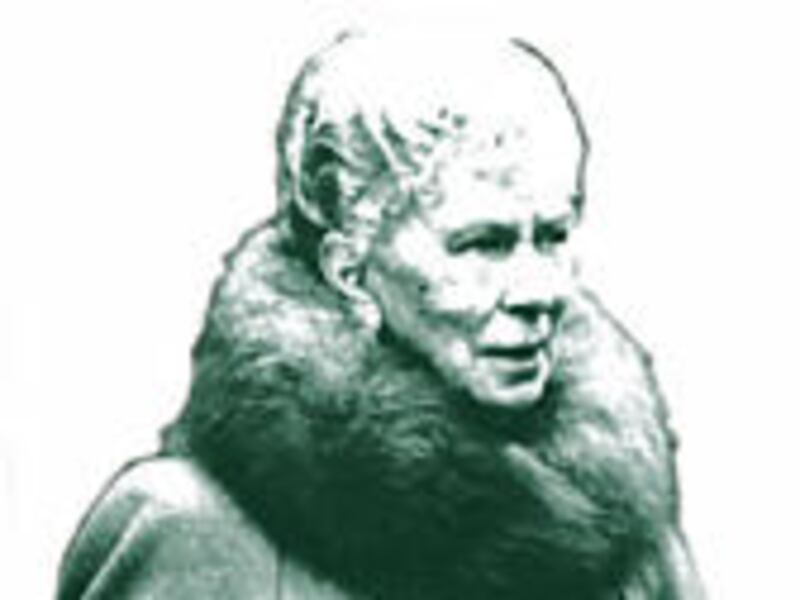
After the duke's death, the duchess stayed in their mansion and kept most of their servants. Her physical health worsened to the point that she told the few friends permitted to visit her that she wished she could die. The woman christened Bessie Wallis Warfield was almost 90 years old and senile when she did die on April 24, 1986. She was buried next to her husband in the Royal Cemetery at Frogmore.
Another chapter was added to the Windsor story just three years ago when the private papers of Walter Turner Monckton, who had been Edward's legal adviser, were unsealed by Oxford's Bodleian Library. According to scholars, the papers do nothing to enhance the reputation of Bessie Wallis Warfield, also known as the Duchess of Windsor.
The papers reveal that while involved with King Edward, she was involved in another sexual relationship with a married car mechanic named Guy Trundle. Although it was probably known by members of the establishment and royal family, the king was unaware of her infidelity.
But that wasn't all. There was a third lover in the person of the Duke of Leominster, Ireland's highest ranking peer and close friend of her future husband.
The most sensational detail revealed in the papers was her rumored relationship with Joachim Von Ribbentrop, at one time the German ambassador to the Court of St. James and later hanged as a war criminal. Upon leaving England, he is said to have sent her bouquets of 17 red carnations, one for each of their trysts.
The Duchess insisted to the end that she barely knew Von Ribbentrop, and had seen him on only a few occasions at most.
Parry Sorensen is a professor emeritus of communications at the University of Utah.
E-mail: PDSORENSEN@aol.com