


You might think of scrapbooking as a modern pastime, and, certainly, it is. According to the Craft and Hobby Association, scrapbooking and memory crafts account for the largest chunk of the craft industry today, racking up more than $2.4 million in retail sales in 2006.
But scrapbooks have actually been around for a long time. The idea of using albums to preserve important data even dates back to Greek and Roman times.
The precursors of today's modern scrapbooks were commonplace books, which became popular in the 17th century as repositories of favorite sayings and words of wisdom, says Deborah Wender, director of book conservation at the Northeast Document Conservation Center in Andover, Mass.
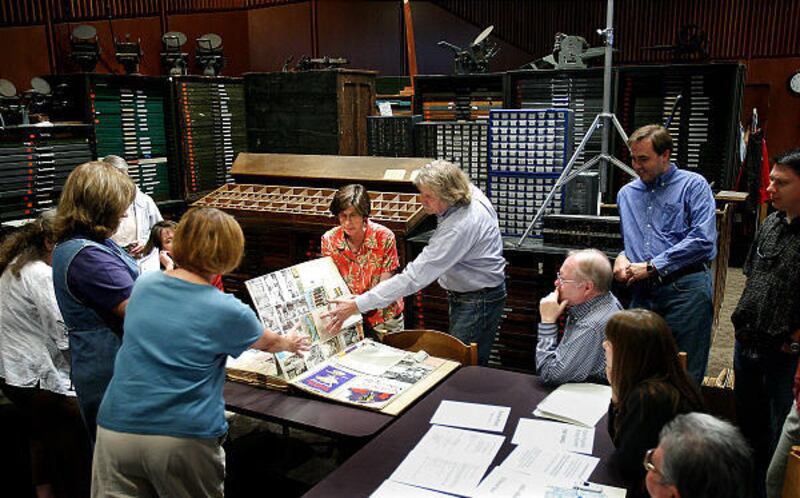
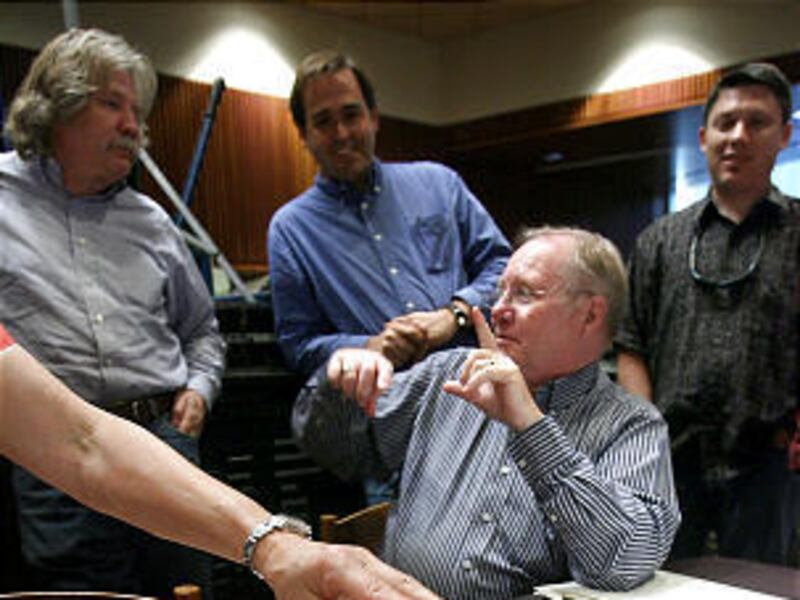
Wender was in Salt Lake City recently to conduct a workshop on scrapbook preservation for professional conservators from libraries and archives around the state. She talked about the history of scrapbooks — and the challenges they present for preservation, both to institutions and at home.
The big problem, she said, is that as scrapbooks became popular in the 18th and 19th centuries, they were naturally put together with available materials. But those materials were not necessarily made to last.
Commonplace books were often compiled just in notebooks, frequently made of brown wood-pulp paper. That kind of paper was considered high-tech in those days, but it doesn't hold up all that well, said Wender.
The first commercially manufactured scrapbooks came along in the 19th century, fueled by a surge of interest in compiling albums. That surge was brought about by a number of things, she said. The Industrial Revolution led to new printing processes, including color printing. Photography became more accessible. But equally important was the fact that "rail travel was more available, and a growing middle class had more money and leisure time for travel. They brought home scraps from their trips, and the idea was to put them in albums so you could sit and look through them with your friend," Wender said.
By midcentury, she said, "we start to see more mass-produced albums and books. There are patented page attachments and structures. A lot of experimenting going on."
In 1873, Mark Twain patented a scrapbook that featured lines of moisture-sensitive adhesive. "Use but little moisture and only on the gummed lines," he advised. "Press the scrap on without wetting it." Twain apparently made $50,000 from these scrapbooks, which were sold through Daniel Slote and Co. However, if the pages happened to get wet, they stuck together in a big mess.
That was only one option, said Wender. Others included the Ideal Scrapbook, which featured little dots of adhesive. "The idea was to get as much on a page as you can." Horn came out with a gummed-leaf scrapbook. The National Flat Back company had scrapbooks. There were scrapbooks that apparently used a system of rubber and metal bands for attaching scraps. "But I've never seen one of those," said Wender. "I don't think they held up well."
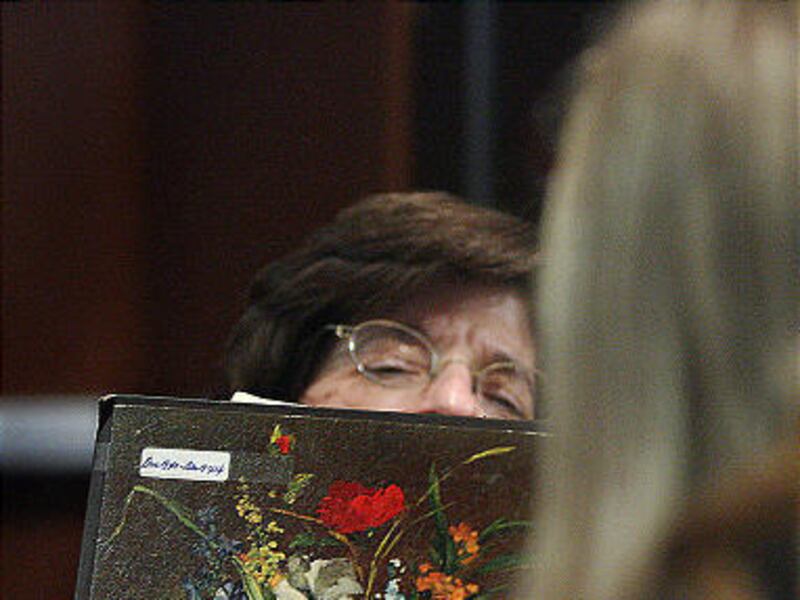
About this time, she said, leather-bound scrapbooks came along. "But the leather was mostly sheepskin, which is prone to surface peels and becomes powdery over time." Cloth and canvas were also popular, but no better. "They were being ask to flex around inflexible things. That's the problem with many of these old scrapbooks. They often had an inflexible wooden spine with pages that needed to flex, so there were a lot of destructive forces going on."
And there was the Nonpareil, which was patented in 1876. It worked better than some because it used a system of folded paper in the spine, which gave the book pages some flexibility and space.
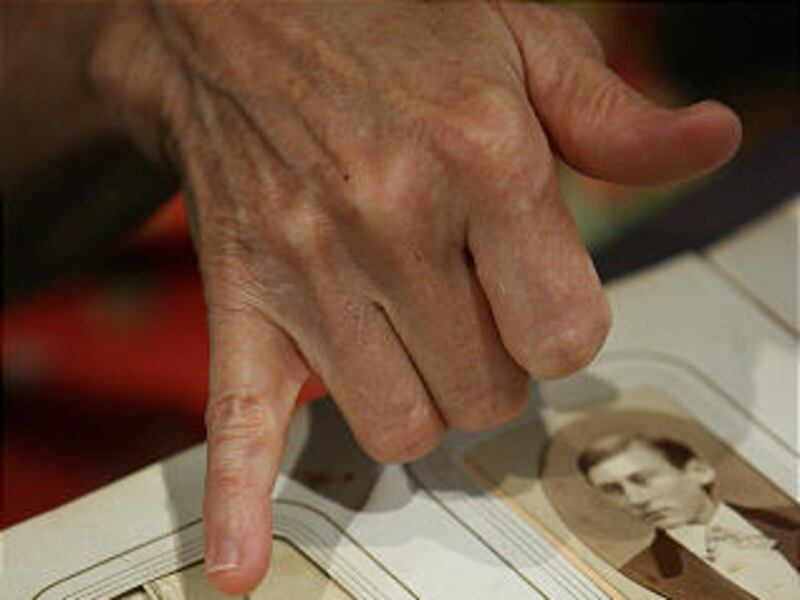
So in looking at old scrapbooks, you have to consider the structure and shape of the support pages, said Wender. Then there's the whole category of scraps. Most scraps from the 19th century are "totally ephemeral material, not made to last," she said.
These include things such as newspaper and magazine clippings, multiple-page booklets, oversize and folded material, plant materials and textiles. "Put these together on nonstable paper, where everything has a different pH balance, and there are all kinds of problems," said Wender. "You have a lot of entry points for light and dirt, gravity issues, different papers that expand and contract at different rates, a variety of adhesives, not only water-based, but also pressure-sensitive tape and chemical-based, such as rubber cement, which is notorious for staining."
Add to this the fact that scrapbooks are meant to be opened and closed more than regular books — to add materials and to look at the collections — and you might be surprised that any of these old scrapbooks have survived.
But they have, and they can be wonderful resources, but that's where the challenges of preserving them comes in.
Those preservation concerns are somewhat different for institutions than for family scrapbooks, of course, says Wender. Institutions must find ways to maximize accessibility while minimizing damage. But some of the same ideas and principles apply to family history scrapbooks.
How the scrapbook will be used is a big consideration, said Wender, as is what is most important about it. Is it the intellectual value of the content? The scraps themselves? The creator? Or a combination of everything?
The condition of the book can also play a part. Is it in the do-something-or-lose-it state? Then you will need more drastic measures. Or can it be protected to minimize further damage and left pretty much the way it is?
If a scrapbook is severely damaged or will be heavily used, one possibility is reformatting it. This can include everything from taking pages apart and putting them back together to copying the pages with microfilm, photography or digitally.
"Digital is a big issue in the world of preservation," said Wender. While it may seem like a magic answer, "it is expensive, and there are so many changes in software, hardware and reading machines that it scares me. What do I do with all my old floppy discs?"
If a scrapbook has binding issues, one option is to take it apart and place the pages in individual archival folders. If it is in pretty good shape, you may be able to spray newsprint and other clippings with archival sprays that cut down on the acidity.
Or, you can slip sheets of interleaving (a thin, archival-quality paper) in between them to prevent elements from interacting with each other. If possible, remove all pins, paper clips and other metal fasteners.
If you have family scrapbooks that need a lot of work, you might want to consult a professional conservator.
Ideally, scrapbooks should be stored flat, and you can get lignin-free heavy-board boxes that come in a variety of sizes, she said. Scrapbooks should also be stored away from light, heat and dust as much as possible.
Scrapbooks are treasures, she said. They can be important visually, aesthetically, historically, even legally. But they do require special care. "They can degrade faster than anything in your collection."
E-mail: carma@desnews.com