



When asked which is the most exotic, elusive and attractive of all flowers, many people might think of the orchid. At least one group, the Utah Orchid Society, is out to change the perception that orchids are elusive. Its mission is to promote and encourage the growing of orchids to hobbyists throughout the state.
Orchidaceae, the orchid family, is the largest family of flowering plants in the world. It contains some 880 genera and nearly 22,000 accepted species, with about 800 new species added each year. Add to that the more than 100,000 cultivars introduced since growers started hybridizing the plants in the 19th century.
I recently visited Orchid Dynasty, a floral business and specialty orchid supplier operated by Clint Lewis and his wife, Shelly Huynh. Lewis is on the board of directors of the Utah Orchid Society and has been growing orchids for 10 years.
His expertise and enthusiasm are contagious. His policy at the store is, "We cater to people who want orchids for their homes and for the hobbyists. We have a knowledge-first policy, and people are free to bring in any plants and we will try to help them." I asked him to share some of his expertise and help dispel the myths associated with growing orchids in Utah.
He agreed that there are many erroneous ideas about growing these plants.
Lewis explained, "The first myth tackled is that all orchids are hard to grow. Almost anyone who has bright, filtered light with no direct sun can find an orchid that will grow well for them. Whenever an orchid does not do well, it is usually because it is not getting enough light.
"The second myth that I hear all the time and that is totally wrong is that you should water your orchids with ice cubes. If you put ice cubes on your plants, they are probably not getting enough water.
"Water is very important in growing these plants. One common problem we see people have is that they forget to water the plants after they finish blooming. They remember to water when they have blossoms on the plants and they are always looking at the beautiful flowers. But once they finish blooming, they do not notice the plants.
"Orchids usually grow on a well-aerated mix of bark chips. When you water, you need to add enough water to flush out the salts so your plants will grow well. We usually use tepid water on our plants, and even cool water is OK, but never ice cubes. Orchid roots never get that cold in most of the areas where they grow."
Lewis mentioned another myth: that orchids are fragile and delicate. While conditions might vary inside your home, he explained that with the large number of orchids available, you can usually find one to grow inside your home.
A final myth to dispel? Lewis stated that many visitors to his shop ask if orchids can be successfully grown in Utah. "There are many different orchids that grow well here, so choose the ones that tolerate our low humidity," he said.
"Our low humidity might cause some problems, but you can overcome those."
He explained that one easy way to add humidity is to make a pebble container by filling a leak-proof tray with gravel and then adding water to the tray. The water evaporates off of the rocks and increases the humidity. Other people will try to mist their plants to add moisture to the air.
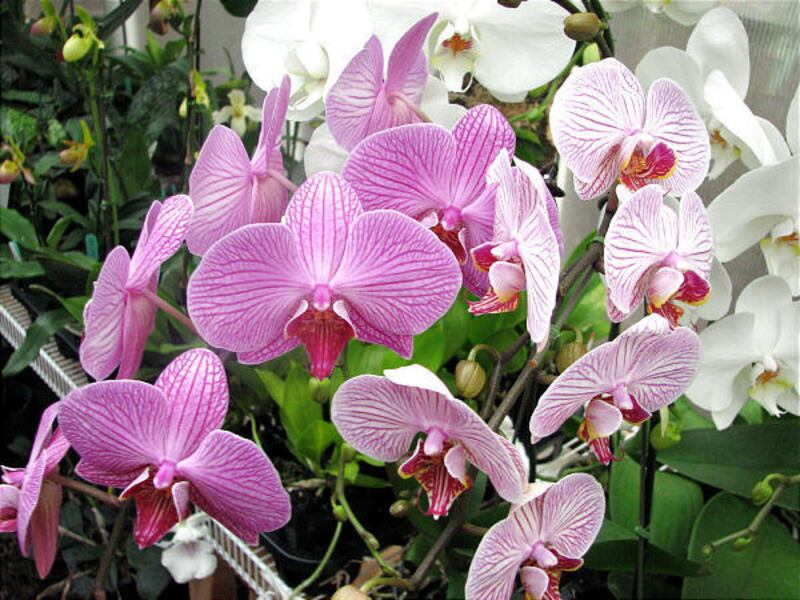
When asked for the easiest-to-grow orchids, he named a few. His Phalaenopsis, or moth orchids, were blooming profusely with various shades of lavender or white blooms. This orchid is probably the best suited to home growing and provides long-lasting spikes of interesting flowers.
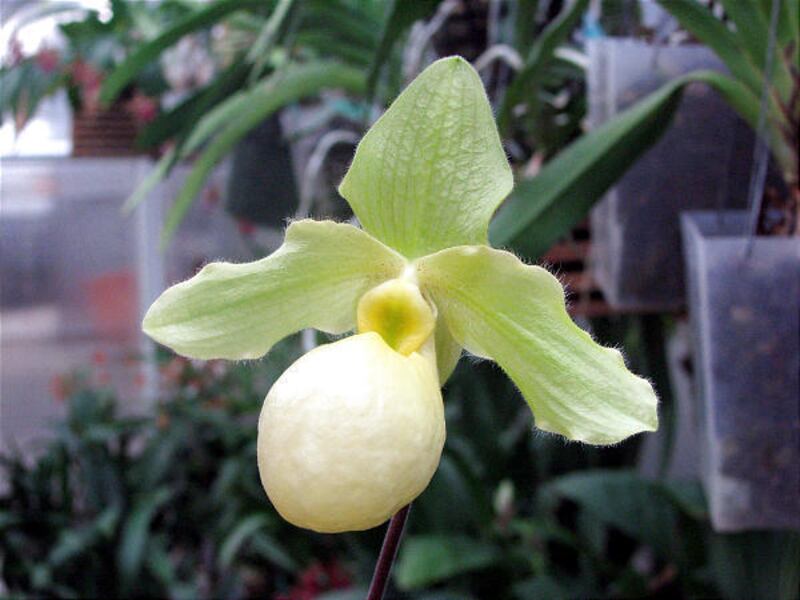
The Paphiopedilum, or slipper orchids, are also a good choice. They tolerate normal home temperatures if they have plenty of bright light. The reward for growing these is exotic blossoms that are some of the longest-lasting available.
Dendrobium, or spray orchids, are common in the retail trade. They have large, well-developed water storage organs, or pseudobulbs, that resemble canes, and they need to be planted in porous, free-draining media.
The Oncidium orchids come from a large and diverse genus from the Americas. They come from amazingly diverse habitats that range from tropical sea-level areas to high elevations in the Andes Mountains. Choose these carefully to fit your growing environment.
His final recommendations are the compact cattleyas. They are true epiphytes and need well-drained mixes to grow well. They are some of the largest and showiest flowers of any orchids and will delight anyone who can bloom them successfully.
Best of all, many of these orchids are winter bloomers and are certain to chase the gloom from our long winter nights.
Larry A. Sagers is the horticulture specialist, Utah State University Extension at Thanksgiving Point.