


When the trailer doors opened, some of Utah's newest residents got their first look at what is now their home ... and there was not a single complaint. At least, none noticed.
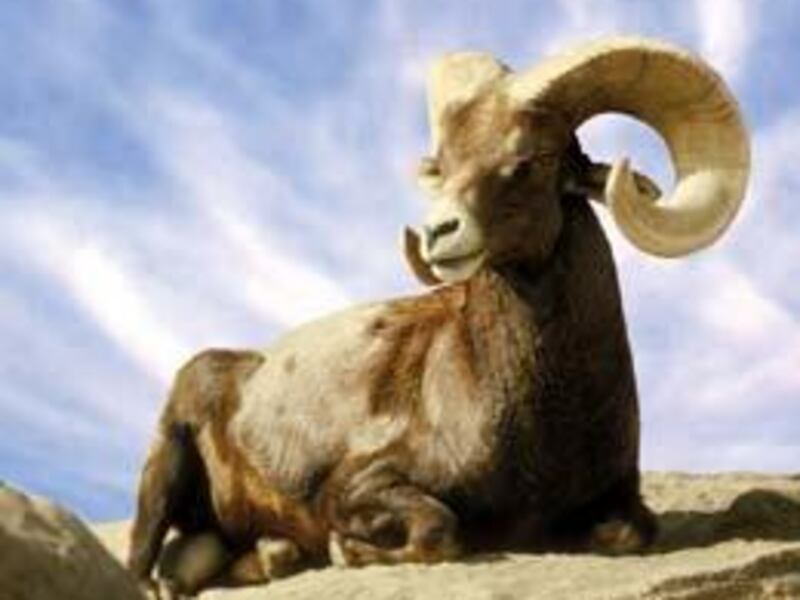
The Rocky Mountain bighorn sheep left the group of onlookers, then settled down, not far away, to dine.
They will stay in the area chosen for them. And, if wildlife biologists choose correctly, they will be part of a growing number of bighorn sheep in Utah.
They will stay in the chosen area, pointed out Jim Karpowitz, director of the Utah Division of Wildlife Resources and, at one time, a big game biologist heading up Utah's wild sheep program, "because sheep are poor pioneers."
"They tend to stay in the release area. It's their offspring that go off on their own into new areas. And what we've found is they will let us know when we've made a mistake. If the habitat is good, the herds do well. And, when the habitat is not right, they don't do well," he offered.
The 117 bighorn sheep released into Utah's wild habitat last month represent the largest number of sheep released in a year.
The first group, 42 sheep, were released in the Little Hole area near Flaming Gorge. The second group, 55 sheep, were released near the mouth of American Fork Canyon, Rock Canyon and Mount Nebo. The third group, 20 sheep, were to be released on Nebo.
Craig McLaughlin, big game program director for the DWR, said the new sheep came from Colorado and western Montana.
The release was handled by the DWR but was made possible by funding from Utah's chapter of the Foundation for North American Wild Sheep.
In fact, Utah's ballooning population of sheep — there are roughly 3,500 desert bighorn and 1,500 Rocky Mountain and California bighorn in the state — has been made possible because of funding from the federation.
Much of that funding is made possible, explained Randy Foutz, president of the Utah chapter, through private donations and the sale of special conservation tags, or permits, for wild sheep, made possible through special legislation. Last year, the federation raised more than $237,000.
This year the Utah chapter has raised $150,000 through the sale of two permits and has five more to auction off this year. A single tag in an area known for trophy sheep in the United States can go for as much as $150,000 to $180,000.
The cost of bringing bighorn sheep into Utah is not cheap. Estimated cost per sheep is between $600 and $700, which covers capture, testing for diseases, transportation and release.
The reason for the high price tag is there are typically few tags available and chances of drawing a permit are extremely slim.
Last year, for example, Utah released only 37 permits for desert bighorn, of which three went to nonresidents, and 15 permits for Rocky Mountain sheep, with no permits for nonresidents.
And, while sheep have been widely distributed throughout Utah, McLaughlin said there are still more transplants planned.
"The DWR has identified six locations in Utah where it is believed sheep once grazed, but those areas are without sheep today. Those areas hold prime habitat, and the sheep we put there should do well," he noted.
So why go to the trouble and expense to reintroduce bighorn sheep?
"They were native to Utah. I think there's an ethical responsibility. When the West was settled, people brought in domestic sheep and goats, and they were the conduit for disease. There was also some overharvesting before controls were put in place," he noted. "We've taken steps to bring back bighorn. It's important we bring them back."
Noting the loss of sheep and other big game animals to overharvesting, Utah placed hunting restrictions on big game animals in 1876. In 1899, all hunting of bighorn sheep was stopped.
As noted, McLaughlin has identified six new areas as release sites. One of the main requirements when selecting a release site is that it has been and is currently void of domestic sheep.
"Any range where domestic sheep have grazed is potentially dangerous for wild sheep. Domestic sheep still have diseases that can kill wild sheep," he noted.
With more sheep comes the opportunity for people to actually see one of the animals in the wild.
One of the most visible herds is located along the highway between Arches National Park and Moab. A single ewe was released and moved to grazing areas along the highway. Other sheep joined her over the years and now make up a group called the "Town Herd."
In November, during the breeding season, the DWR conducts tours to possible viewing sites. This is a time when rams battle to gain the attention of the ewes by butting heads. These battles are rarely dangerous, but the collision between two rams can be heard for miles.
McLaughlin hopes that as sheep numbers increase and more herds are established, more viewing opportunity will be made available.
E-mail: grass@desnews.com