

PHOENIX (AP) — A proposed new Mexican seaport could provide Union Pacific Railroad with a major business opportunity — trainloads of shipping containers of imported goods to haul to points across the United States.
But southwestern Arizona farmers say that opportunity for Union Pacific could spell trouble for them.
After rumors had Yuma-area residents wondering during much of 2006 what Union Pacific was up to, the railroad is shedding light on its possible involvement in a multicompany project to build and operate a seaport at Punta Colonet in Baja California.
Union Pacific, based in Omaha, Neb., says plans for the project are still under development but that it has started acquiring options to buy property for the U.S. portion of a 200-mile spur that container trains could travel between UP's east-west "Sunset Route" main line near Yuma and the proposed seaport.
With U.S. ports on the West Coast congested, Mexico has several projects in the works to expand existing ports or establish new ones to offload Asian imports. Meanwhile, in the United States, UP already is upgrading the Sunset Route, adding a second track through Arizona to increase its capacity to move trains. The Sunset Route main line runs from Louisiana to California.
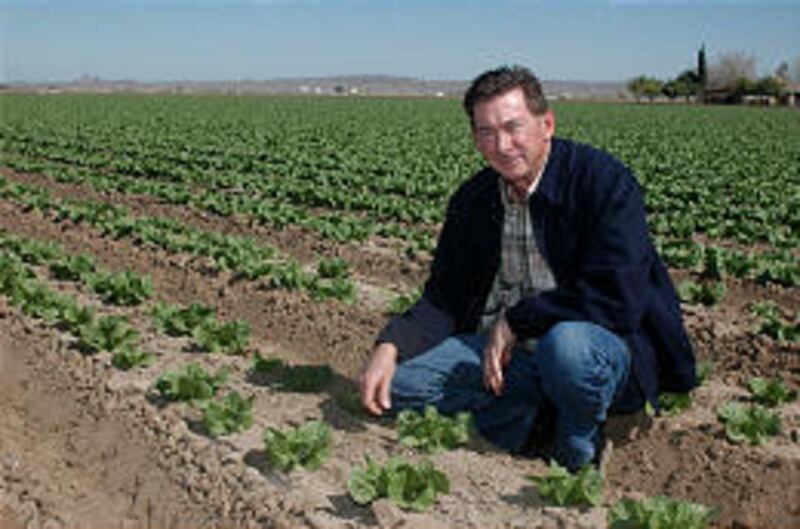
The U.S. portion of the proposed new line would need up to 30 miles of track in Yuma County in an area where farmers now grow lettuce, broccoli, cauliflower and other crops on irrigated fields between the city of Yuma and a Marine Corps base on the west and a sprawling military bombing range to the east.
Farmers and their supporters acknowledge the railroad lately has started providing some information, but they say they still are troubled. The contemplated new line would take some farm land, and trains traveling the route would disrupt their agricultural operations and pose environmental and safety risks, growers said.
"All we see now is downsides for us," said Paul Muthart, general manager of a family owned produce company.
Union Pacific spokesman Mark Davis said UP expects the Mexican government to solicit proposals for Punta Colonet this spring and to pick successful bidders later this year, with port operations starting in 2012.
As part of a group of companies submitting a proposal, UP would build the necessary rail connection on the U.S. side of the border, Davis said. "There'd have to be another company that would construct a line on the south side."
Davis said he could not provide specifics about property options being acquired in the Yuma area, the company's potential partners in the Punta Colonet project group or a total price tag.
Asked why UP wanted to have the spur connect the main line in Arizona and not further west in California, Davis said it was to have the connection east of the railroad's bridge over the Colorado River.
Also, Arizona has a strong reputation as being pro-business, Davis said.
However, Yuma growers and their supporters drew support at the Arizona Legislature when they complained about the project and Union Pacific's handling of it.
A House committee endorsed a bill sponsored by a Yuma lawmaker to make railroads disclose any land acquisitions or option purchases for rights of way and to hold a public hearing on a project's impact.
"We need to get this out in the open. I see this bill at least being a good start," said grower Robert Barkley.
Yuma has a tradition of embracing new projects, but Union Pacific didn't reciprocate by being open and frank about its intentions, said Ken Rosevear, Yuma County Chamber of Commerce executive director.
And the stakes are high, going beyond not-in-my-backyard objections, Rosevear told legislators. "This is an issue of an attack on our No. 1. industry, which is agriculture."
Davis acknowledged that rumors had long been circulating in the Yuma area regarding UP's intentions, but he said the company recently decided to provide more information, even though its plans aren't complete.
"We stepped forward and said we needed to engage the community even during this study process," he said.
Another UP representative met recently in Yuma with several dozen property owners and others interested in the project. "As soon as we have some solid information, we put that out as quickly as we can," Davis said.
Davis said UP estimates it initially would run six trains daily on the new line if it is built. The Sunset Route's daily average is 45, he said.
Muthart say their calculations, based on freight projections for the proposed seaport, put the spur line's traffic at 90 trains a day.
With farm equipment to move between fields and trucks making numerous runs to drop off harvested crops, "this isn't a minor inconvenience," Muthart said. "It's pray to God there's a break in the train traffic so you can" cross the tracks.
And with crops along the tracks, "I can imagine when I see smoke and exhaust coming out of a diesel engine, it's got to fall to the ground somewhere," Muthart said.
Davis said UP's locomotive fleet is increasingly environmentally friendly, with more than 50 percent meeting current federal air-quality standards. Those that don't have to come into compliance at certain major maintenance points or be phased out, he said.
Davis and an attorney for UP said the Yuma area could benefit from the project. There could be additional jobs from the rail line itself, and the connection to a new Mexican seaport could attract economic development, they said.
"To some businesses, that's very attractive," Davis said.
Also, farmers who depend on transportation to move their goods to market should help accommodate those systems, said Steve Hirsch, an attorney for UP.
Another concern for property owners is that Arizona law lets railroads use eminent domain to compel land sales for rights of way.
"Those are the threats being used," Barkley said.
Davis said eminent domain would be "the last resort" for the railroad. "We go to great lengths not to use it because it is better to work with the community because we're going to be there for a long time. You don't want to get off on adversarial foot."