


DEER VALLEY — The lifts are closed, skiers have all gone to their appointed evening destinations and, aside from a few scattered vehicles, the parking lots are empty.
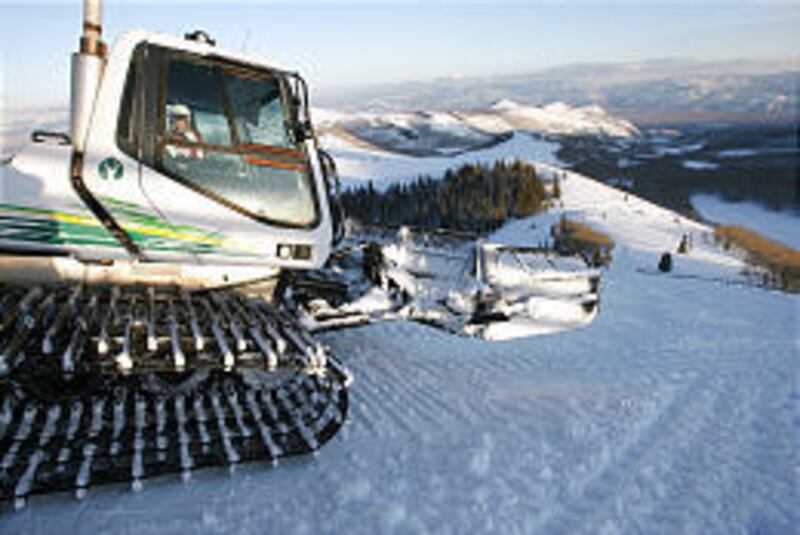
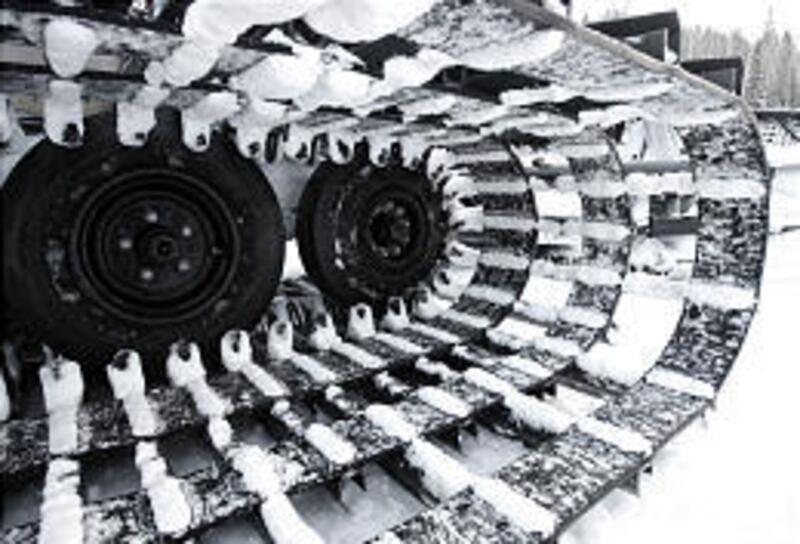
That's when the real work begins. Drivers check tracks, oil levels and hydraulic systems, then start their diesel engines. Over the next 16 hours they will run their snowcats over as many ski runs as time and snow conditions will allow.
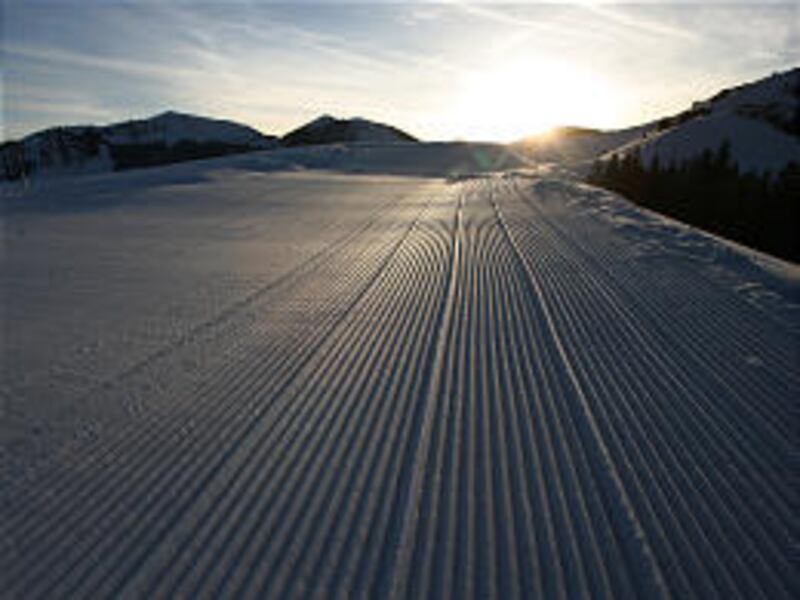
They will start on runs that are bumpy, grooved and chopped up, and leave behind runs that are smooth and very skiable.
Skiers, these days, expect to find the smooth runs. And, when they don't, "They let me know," said Chuck England, mountain operations manager for Deer Valley.
"The majority of skiers are at that level where they want groomed runs. For one thing, the snow is more predictable. Turns come more easily. Skiers feel better about their skiing when the runs are smooth. They also look better. At the end of the day people want to feel good about their skiing," he added.
All 13 Utah ski areas do some level of nightly grooming. In fact, few areas in the country don't groom.
"Sometimes we can't get to all of the runs. In some cases, when someone happens to ski one of those ungroomed runs, they let us know," said England.
"They'll tell me they're disappointed. They tell me that Deer Valley is known for its grooming and the run wasn't groomed. A lot of things come into play with grooming, like the weather and snow conditions, and there are times when we can't get as many runs groomed as we would like."
Grooming does require a major commitment on the part of the resort. Snowcats are not cheap. Also, as in the case of Deer Valley, it takes two full crews each working eight-hour shifts.
There are two companies that build snowcats — Prenots and Piston Bullys. Deer Valley has a fleet of 15 Prenots, two of which are wench cats. Each of the cats cost about $250,000.
Deer Valley started grooming runs even before it opened 1981.To introduce the resort, it hosted snowcat tours in 1979 and 1980. Many of its runs were groomed in order to give guests a good sampling of the mountains.
In the early days, basic snowcats pulled rollers, which were nothing more than large corrugated drainpipe about two feet in diameter. The rolling pipe did nothing more than compact the snow and flatten some of the bumps.
"The rollers were not very maneuverable and not very efficient. On steep slopes the rollers would often jackknife, so we were limited on the slopes we could groom," recalled England. New snowcats operate differently.
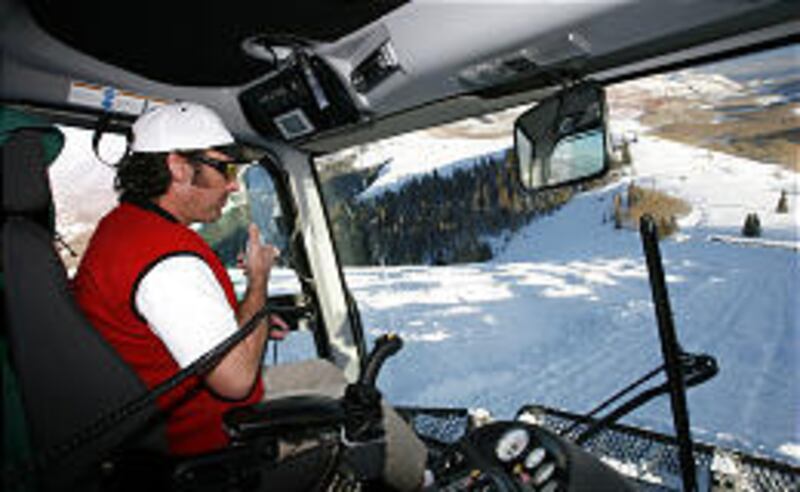
For starters, new cats are the luxury models. They comes with expensive body-fitting seats, stereo systems, and even satellite radios in the new models, heated windshields and mirrors, and two-way radios for direct communications with other drivers and managers.
There is an adjustable blade in the front of the cat that cuts down and reshapes the surface.
In the back of the cat is one of two types of implements — a tiller or a compactor bar.
The tiller is a little wider than the width of the track and has an axle that spins the round tiller up to 1,550 revolutions per minute. It picks up three to four inches of surface snow into the tiller, spins it into a powder and then puts it back down. A comb on the rear of the tiller gives the surface the smooth, corduroy top skiers look for.
"When the snow comes out of the tiller," explained England, "it is very soft. Before it can be skied it needs to set up. At first it's like walking in wet sand. Once it sets up it becomes that firm corduroy surface skiers want."
The compactor bar is similar to the tiller, but is intended for use on new snow, where the tiller is more suited for refurbishing an existing surface.
Another snowcat model is called a "wench cat."
Deer Valley has two. The wench cats are used to groom steep slopes. The cat is connected to a solid anchor at the top of the run. The wench then safely lifts and lowers the cat over the run.
England said that with the wench cats ski runs expert or black diamond runs can be smoothed.
Another part of a snowcat's responsibilities involves moving snow.
When skiers ski a run, they will actually push the show off to the sides of the run. The blade on the cat allows the operator to move it back to the center where it can be groomed.
Also, said England, "The snowcats are interactive with our snowmaking. We make snow in piles, let it cure to let out the excess water for 48 hours and then use the cats to move the snow to where it's needed."
The cats will also pull snow from inside the tree line and deposit it on runs to be groomed.
Deer Valley runs its cats in two shifts — from 4 p.m. to midnight, and from midnight to 8 a.m.
England said the first shift knocks down the moguls, grades and refurbishes the runs. The second shift puts on the finishing touches.
Runs are regroomed, especially the beginner runs, when two inches or more of new snow has fallen on a run already groomed. More advanced skiers seek out the deep powder, where new skiers struggle and find powder tiring.
The number of runs that can be groomed in a night depends on weather and snow conditions.
"One thing we do is let our drivers know that they are empowered to groom a run until it's done right. There are no quotas. Depending on conditions, one run may take longer than another. We want it done right," said England.
Which, of course, is why the resort is constantly ranked No. 1 among North American resorts in grooming in the annual SKI magazine ratings.
And why, added England, drivers will often step out of their snowcats and into a pair of ski bindings after work to sample their work, "and make sure it's up to their liking."
E-mail: grass@desnews.com