

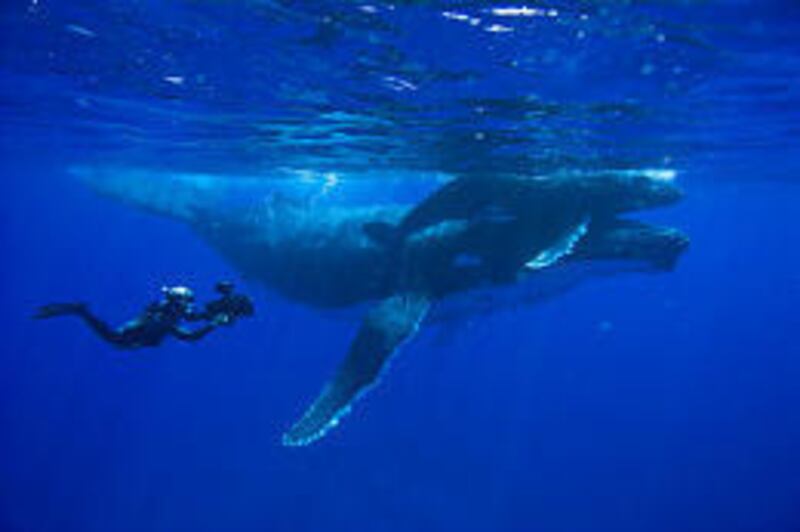
The word "spectacular" just doesn't adequately describe the Discovery Channel's new series "Planet Earth."
But how to modify it? Truly spectacular? Really spectacular? Super spectacular? Spectacularly spectacular?
More than five years in the making, this 11-part series is jaw-droppingly astonishing in its size, scope, scale and beauty. The cinematography is amazing, the wildlife photography is unprecedented, the narrative (voiced by Sigourney Weaver) is gripping.
But it's an utterly visual experience that words can't begin to describe.
Seventy-one photographers — some waiting days in freezing cold or burning heat — worked at more than 200 locations around the globe. Everything is filmed in high definition, although even on a cheap TV the product is, well, spectacular.
"To achieve this great series, we went back to the basics — had cameramen in the field longer than ever to record new behavior, new locations. So you're going to get fresh material," underwater filmmaker Mark Brownlow told TV critics in January. "But on top of that, we've applied new technology."
Advances in technology play a big part in this groundbreaking series. Photographers used an extremely powerful camera lens attached to a helicopter with a highly advanced stabilization system to allow animals to be filmed from so far away that they are completely unaware of the camera.
"I'd be very surprised if all of you in here didn't get to the end of the series and realize that what you've seen is quite special," said Hugh Cordey, who produced the series for the BBC and Discovery. "We've been places nobody's been before. We filmed behaviors that nobody's filmed before."
From mountaintops to ocean depths, from swamp to desert, from Arctic to Antarctic, "Planet Earth" travels the globe. Sunday's premiere (9 p.m.) goes "Pole to Pole"; subsequent hours are themed, including mountains at 10 p.m. and deep oceans at 11 p.m. (Two episodes air Sundays at 9 and 10 p.m. through April 22.)
Even if you're not generally a fan of nature films, "Planet Earth" will draw you in. The only caution would be for very young children, who might be disturbed by scenes of animals hunting each other, although it's not graphic.
Adults, on the other hand, will gasp at footage of a great white shark taking a seal.
TV executives are prone to hyperbole, but Jane Root, executive vice president of the Discovery Channel, wasn't exaggerating when she said, "Once every few years something comes along that isn't just television. It's far, far bigger."
And simply spectacular.
E-mail: pierce@desnews.com