

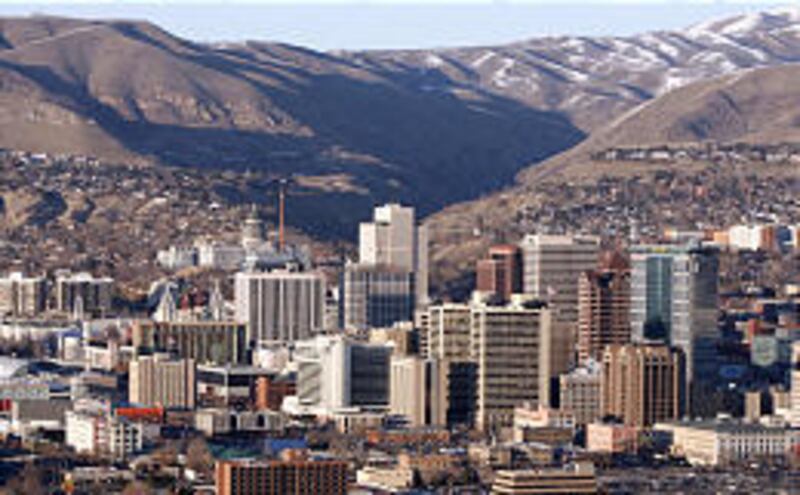

When the summit group outgrew its downtown Salt Lake City offices, it spent four years examining 70 different buildings before finding a suitable new location.
Steve Brown, president of The Summit Group, recalls scouring the downtown area — from 600 North to 700 South and 1300 East to 700 West.
"I actually physically went through and drove the neighborhoods with a Realtor," Brown said. "When we couldn't find anything at all, we started looking at places we could go through and retrofit."
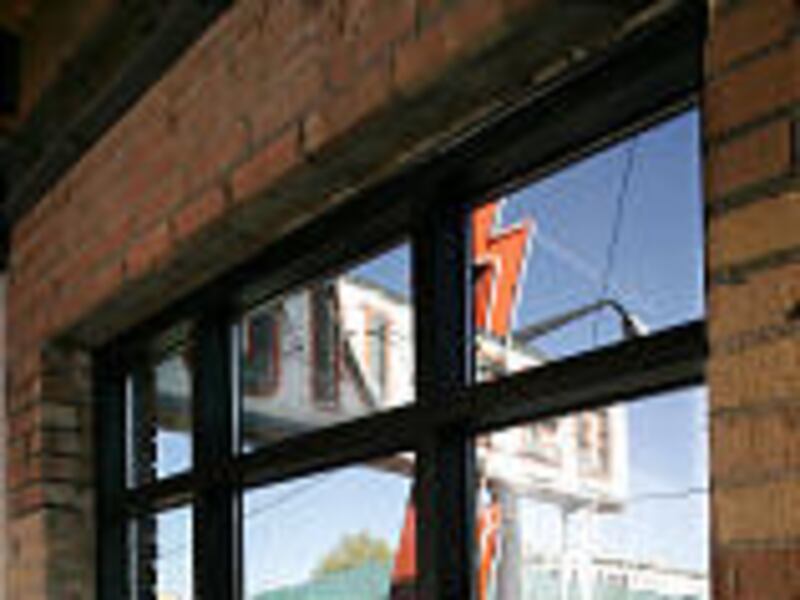
Instead of giving up on downtown and moving to the suburbs, where premium office space is plentiful, the public relations firm decided to restore the old United Electric Building, located at 117 W. 400 South, pouring more than $5 million into the run-down structure to bring it up to standard.
The building, built in 1923, had to be completely gutted. A new roof was added. Windows, wiring and plumbing were replaced. New heating, ventilation and air-conditioning systems were installed. And modern seismic standards were met.
"This was more of a warehouse than it was an office," Brown said. "I think it's unique in that we've brought the old and new together. We've got all the modern technology. We've got a brand new facility, but it still has a rustic appeal."
With premium office space in downtown Salt Lake City nearly nonexistent, The Summit Group had little choice but to renovate an old building or settle for less than premium space.
Chris Kirk, office specialist with Commerce CRG, a Salt Lake-based commercial real estate office, said most of downtown's high-end office buildings are full.
The Wells Fargo Center, at 299 S. Main, had a vacancy rate of less than 1 percent in the first quarter, while the One Utah Center building remained completely occupied. The Gateway Tower West, on the corner of South Temple and Main Street, also is 100 percent occupied. And the 170 S. Main building, formerly the First Interstate building, has less than a 4 percent vacancy rate.
"If you understand the market and you know what's going on, then you've got to get in line," Kirk said. "If you know a tenant is vacating space, you've got to be there. You've got to negotiate that space before the tenant moves out."
Brandon Fugal, vice president at Coldwell Banker Commercial NRT, said downtown's limited space is part of the reason more companies are moving to suburban office parks.
"We're seeing heightened demand in the suburban market out in the valley as a result of executives and key decisionmakers wanting to locate closer to where they reside," Fugal said. "That has really been the primary reason for a lot of the major growth and expansion that we've seen evidenced in both the South Towne area market and also the Cottonwood submarket."
A report earlier this month by Commerce CRG noted that 1.5 million square feet of new office space, most of it in the outlying suburbs, will be added to the Salt Lake County market by the end of this year. Nearly half of that space is already pre-leased.
"There's not a lot of space," Kirk said. "The real competitive area is in class A, but we're still seeing plenty of people that want to come in and take an older building and retrofit it."
They are people like Jenny Clawson, president of AG Interior Design, who currently operates her business in the Oquirrh School building at 400 S. 350 East.
Clawson's lease runs out at the end of this year. For the past two months she has searched for a suitable building to purchase.
"It's really difficult," Clawson said. "You have to find out about a place before it even comes out. If anyone else knows about it, it is just snatched up."
JJ Johnson, vice president and branch manager of Charles Schwab's Utah operations, said finding premium space in downtown Salt Lake City was a challenge nearly 18 months ago, when the firm was looking for new space.
The financial services company currently occupies about 6,000 square feet in the historic AlphaGraphics-Brooks Arcade building, located on the corner of 300 South and State Street.
"It was difficult, and from what I understand it is even more difficult now," Johnson said. "Our search process lasted about two months."
Johnson said the firm even considered moving to the suburbs, but ultimately decided against it.
"We've had a presence here for so long, we just really didn't feel like we wanted to abandon downtown," Johnson said. "Plus, we really didn't want to be another one of these companies that just abandons their downtown's presence and contributes to the decline of downtown."
For Bill Paulos, chief executive officer and founder of The Summit Group, the time and money spent in keeping his firm downtown was worth the effort. Next month the firm will begin moving from its South Temple location to its new building.
"We wanted to make our mark on Salt Lake City," Paulos said. "We really think there is an attraction to the urban atmosphere. We've been in Salt Lake City for 25 years. There's an energy to being downtown. We just always had a commitment to the city."
E-mail: danderton@desnews.com