



It was just a piece of a woman's shoe that Dr. Tommy Love found near the grave of a stillborn infant on an island in the Pacific Ocean. It would turn out to be one of several pivotal clues in the search for the remains of Amelia Earhart.
Love, a physician who works in Layton and lives in Park City, belongs to a group that recently purchased on eBay a typewritten copy of a reporter's notebook that gives more insight into Earhart's final hours before her plane's radio went silent in 1937.
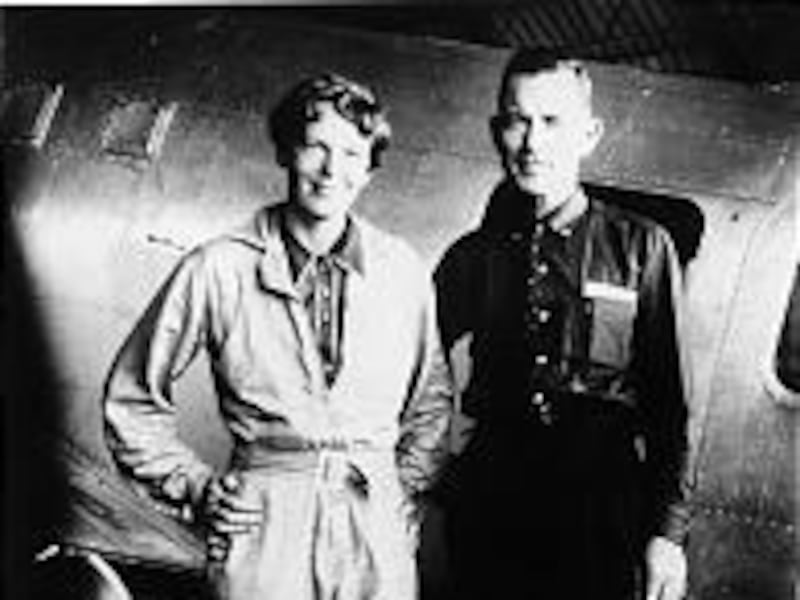
On that trip, Earhart, 39, had seemed destined to become the first female pilot ever to circumnavigate the globe. Born in Kansas, Earhart had made a name for herself in the 1930s by setting several aviation records. She had married "master promoter" and publicist George Palmer Putnam in 1931, and her fame had grown.
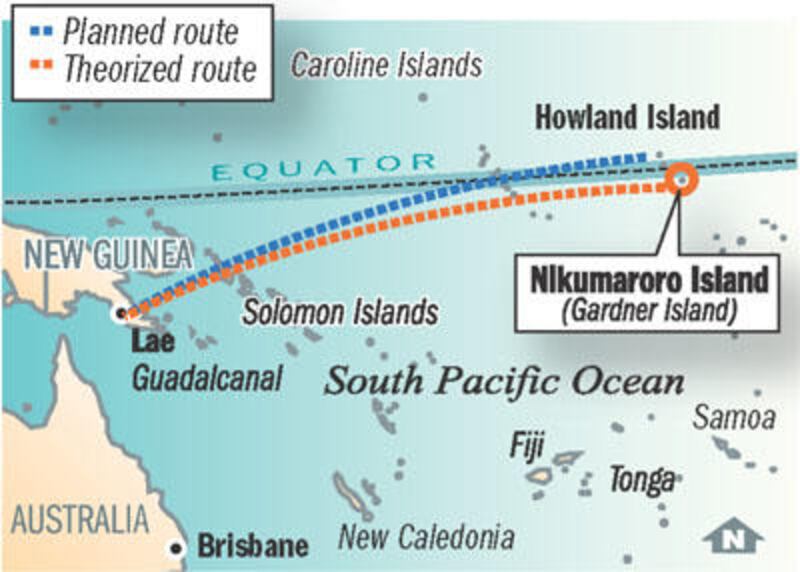
By 1937, she was ready to tackle the more than 28,000-mile trip that was supposed to begin and end in Oakland, Calif. But at some point during the 2,556-mile leg between Lae, New Guinea, and Howland Island, the dream abruptly ended. It's reported she ran out of gas, became lost over the Pacific Ocean and couldn't receive radio transmissions.
Different ideas have been proffered on where her plane may have gone down and whether she actually landed and lived for a while or died in a crash.
Love's own theories stem from his involvement in The International Group for Historic Aircraft Recovery, a nonprofit foundation "dedicated to promoting responsible aviation archaeology and historic preservation," according to its mission statement.
TIGHAR has narrowed the list of possible places where Earhart's plane came to rest to the island of Nikumaroro (formerly Gardner Island), in the Phoenix Island chain. The island is about 350 miles south of her planned destination, Howland Island, where she was going to refuel before continuing on to Honolulu.
The group believes that Earhart and her navigator, Fred Noonan, may have actually lived for a while as castaways on the atoll, which was uninhabited at the time. In 1938, the British colonized the island with people from the Gilbert Islands, but by 1963, it was once again uninhabited and has remained so since then.
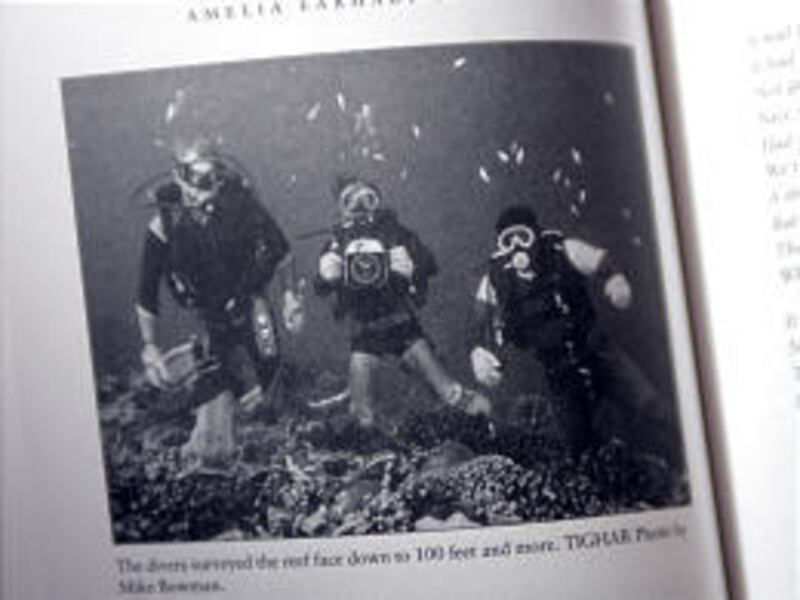
To support the castaway theory, TIGHAR members point to parts of a woman's shoe and measurements of bones found on the island, along with a section of a plane's windshield and a piece of aircraft aluminum that were consistent with the type used in civilian planes in the 1930s. Other clues come from recollections of transmissions by Earhart that were overheard by people with shortwave radios in the United States.
"I'm the one who found the shoe," Love said Tuesday in an interview about his visits to Nikumaroro, the last of which was in 1996.
Looking for evidence
In 1991, the group's search for Earhart's campsite on the island focused on a grave that, by appearance, was inconsistent with others belonging to the Gilbert Islanders who had inhabited the atoll for more than 20 years. With permission to search the gravesite, Love's group discovered the remains of the stillborn infant and parts of a woman's shoe. The shoe remnants were similar to shoes Earhart was pictured wearing around that time.
"We have a tremendous amount of circumstantial evidence that she and her navigator crashed on the island of Nikumaroro," Love said. "What we need is a smoking gun."
Love's own fondness of aviation began at age 8, when he would wash planes for rides and flying lessons in Brownsburg, Ind. He graduated from the Air Force Academy but chose medical school in Texas over training to become a pilot.
His interest in planes and aviation history never waned, and in the 1980s, he became involved in TIGHAR. Work, however, comes first, and he may have to forgo this summer's trip in order to tend his new Hyperbaric and Wound Care Center at Davis Hospital and Medical Center.
On the other hand, family sometimes takes a back seat to the search for Earhart. Yet it doesn't seem to bother Love's wife, Rebecca, who he says is "not threatened by me looking for a dead woman."
Love said his group will return for another expedition to the island this summer to search for more bones — and DNA — that will prove their theory. In 1940, a few human bones were discovered and shipped to a British doctor in Fiji.
Later analysis of the measurements of the bones taken by that doctor in 1941 indicate they may belong to a female of European descent who stood about 5 feet 7 inches tall. The whereabouts of those bones, however, remains unknown today.
A deserted atoll
More recently, interest in Earhart's whereabouts has been renewed with the surfacing of the diary entries kept by Associated Press reporter James W. Carey. He was supposed to cover Earhart's Howland Island stop on her way to Hawaii.
But she never made it to Howland Island on her expected due date, July 2, 1937. A 16-day search for her twin-engine Lockheed Electra came up empty.
However, while Carey was on Howland and aboard the Coast Guard cutter Itasca, he kept a diary of events leading up to Earhart's final radio transmissions, which included her giving an approximate location and saying she was running low on gas and searching for her landing site.
TIGHAR executive director Ric Gillespie recently told the AP the diary is an "incredible" discovery.
"We have long had the transcripts of the radio traffic, but this is the first document that puts a real person aboard Itasca and tells us something from a firsthand witness about what went on during those desperate hours and days," Gillespie said.
The ongoing search for Earhart and her plane, most of which may be underneath 2,000 feet of ocean, is a mystery that has taken Love to Nikumaroro for three of TIGHAR's seven trips there.
One reason TIGHAR began focusing on the island is because of information about how the Navy spotted "signs of recent habitation" on Nikumaroro during its 1937 search for Earhart, before the atoll was officially inhabited by people from the Gilbert Islands. At least one search plane had repeatedly circled the island, surrounded by a reef that could rip apart the hull of a ship that got too close, but no one appeared on its beaches to confirm the supposed signs of life.
TIGHAR's first trip to the island in 1989 yielded several pieces of aircraft debris found in an abandoned village on the west end of the island. Subsequent visits to the island turned up more and more pieces of aircraft consistent with what would have been used to construct Earhart's plane. The trip this summer will focus on a confirmed campsite location — and possibly Earhart's final resting place.
Contributing: Associated Press
E-mail: sspeckman@desnews.com