

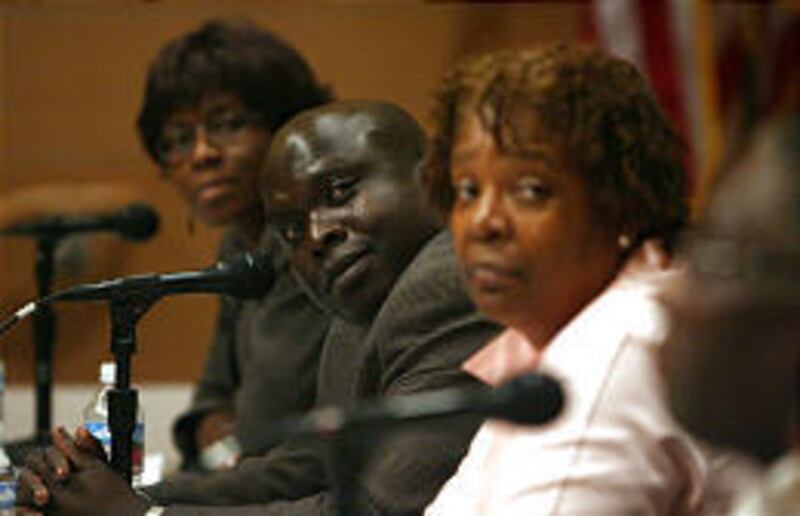
Attend a Nigerian Independence Day celebration in Utah, and you'll see more whites than African-Americans, says Michael Styles — and that's just the tip of a gulf of disinterest and misperceptions that needs to be bridged, the director of Utah's Black Advisory Council said Thursday.
Styles moderated a public dialogue billed as "The Disconnect: A Conversation Long Overdue." The frank, two-hour discussion gathered Utah African-Americans and "continental black Africans" from nations such as Nigeria and Sudan. For many in the audience, the conversation was a first.
The disconnect goes both ways, said panel members, and includes stereotypes that Utah's American-born blacks have of Utah's African-born blacks ("you come to our country and think you're better than us") and those that the African-born have of the American-born people ("you're lazy.")
"We believe that all of us have a bedrock of culture; we started somewhere and migrated somewhere," said Joan Effiong, who migrated from Nigeria 30 years ago to get an education.
But often, said Oakland-born Ed Tanner, black Americans don't want to recognize their African ancestry or associate with Africans here. "As descendants of slaves," said Tanner, who is an academic adviser at Salt Lake Community College, "we have a mindset that black is just not good enough. ..The problem in Utah is that we're ashamed to be black, and that's ridiculous."
He challenged African-Americans in the audience at the downtown Salt Lake City Library to shop at black-owned stores.
There's strength in numbers, echoed Styles. But when American-born blacks in Utah and African-born blacks don't get together, "we're operating at 50 percent capacity" when it comes to economic viability and lobbying the Legislature, he said.
Utah's blacks may ignore each other, but whether they're from Salt Lake or Sudan, they end up being lumped together by the system, he said. No Child Left Behind doesn't talk about students from Mali or Somalia.
Instead, federal reports mandated by the law say "black students' test scores have dropped," Styles noted. And when there is racial profiling ("if there is racial profiling," said Styles wryly), "you don't get pulled over because you're from Togo."
Styles said there is no tension between Utah's African-Americans and continental black Africans. But there is also little overlap. Black Africans rarely attend the Juneteenth celebration of Utah's African-American community, he said, and students from the two groups often sit on different sides of the high-school cafeteria.
The effort to bridge the gap was begun several years ago, he said. "We're seeing some friendships being made." About half of the members of the Black Advisory Council now are American-born, and the other half are African-born, he noted.
E-mail: jarvik@desnews.com