
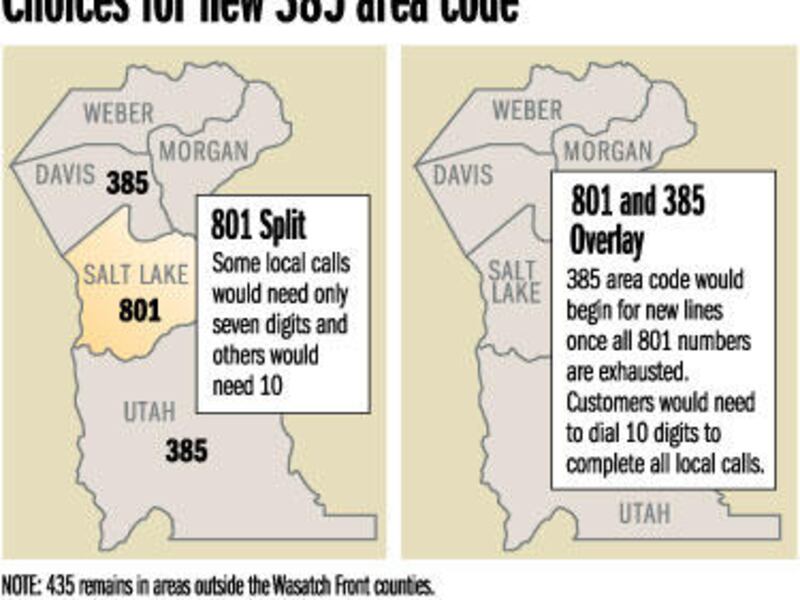
Utah's consumer watchdog group is backing a proposal by telecommunications companies that would allow residences and businesses to keep their existing 801 area code.
The state Committee of Consumer Services voted Wednesday in favor of backing a so-called "overlay" plan that would allow customers to keep their existing 801 area code.
The action comes as the state prepares for the implementation of a third area code — 385. Under the overlay proposal, everyone would keep their current area code, and only new phone activations would get the 385 area code.
But the plan also would mean that everyone would use 10-digit dialing.
The North American Numbering Plan Administration has projected that Utah area code 801 numbers will be exhausted by the spring of 2009. In 1998, a 435 area code was implemented for areas outside of the Wasatch Front.
Earlier this year the Utah Public Service Commission proposed a geographic split that would have allowed Salt Lake County residences and businesses to keep the 801 area code. However, residences in Davis, Utah and Weber counties, which currently use the 801 area code, would have been forced to make a change to the new 385 area code.
The consumer committee said such a plan would lead to added costs for small-business owners, who would be forced to change letterhead, signage, business cards and other materials informing customers of their new area code.
Kelly Casaday, a committee member and owner of a small advertising agency in Salt Lake City, said a recent phone number change at his company cost roughly $4,000.
"We're redoing letterhead, business cards and just some general announcements," Casaday said. "I believe it would cost a lot of small-business owners a lot of money."
Betsy Wolf, also a committee member and a utility rate analyst with the Salt Lake Community Action Program, which works with low-income households, expressed some concern over the implementation of the new area code.
"My concern was that if the new area code is not tied to a geographic area, people could lose that benefit of calling an extended area," Wolf said. "That could be a problem for people whose land line is their only phone."
Yet those concerns were addressed in the committee's motion, which urged that the PSC define long distance and extended area charges in such a way that consumers are not burdened with the increased costs for making calls to different area codes within their neighborhood.
E-mail: danderton@desnews.com