



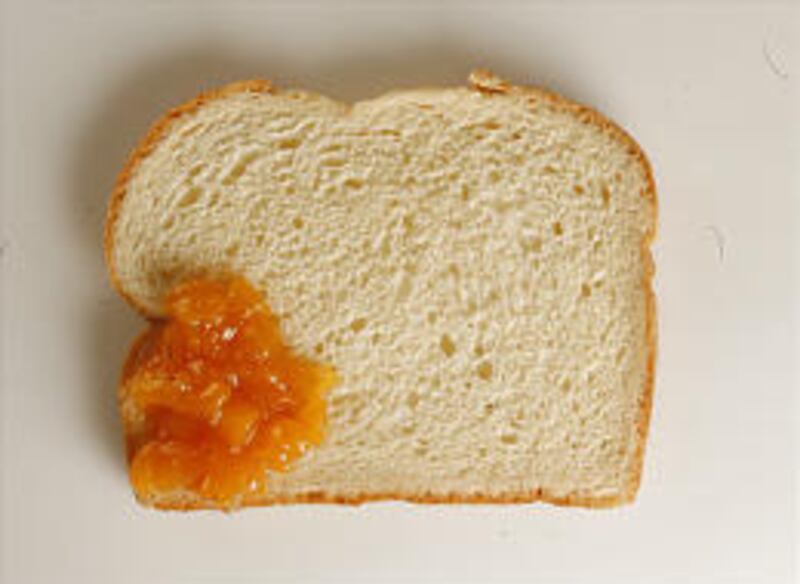

How about a toast to jam? Or let's just make that toast and jam.
Whatever, jam is the best thing since sliced bread. Let three local jam-makers inspire you to try your hand at making your own:
"Once you have homemade jam, nobody will eat the store-bought kind again, because there's so much flavor," said Sandy Salmon of Centerville, a regular winner at numerous Utah and California state fairs. In fact, one year the former University of Utah nurse took home 53 ribbons for her jams, jellies and other entries.
"What I like about making your own jams and jellies is that you can control the product for your family needs. If someone is a diabetic, you can make it without sugar, so that they can have a good quality food," said Marilyn Albertson, a Utah State University Extension consumer science agent with Salt Lake County. "We really like the flavor, it just tastes fresher."
"The cool thing about making jam with berries is that their color and tartness and acidity make each kind unique," said David Prows, a chef who uses unusual varieties such as huckleberries, choke cherries and loganberries in Lehman All Natural Preserves, made in Salt Lake City and currently sold in Associated Foods stores. "Every berry has a distinctive flavor. The key is to pull the flavor out of the berries so all your jam doesn't taste the same."
But, before you start jammin' in your own kitchen, brush up on your knowledge to make sure the end results are good-tasting, good-textured and, most importantly, safe to eat.
Keeping it safe
Although Salmon enjoys the creativity that comes with experienced jam-making, she cautions beginners to use recipes from reliable sources, such as the "Ball Blue Book of Preserving" (Jarden Home Brands, $4.99). Jarden, the company that sells both Ball and Kerr canning products, also has a Web site, www.homecanning.com, with directions and tested recipes.
It's important to measure accurately and follow the recipe exactly. "A lot of mistakes get made when people don't read the directions," Salmon said.
Years ago, her grandmother taught her to seal jams and jellies with paraffin wax — the tradition at the time. But in keeping with the USDA's guidelines, Salmon now uses metal lids and screw-on bands to seal the jars against any bacteria or mold.
"We don't recommend you use paraffin — ever," said Albertson.
Also, the USDA calls for processing 10 minutes in a boiling water bath for
Utah altitudes. It used to be that people just inverted the jars of hot jam and left them to seal as they cooled.
"You do the water bath to get a good seal," said Albertson. "Some of those jars that are tipped upside down will come unsealed."
And you don't want to invert your jars if you're entering them in a fair competition, said Salmon. She found this out by sitting in on the "open-judging" sessions in the California State Fair.
"The judges don't want any jam on the lids," she said. "And you have to have an exact 1/4-inch head space between the jam. They measure it."
You don't need to worry about jars and seals if you're making freezer jam, which has grown in popularity for its quicker preparation and fresh, uncooked flavor.
Know your ingredients
Although different types of preserves may range from firm to almost runny, the "jelled" quality comes from a combination of fruit, sugar and pectin.
So what's pectin? It's a natural substance found in fruit that forms a gel when combined with the right amounts of acid and sugar. All fruits contain some pectin. Apples, gooseberries and some plums and grapes usually contain enough natural pectin to form a gel, according to the National Center for Home Food Preservation.
Other fruits, such as strawberries, cherries and blueberries, contain little pectin, so you should combine them with high-pectin fruit or add commercially made pectin. Fruits have varying amounts of acidity; most recipes call for added lemon juice to aid in the preservation and jelling processes.
Commercial pectins are found in supermarkets where canning products (such as jars and lids) are sold. It comes in liquid, powdered, no-cook (for freezer jam) and no-sugar-needed types. These are not interchangeable; make sure you're using the type of pectin specified in your recipe. You can also use gelatin to thicken jam or jelly, but these products can only be stored in the refrigerator, not canned, said Albertson.
"Using no-sugar pectin requires that you follow instructions exactly as directed," said Albertson. "You can't eliminate sugar when using regular pectin, because it's the balance between the pectin and sugar that makes it jell. You'll get syrup instead of jam. With no-sugar pectin (low-methoxyl pectin), it thickens a different way and doesn't need sugar."
If you use an artificial sweetener with the no-sugar pectin, be aware that aspartame (NutraSweet) loses sweetness with high heat, Albertson said. Other sweeteners may change in flavor over time, although a study done with sucralose (Splenda) showed that it maintained its flavor in canned peaches for at least one year. One option is to add a sweetener just prior to serving, instead of during the canning process, Albertson suggested.
Albertson said many people like the no-sugar jam, "Because you get more of the natural, fresh-fruit flavor and less of the sugar and cooked taste."
Salmon said she prefers making the traditional, cooked jam, using regular powdered pectin. "Although the recipes seem to use a lot of sugar, you're only spreading a little bit on your bread at a time," she said.
She doesn't make freezer jams, "Because they're runny, and they take up a lot of room in the freezer and don't keep as long."
Salmon starts with good quality, fresh fruit; she has never used frozen fruit. Although some people like to use overripe fruit for jam, Salmon cautions that it contains less pectin and may not set properly. One trick is to add a small quantity of underripe fruit. "It has a little more natural pectin to help the jam set," she said.
Salmon has also found that berry jams tend to set up better than peach and apricot jams. They also tend to darken when they're jammed.
"Go out and find the richest, reddest, most flavorful berries that you can," said Prows. "Lemon juice helps preserve the color, but anytime you cook fruit it will go darker. A lot of the commercial jams are artificially colored."
Fair judges look for uniform pieces of chopped fruit, said Salmon. Instead of mashing strawberries, she puts them through an egg slicer.
Judges also check the jam for air pockets, Salmon said. "You can add a teaspoon of butter to keep the foam down, and skim off all the foam before you pour the jam in the jars. And then you press a nonmetallic spatula around the edge of the jar to get any bubbles out."
Assemble equipment
Assemble all your equipment before preparing the fruit, so you can use the fruit as soon as possible, said Salmon.
She said you can make jam without investing in a lot of equipment. If you don't have a huge water-bath canner, you can use a large pot. Set a towel, washcloth or small rack on the bottom to keep the jars from bouncing in the boiling water.
You can reuse canning jars that aren't nicked or cracked, but you can't reuse lids (they won't seal). The screw-on caps are reusable, but they can warp and rust over time. A funnel, jar lifter, magnetized "lid wand," juice extractor and a candy thermometer are also helpful.
Use your dishwasher to wash the jars, said Salmon. You can time your wash cycle to keep the jars hot, to guard against cracking when the hot jam is poured in.
Is it done?
Many recipes will tell you how long to boil the jam or jelly. But, if it doesn't, there are three reliable tests to find out if the mixture has reached its jelling point, according to the National Center for Food Preservation and "All About Canning and Preserving," by Marion Rombauer Becker & Ethan Becker (Scribner, $15.95):
Spoon test: Scoop up some boiling syrup in a stainless-steel spoon and let it fall back into the pan. At first, the drips are syrupy. When the drips glide together and hang off the edge of the spoon in a "sheet" before dropping, the jelling point has been reached.
Temperature test: Take the temperature of the jelly with a candy thermometer; it should be 8-10 degrees above the boiling point. (For the 4,000-foot altitude along the Wasatch Front, the jelling temperature would be about 212 degrees.)
Refrigerator test: Pour a little boiling jelly on a small plate and set it in the freezer for a few minutes to see if it gels.
The preserves will thicken after cooling and continue to set for one to three weeks after being made, according to "All About Canning and Preserving."
MICROWAVE PEACH JAM
1 2/3 pound finely chopped firm-ripe peaches
2 1/2 teaspoons orange juice
2 teaspoons bottled lemon juice
1/4 cup powdered pectin
1 cup plus 3 tablespoons sugar
In a 2-quart microwave-safe bowl, mix peaches, juices and pectin. Cover with wax paper, place in the microwave and bring to a boil on high. Stir, then cook until the peaches are soft. Stir in 1 cup plus 3 tablespoons sugar. Stir until the sugar dissolves, then cover and cook on high. Test for the jelling point after the jam comes to a boil, then every 30 seconds. Remove from the microwave and skim off any foam before ladling into hot jars. Leave 1/4-inch head space, and process for 10 minutes (for Utah altitudes) in a boiling water bath. Makes about 3 half-pint jars.
Option: For strawberry-rhubarb jam, you can substitute 1 pound strawberries and 6 ounces chopped tender red rhubarb stalks for the peaches. — "All About Canning and Preserving"
LIGHT STRAWBERRY JAM
4 cups crushed strawberries
1 cup unsweetened white grape juice
1 1.75-ounce package Ball No Sugar Needed Fruit Pectin
Prepare boiling water canner. Heat jars and lids in simmering water until ready for use. Do not boil. Set bands aside.
Combine strawberries and juice in a 6- to 8-quart saucepan. Gradually stir in pectin. Bring mixture to a full rolling boil that cannot be stirred down, over high heat, stirring constantly. Remove from heat. Skim foam if necessary.
Ladle hot jam into hot jars leaving 1/4-inch head space. Wipe rim. Center hot lid on jar. Apply band and adjust until fit is fingertip tight.
Process filled jars in a boiling water canner for 10 minutes (for Utah altitudes). Remove jars and cool. Check for seal after 24 hours. Lids should not flex up and down when center is pressed. Makes about 6 half-pint jars. — Altrista Consumer Products, www.freshpreserving.com
CHERRY JAM
1 quart chopped and pitted sweet or sour cherries
6 1/4 cups sugar
2 tablespoons lemon juice (use only with sweet cherries)
2 pouches liquid pectin
Combine cherries, sugar and lemon juice (if needed) in large sauce pot. Bring to a boil, stirring until sugar dissolves. Stir in liquid pectin. Return to a rolling boil. Boil hard 1 minute, stirring constantly. Remove from heat. Skim foam if necessary. Ladle hot jam into hot jars, leaving 1/4-inch head space. Adjust two-piece caps. Process 10 minutes in a boiling-water canner (for Utah altitudes). Makes about 8 half-pints. — Ball Blue Book of Food Preserving
MANGO-RASPBERRY FREEZER JAM
1 pouch Ball Fruit Jell Freezer Jam Pectin
1 1/2 cups sugar
3 cups finely chopped, pitted, peeled mangoes (about 3 medium)
1 cup crushed red raspberries (about 1 pint)
Combine pectin and sugar in a medium bowl, stirring to evenly blend. Add chopped mangoes and crushed raspberries. Stir for 3 minutes. Serve immediately, if desired. For longer storage, ladle into clean freezer jars, leaving 1/2-inch head space; apply lids. Let stand until thickened, about 30 minutes. Refrigerate up to 3 weeks or freeze up to 1 year. Makes about 5 half-pint jars. — Jarden Home Brands, www.homecanning.com
BERRY BLITZ FREEZER JAM
1 1.59-ounce package Ball Simple Creations Freezer Jam Fruit Pectin
1 1/2 cups sugar
1 cup crushed blackberries
1 cup crushed blueberries
1 cup crushed raspberries
1 cup crushed strawberries
Zest of 1 small lemon
Stir sugar and contents of package in a bowl into well blended. Add blackberries, blueberries, raspberries, strawberries and lemon zest. Stir 3 minutes.
Ladle jam into clean jars tubs with lids. Let stand until thickened, about 30 minutes. Freeze up to 1 year. Makes about 5 half-pint jars. — Jarden Home Brands, www.homecanning.com
SUGAR-FREE GRAPE-PEACH REFRIGERATOR JELLY
2 packages or 2 tablespoons unflavored gelatin
4 1/4 cups bottled unsweetened white grape-peach juice (1 quart plus 1/4 cup)
1/2 cup Splenda granular sweetener
Sterilize jars. In a saucepan, soften gelatin in juice. Bring to a rolling boil, dissolving gelatin; boil 1 minute. Remove from heat. Stir in Splenda. Skim foam if needed. Pour into hot sterilized jars, leaving at least 1/4-inch head space. Apply lids, cool and store in refrigerator. (Do not process in a canner or freeze.) Makes about 4 half-pint jars.
Note: This recipe was tested using commercially bottled white grape-peach juice. Sterilized jars are not required for this recipe; it can be filled into hot, clean jars or plastic refrigerator containers. However, sterilized jars would be best for avoiding spoilage. Refrigerator jellies made with gelatin typically last one month in the refrigerator until opened. — Marilyn Albertson, Utah State University Extension
BERRY JAM
This recipe relies only on the natural pectin in the berries.
9 cups crushed berries (can be blackberries, blueberries, boysenberries, gooseberries, loganberries, raspberries)
6 cups sugar
Combine berries and sugar in a large sauce pot. Bring slowly to a boil, stirring until sugar dissolves. Cook rapidly to jelling point. As mixture thickens, stir frequently to prevent sticking. Remove from heat. Skim foam if necessary. Ladle hot jam into hot jars, leaving 1/4-inch head space. Adjust lids and caps. Process 15 minutes in a boiling-water canner.
Options: If seedless jam is preferred, crushed berries may be heated until soft and pressed through a sieve or food mill; measure pulp and proceed as above. Makes about 3 pints. — Ball Blue Book of Preserving
E-mail: vphillips@desnews.com