


LOGAN — Glenn Howard Griffin, convicted of the 1984 murder of Bradley Newell Perry, will spend the rest of his life in prison.
A 12-member jury Thursday deliberated for less than two hours before reaching a decision to sentence Griffin to life without the possibility of parole. At least 10 jurors had to agree to the sentence for it to happen.
Griffin stood mostly stone faced, as he had through most of the week-long sentencing proceedings, when 1st District Judge Ben Hadfield read the jury's decision. When he was being led back to his holding cell, Griffin smiled at his family.
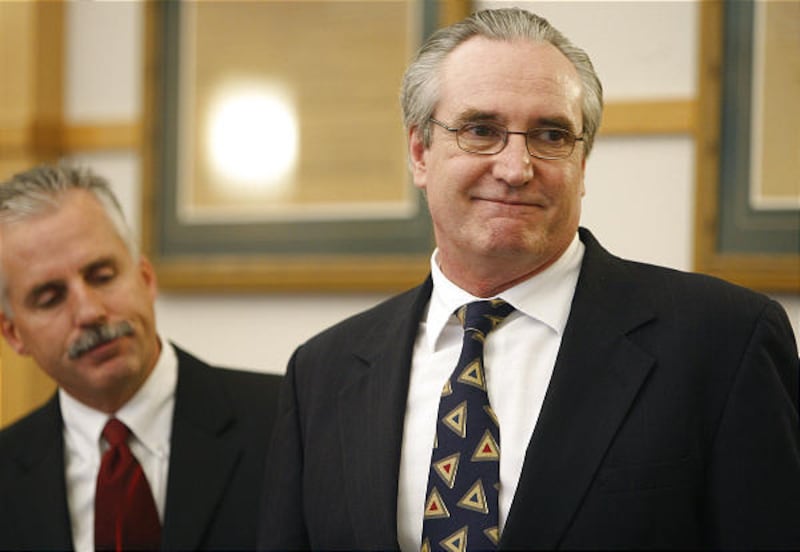
"We're obviously thrilled," defense attorney Randy Richards said. "He certainly wanted to avoid the death sentence ... He understands where he's at with this thing," Richards said.
Richards said Griffin was "certainly remorseful" over what happened to Perry and hopes now he might be able to do some good in prison.
State prosecutor Brad Smith had few comments outside the courtroom, simply saying it was a "good jury" and a "good verdict" in light of a terrible tragedy and "tough case."
Griffin was convicted last week for the 1984 murder of 22-year-old Perry in Box Elder County. The case went cold for many years until advances in DNA analysis and other forensic tools were able to finally link Griffin to the crime.
Over the course of the past 24 years, the Perry and Griffin families have become close, even after Glenn was charged and convicted of Perry's murder.
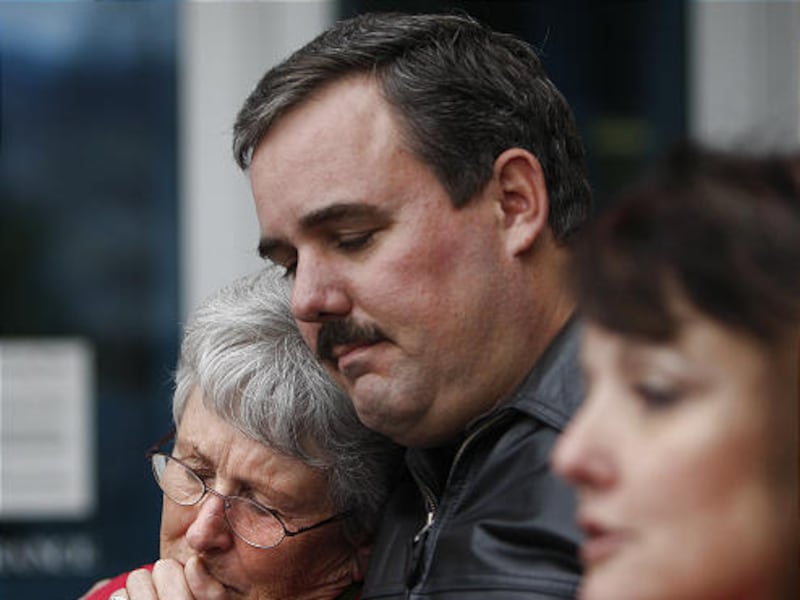
Perry's family was pleased with Griffin's sentence.
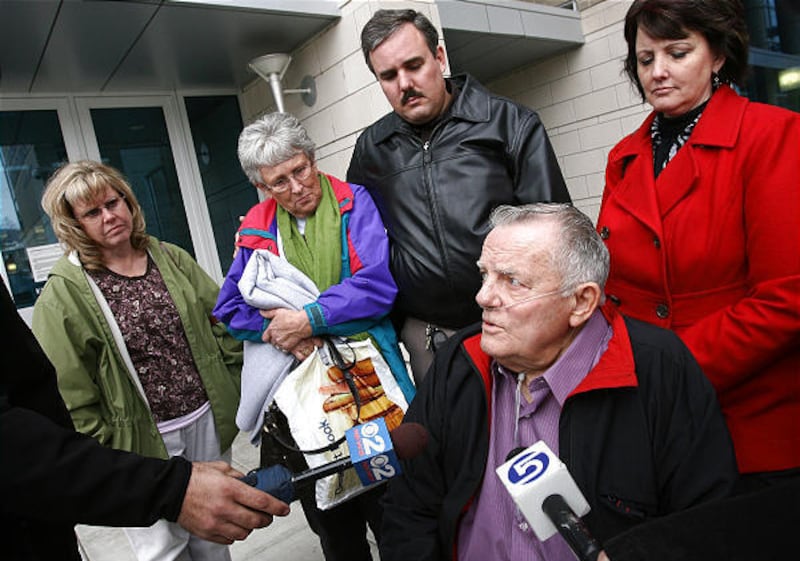
"This is Brad's verdict," brother Lee Perry said. "It's what he would have wanted. Brad was a peacemaker."
"I don't think any of us ever wanted (the death penalty) because Brad didn't want that," sister Nanette Perry Wharton said.
Claudia Perry, Brad's mother, said both her family and the Griffin family got what they wanted: the Perrys received justice and the Griffins received mercy by the jury for sparing the killer's life.
"He's where he needs to be," Newell Perry, Bradley Perry's father said of Griffin spending the rest of his life in prison. "We're satisfied."
Although they are happy with the verdict, the Perrys say it will not bring closure.
"I don't know how there can be closure," said Laura Boyd Hill, who was about to be engaged to Perry two decades ago before he was killed.
"I don't see Brad here," Claudia Perry added.
The family also noted there's the possibility of another trial to endure when a second man charged with Perry's murder finally begins to work his way through the court system with a January preliminary hearing.
The Perrys admitted there was a time when they didn't think they would ever see anyone convicted for the young man's death.
"We really thought it would be dealt with in the afterlife," Lee Perry said.
But with today's advances in collecting and analyzing DNA evidence, the Perrys said they would encourage any family that is involved in a cold case crime to never give up hope. The Perry family praised prosecutors Thursday and the work of the Utah State Crime Lab for preserving evidence for 22 years.
Before the jury came back with its decision, Richards asked the jurors during his closing arguments for mercy.
"It's hard for me to fathom the taking of another man's life," he said while asking the jury to "think about death but consider life" and "think about justice but consider mercy."
During his closing arguments, Smith reminded the jury of how Perry was brutally murdered by being stabbed multiple times with a screw driver and having his skull crushed. He called the nature of the crime "animalistic" and "savage."
"This was a death that Mr. Griffin made Brad Perry feel," he said.
He pointed out that Griffin has had a "persistent pattern of violent, anti-social destructive conduct" his entire adult life as well as a pattern of "selfishness" and "self-absorption," even though at age 3 months he was adopted into a good home with loving parents.
"Mr. Griffin did hot have a disadvantaged life," Smith said.
Griffin "chose his conduct," Smith said, noting that, "The murder of Brad Perry unfolded over time."
But Richards countered by saying the death penalty was not necessary because Griffin would receive a just penalty by being sent to prison where he will be in solitary confinement and not have a parole hearing for at least 25 years.
Griffin's troubled childhood, drug use and brain disorder did not excuse his actions, but it did help explain them, Richards argued.
"Mercy is given to the undeserving, otherwise it is not mercy," he said. "Mercy is entrenched in the hearts of good. Mercy is an attribute of God."
Also during Thursday's hearing, Hadfield addressed both the families of Perry and Griffin, calling the past five weeks through the trial and now the sentencing phase an "extraordinary experience."
"I haven't seen any anger or vengeance on the part of either family ... that's remarkable," he said. "I wish both sides the very best."
Hadfield also commended the Griffin family for attending all the hearings, noting that in many cases a defendant does not have anyone show up for support.
Griffin will return to court Dec. 3 for formal sentencing.
E-mail: preavy@desnews.com