



It was, for its day, as big a book-selling phenomenon as Harry Potter. For decades it was a No. 1 best-selling phenomenon unlike anything seen before in America.
And Joseph Smith loved it.
Or did he?
Two unsigned newspaper articles from the 1842 Nauvoo newspaper Times and Seasons reviewed the best-seller and said it supported the Book of Mormon having taken place in Central America. But nobody knew for sure who wrote these articles — until now.
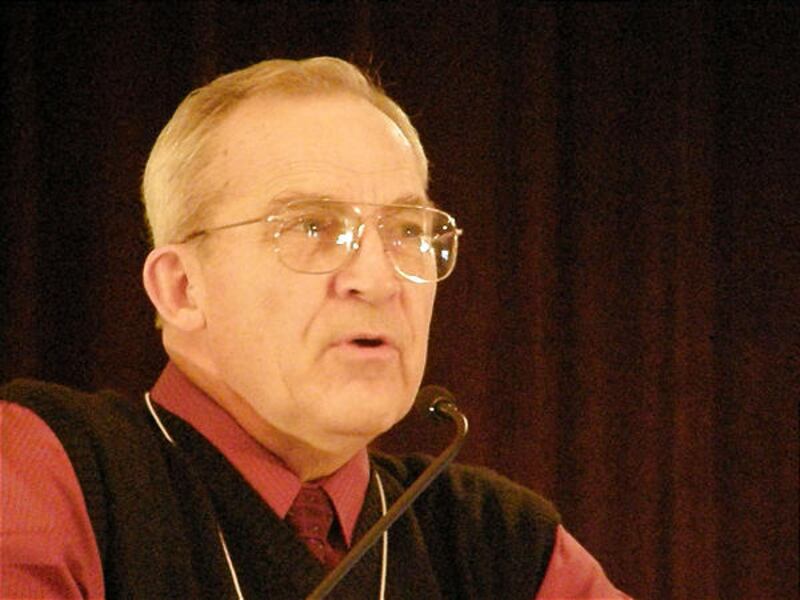
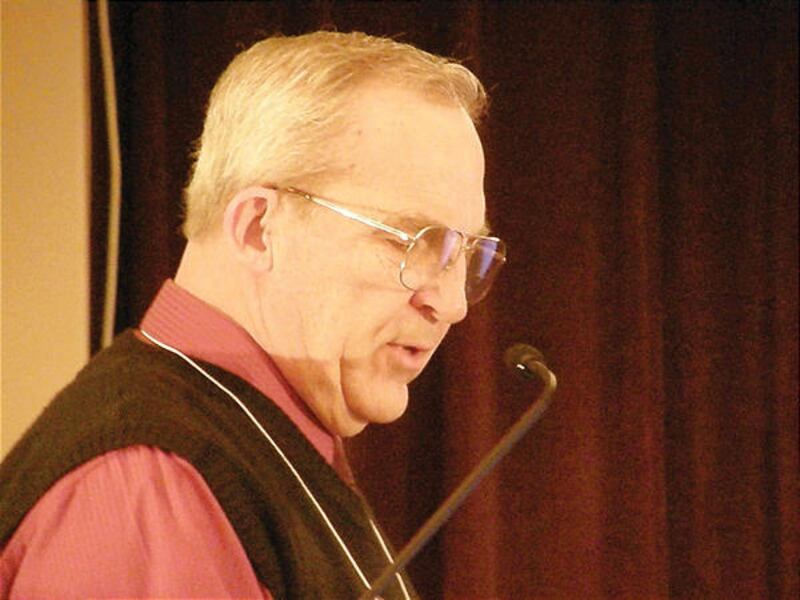
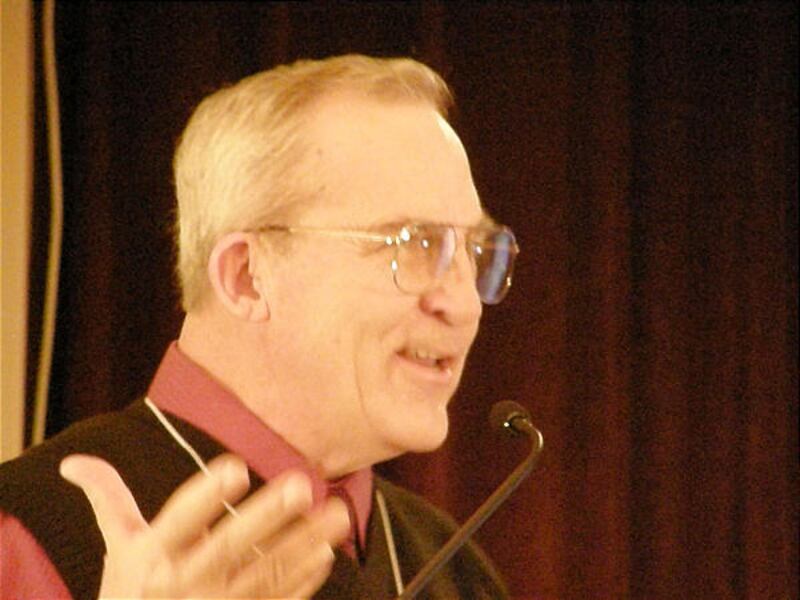
Author John L. Lund spoke at the Book of Mormon Lands Conference on Oct. 17 about the best-seller and says he believes he knows who wrote the Times and Seasons articles.
The best-seller was John Lloyd Stephens' two-volume "Incidents of Travel in Central America, Chiapas, and Yucatan." They were beautifully illustrated volumes that chronicled Stephens' exploration of great ancient ruins in Mesoamerica.
According to Lund, up to that point Americans thought the ancestors of American Indians were "uncivilized." Stephens' books were a mind-bending thing for pre-Civil War Americans: an Indiana Jones-like tale of adventure, exploration, archaeology and mystery.
A side-effect of Stephens' books was to bolster Book of Mormon claims for advanced ancient civilizations in the Western Hemisphere.
No doubt recognizing this, Dr. John M. Bernhisel, Mormon bishop in New York City, sent copies of Stephens' books to Joseph Smith in 1841. The Prophet wrote back that Stephens' work "corresponds with and supports the testimony of the Book of Mormon."
About a year after Bernhisel sent the books to Joseph Smith, the two unsigned articles appeared in Times and Seasons. Joseph Smith had assumed the editorial chair of the official Mormon newspaper earlier that year and was in town to supervise the Sept. 15 and Oct. 1, 1842, issues. The articles quoted extracts from Stephens' best-seller and included commentary that implied that the Book of Mormon might have taken place in Central America: "The foregoing extract has been made to assist the Latter-day Saints, in establishing the Book of Mormon as a revelation from God. It affords great joy to have the world assist us to so much proof, that even the most credulous cannot doubt.
"Let us turn our subject, however, to the Book of Mormon, where these wonderful ruins of Paleque are among the mighty works of the Nephites, and the mystery is solved.
"Mr. Stephens' great developments of antiquities are made bare to the eyes of all the people by reading the history of the Nephites in the Book of Mormon. They lived about the narrow neck of land, which now embraces Central America, with all the cities that can be found.
"The city of Zarahemla, burnt at the crucifixion of the Savior, and rebuilt afterwards, stood upon this land. … It is certainly a good thing for the excellency and veracity, of the divine authenticity of the Book of Mormon, that the ruins of Zarahemla have been found where the Nephites left them.
"It will not be a bad plan to compare Mr. Stephens' ruined cities with those in the Book of Mormon."
"From an extract from Stephens' 'Incidents of Travel in Central America,' it will be seen that the proof of the Nephites and Lamanites dwelling on this continent, according to the account in the Book of Mormon, is developing itself in a more satisfactory way than the most sanguine believer in that revelation, could have anticipated."
According to Lund, the most likely authors were those who worked on Times and Seasons: the Prophet Joseph, John Taylor or Wilford Woodruff. Proponents of a North American Great Lakes setting for the Book of Mormon say the Prophet couldn't have written the articles. Proponents of a Central or Mesoamerican setting for the Book of Mormon believe he did.
Lund drew upon statistical analysis of communication styles and word usage — something he learned about while getting his doctorate in 1972.
"One of the things that I discovered when doing the research for my doctoral dissertation, was that when we went to analyze people, we could separate them rather quickly by doing what we called their 'average sentence length,' " Lund said.
Lund looked at Joseph Smith, Taylor and Woodruff — analyzing more than 100,000 words per author.
Woodruff's average sentence length was 22 words. Taylor's was 25 words. Joseph Smith's: 40 words. The two Times and Seasons articles had 36 words per sentence — statistically close to the words of the Prophet, considering the articles' sample size was only 906 words.
"The chances of John Taylor or Wilford Woodruff authoring these articles is about one out of 100,000," Lund said. "That's a huge discriminator. A huge discriminator."
But Lund didn't just look at average sentence length. He looked at sentences using 10 words or less, 100 words or more and even one-word sentences. He looked at how sentences began and ended.
He also looked at specific words and phrases.
Joseph Smith is the only one who uses the phrase "none can hinder," according to Lund. "It's not found in any of the writings of Wilford Woodruff … nor in John Taylor's writings. … But it is found in this (Sept. 15, 1842) article."
Other phrases from the articles, "dwelling upon" and "in the eyes of all the people," are used frequently by the Prophet, but not by Woodruff and Taylor. Joseph Smith uses the term "great joy" 234 times in his writings. Woodruff and Taylor only about five or seven times in all their writings.
Other words in the articles — "proof," "agoing" and "cuts" — are used often by Joseph Smith, but much less often or not at all by Woodruff and Taylor.
"When (people) look at all the evidence they are going to find that Joseph was the author of those articles," Lund said.
This means that the Propher was probably also the author of one of the articles' headlines: "Facts are stubborn things."
e-mail: mdegroote@desnews.com