

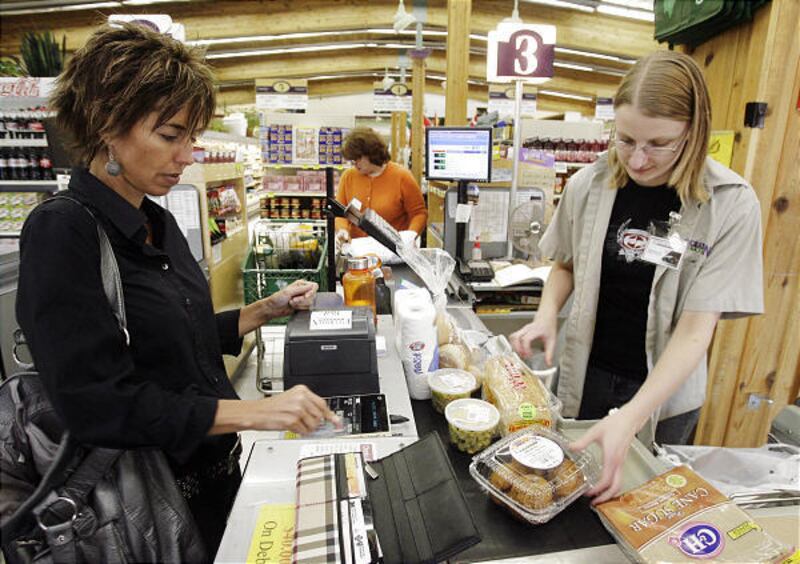

A plastic, mostly cashless society is taking a toll on merchants, who hope financial reforms will include the interchange fees they are charged when consumers pay with credit cards.
"Over the past four or five years, we've watched our credit card fees grow faster than health-care (costs)," said Eldon Payne, chief financial officer for Salt Lake-based restaurant company Gastronomy. Recent credit reform focused on consumers and banks, but the merchant side was neglected, he added.
At Salt Lake City's Emigration Market, owner J.T. Martin, a Salt Lake City councilman, said "swipe" fees are always in his top three operating expenses, along with labor and rent.
The National Association of Convenience Stores recently told Congress the credit fees they pay were more than their net profit. The card issuers and other processors, however, counter that businesses just want someone else to pay the cost of processing transactions.
Fees are typically a small, flat amount such as 20 cents, depending on the contract the merchant negotiated, plus a percentage of the transaction — 2 percent to 3 percent is not unusual — but they add up, merchants say. Interchange fees were a $48 billion industry in 2008, according to the Merchant Payments Association.
Experts say it's unclear how much of the fees are simply passed on to consumers or whether prices would drop should fees be reduced. But small-business owners say the inability to negotiate favorable fees makes it hard enough to compete with bigger merchants and raising prices to pass on the fee wouldn't help, either.
The South Jordan Chamber of Commerce takes the issue very seriously, said Paul Pugmire, president. The increased use of credit cards, the limited negotiating power of small businesses and the high market concentration create problems, but there's no market pressure to keep those costs in check, especially for Visa and MasterCard, which dominate 80 percent of the market, he said.
Martin's store is a member of the Associated Foods group, so he can negotiate better fees, something he said most single-operator small businesses cannot do.
Even so, the fact that 90 percent of his customers pay with plastic "is just crushing. You would not believe the skinny, skinny margins that grocery stores work on."
Martin said his friends who sell gasoline call the fees "devastating." And while those fees have not generally gone up, the number of people using cards has, so the businesses pay them on a much larger share of their transactions.
"It used to be an insignificant portion of the business, but now it's a major part," said Martin, who hopes the federal government will cap the fees. "It can't go on. I look at my quarterly reports and what I am paying out in credit card fees and it makes me sick."
The bigger the transaction volume, the more options in negotiating, Pugmire said, so mom-and-pop retailers are hardest-hit. Most can't refuse to take credit cards because customers expect to pay that way.
"Normally, when use of a product goes up," said Pugmire, "the price will come down. Demand is not driving (the fee) price down."
Some businesses are fighting back. Darren McCabe, chief financial officer of the Valley Journals, said their rates recently went up, so they changed credit card processors. It's too soon to tell, he said, "but it looks like we will save some money."
WinCo Foods have signs saying they do not take credit cards because of the swipe fees — an expense that would raise prices — and Pugmire points out they are big enough to negotiate a discount but "they still say they're not playing."
Gas stations often discount the price of a gallon of gas a few cents for those who pay cash. The credit card fees are why, he said.
Meanwhile, merchants are watching closely bills, including one by U.S. Sen. Richard Durban, D-Ill., that they hope will provide them some relief from the fees.
e-mail: lois@desnews.com
Twitter: Loisco