


The First Decade: A new millennium was born amid concerns about the Y2K bug. Far more real fears unfolded on Sept. 11, 2001. For the next eight days, Deseret News and Associated Press writers in a series of essays will examine the great developments of the past decade and their impact on Utah and beyond.
When the United States of America went to sleep on Sept. 10, 2001, it was with the peaceful slumber of a toddler, surrounded by all the toys, secure in the promise of a new day that would be much like all the others.
The country awakened to a scary, different world, one in which our playpen, our home, had been violently rattled by angry strangers, innocence was stripped, and nothing would ever, ever be quite the same.
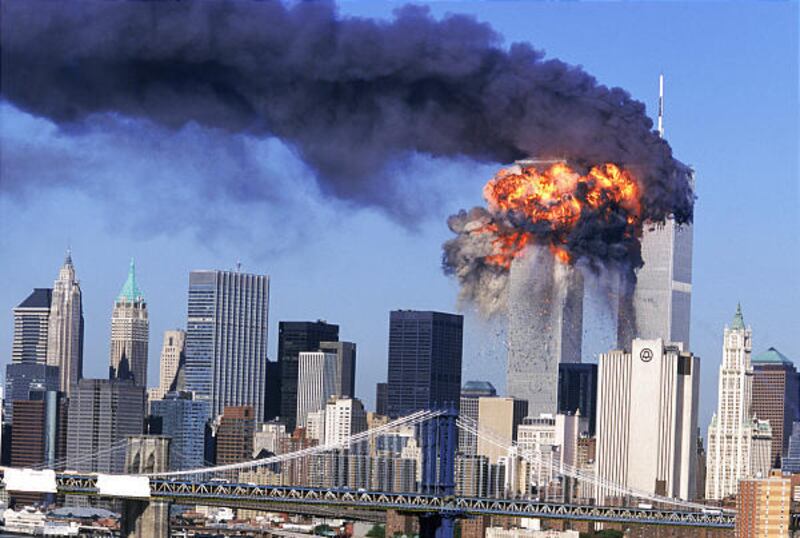
Terrorists, in vanquishing the Twin Towers, became the unwelcome architects of a new city skyline in New York. The Pentagon, our bastion of military might, was crippled on 9/11.
Long before the debris would be cleared, and long before the tears would dry, a new America would totter with the realization of 2,976 dead. On our doorstep.
Over the days to follow, as the numbers rolled in, police, firefighters and other emergency responders would become our new, once-again heroes. A total of 411 died responding to the World Trade Center attack.
In despair, however, there was hope, and a betrayed America became a determined America.
We hung onto the last words of Todd Beamer, a passenger on hijacked Flight 93 who simply said, "Are you guys ready? Let's roll."
Thousands of miles away and eight years later, Utah still "rolls" in a post 9/11 era.
Enlistments in the Utah National Guard, the Army and Army Reserve surged in the days and months following the attacks.
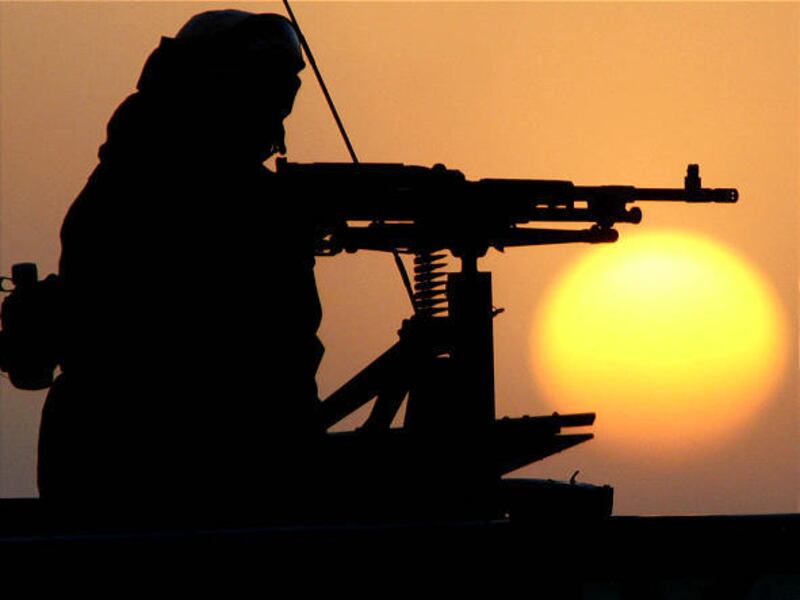
At any given time, Hill Air Force Base has upward of 500 people deployed in support of Operation Iraqi Freedom and Operation Enduring Freedom, which have topped a trillion dollars in financial costs.
And there are costs closer to hearts than pocketbooks — the cost of 51 men and one woman with Utah ties who have died fighting the "war on terror."
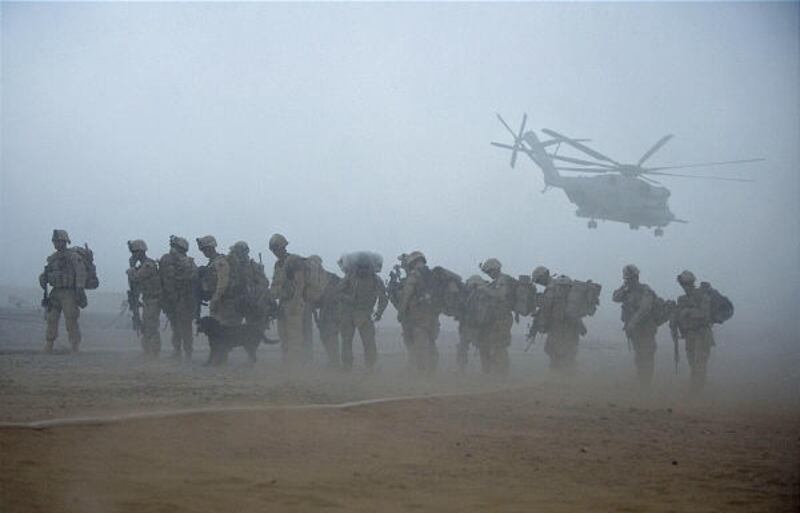
For its part, the Utah National Guard has seen itself transform from a part-time, civilian-centric organization into a military group dominated by a frenetic pace of deployments that rival its active duty counterparts.
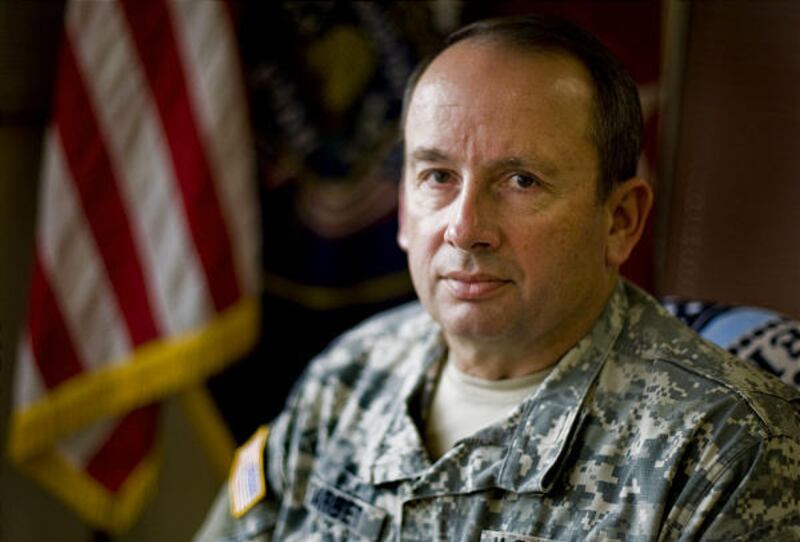
"The world we live in has changed," said Maj. Gen. Brian Tarbet. "For the soldier who enlists today, it is not a question of if I will be deployed but when I will be deployed."
Since 9/11, the Utah National Guard has sent 7,000 to 8,000 soldiers overseas. Many have gone to Iraq or Afghanistan twice, a handful have gone three times, Tarbet said, and a few as many as four times.
Already ramped up for the 2002 Winter Olympics and the buildup to war, the Utah National Guard was tapped quickly from the outset of the 2003 U.S. led invasion of Iraq.
Before that year would end, 80 percent of the Utah Guard was deployed, a number Tarbet surmises few states have surpassed.
"For all intents and purposes, this guard has been on active duty since 2001," he said. "We've had to adapt, evolve and retrain. Everybody is paying the price, a big price in that these units are used, reused and used again."
The U.S. Air Force, too, has had to shift because of the 9/11 dynamic.
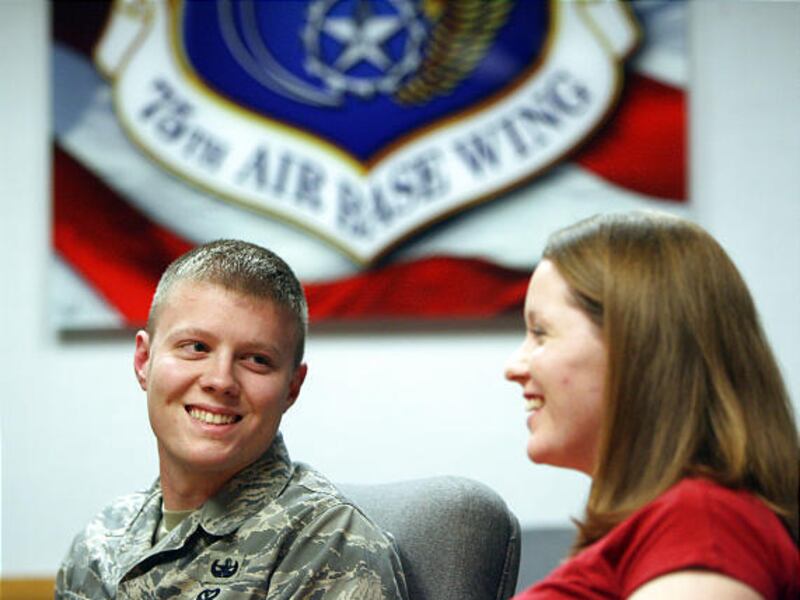
Col. Patrick Higby, commander of Hill's 75th Air Base Wing, said the Air Force of the Cold War era, in which the fighter pilot or the bomber are the sole "combatants," has changed.
Those taking on the enemy, he said, might be the security force around a base on Iraqi or Afghani soil, or the explosive ordnance disposal technician clearing a path free of roadside bombs.
"The irony is that it might be an Air Force guy leading the patrol to protect the Army on the ground," Higby said. " We've changed how we are approaching combat and how we are approaching war."
The events of 9/11, for more than just the U.S. military, changed the lens of how life is viewed for most Americans. For some, it became a dividing line of then and now.
Midvale resident Joyce Jensen doesn't like crowds, cringes when an airplane flies too low and is a bigger planner, full of more insecurity, than she ever was before 9/11.
Just blocks away on the streets of Manhattan during the World Trade Center attack, Jensen was caught up in a horrific chaos only made worse when she learned the enormity of what had happened.
As armed military came rolling down the streets and took to the skies and people were scattering in all directions, Jensen said she could only gaze in shock.
"It was the closest thing to a war zone I'd ever been in my life and I was 3,000 miles too far away from home."
A young man sporting a backpack was just as dazed, standing on the same corner with Joyce and her husband, Carl.
She asked the stranger if he was OK.
He shook his head.
"I don't think so."
The young man told her he'd seen people jump from the burning towers.
"He said he'd never be the same. That's when it all came gushing in, the reality of it."
Two years later for Christmas 2003, her husband surprised her with airplane tickets to New York.
"It ruined my Christmas I got so angry with him. After 9/11, I never wanted to return to New York. The memories were just so awful."
She recalls the firefighters who greeted her outside their station, sipping coffee, offering smiles just before all hell broke loose.
She says she thinks about those men often, and wonders how many died that day trying to help others. If she thinks about it too long, there's fresh pain, fresh tears, even with the years that have passed.
Packing up her anxiety and trepidation, the Jensens did venture back to New York, where they tried to retrace the path they had taken on 9/11.
"I wanted to go back to that fire station and give them my love," she said.
While Joyce Jensen and many other Americans divide time with the then-days before 9/11 and the now, Jennifer Hartzog marks time with "gone" and "here."
Her husband, Paul, was gone in Iraq as an explosive ordnance disposal technician when their infant son came down with pneumonia — three times.
The senior airman stationed at Hill Air Force Base was gone when Kenneth learned to crawl.
He's here, now, for Christmas, but will be gone when the January snow flies as he begins another six-month deployment.
"There were days I didn't want to get out of bed," the young mother said. "But whether you stay in bed or not, the day goes on."
She devoted an hour each day to the gym and knows other wives who purchased dogs to get them up and motivated.
"I won't say it's been easy," she said. "For us, the military was not a decision he made on his own. We made that as a family. I always say I can't complain because I got myself into this mess."
The Hartzogs say they feel they are better prepared for this deployment and their planned reunion this summer.
"While I am gone she learns to live as a single mother and I basically live as a single guy, with a very defined role, organizing and structuring life on my own," Paul Hartzog said. "It's just different when you get back."
The military offers "reintegration" assistance to families, helping them to get used to living together again as a family unit.
"You become better together as a couple," she said.
Smiling, she added she was relieved her husband was here when the car broke down twice but isn't as thrilled about him being gone when the snow needs to be shoveled.
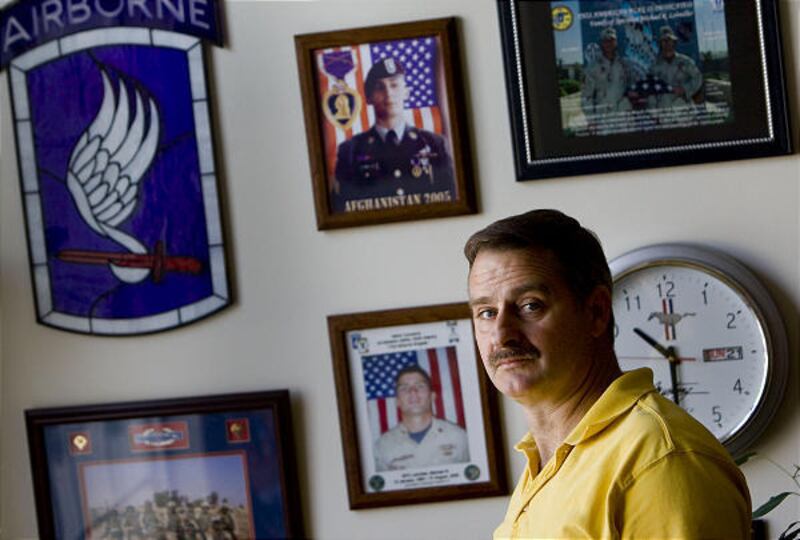
As Clearfield resident Bob Lehmiller prepares to usher in a new decade, he knows two distinct chapters will continue to divide his life. There is that part when he was a silent patriot, that time in his life with his son, Mike. Then there is that time after 2005 and the rest of his life, that of being the father of a dead soldier, of living without Mike.
"I remember sitting around the table New Year's Eve 1999 and the only concern in the world was Y2K," he said. "To believe that at the opposite end of the same decade that there would be a terrorist attack on the United States, that we'd be at war for eight years and that I would have lost a son to that, it's a decade I would not want to repeat."
A natural-born daredevil, Mike Lehmiller joined the Army in March 2001. His passion was mechanical drawing, and he had an eye on an eventual bachelor's degree. He spent 11 months in Iraq and then re-upped. He quickly raised his hand to join the 173rd Airborne combat team.
"I really didn't think much of it at the time and he didn't say much because he didn't want to worry us. But he wanted to get that combat jump."
A month before he was due stateside for a two-week visit, Mike Lehmiller, 23, was killed in a roadside bomb blast in Afghanistan.
Before then, the elder Lehmiller readily admits Memorial Day for him was about Coca-Cola and the Indy 500.
"I can honestly say I didn't know the true meaning of Memorial Day. That's changed forever."
A year afterward, Lehmiller launched Mike's Guardian Eagle Foundation, and along with a core group of volunteers, they spend their spare time aiding veterans, helping active duty military and raising money for causes to assist their families.
"It has changed my life in ways I can't describe," he said. "I've gone from being a silent patriot to an active patriot."
Lehmiller says he doesn't cry as much any more, isn't nearly as angry at the world, and most of all, misses the endless talks he had with his son.
"Sometimes I am afraid there may be a day that comes when I don't think of Mike, when he's not on my mind, and that scares me. The things he did, he just wanted to be remembered."
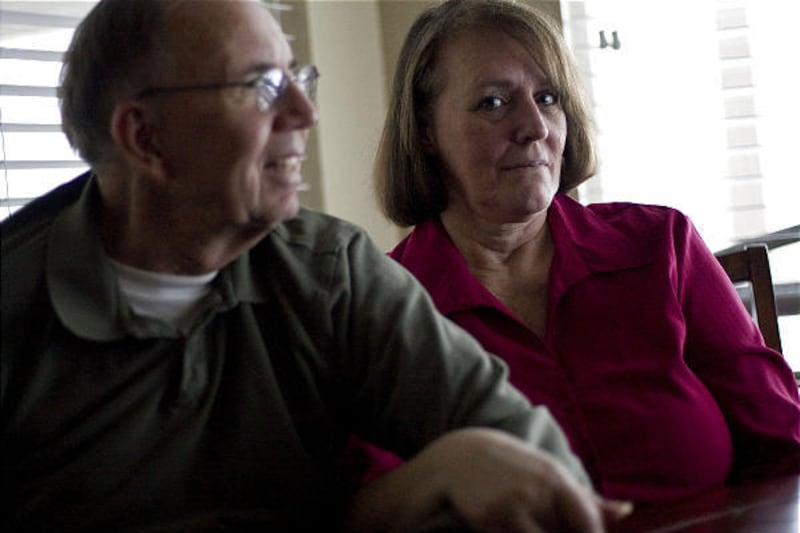
The foundation forged a bond among Lehmiller and a couple from Roy who understand all too well his pain and his desire to preserve the memory of a fallen son.
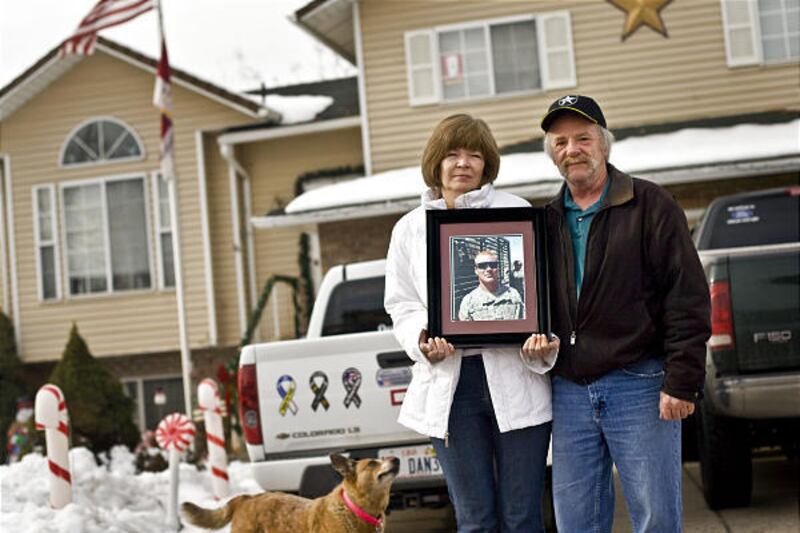
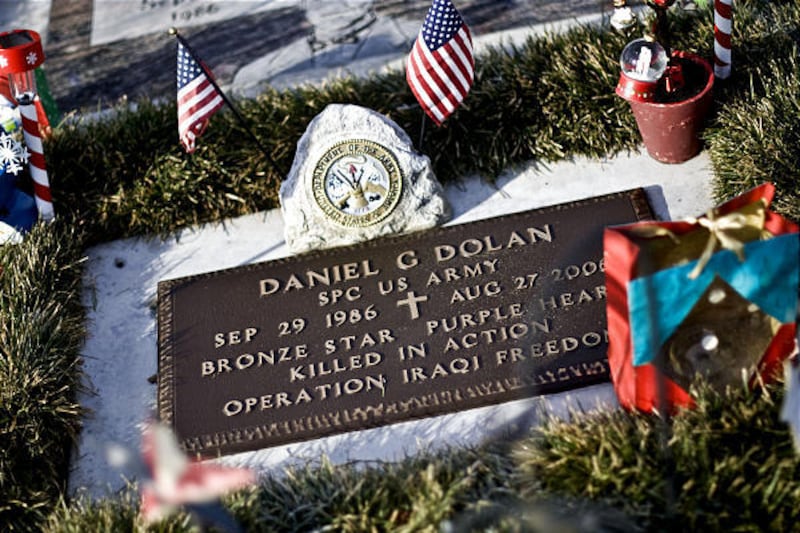
Daniel Dolan, also an Army soldier, died in 2006 in Iraq. His Stryker combat vehicle hit an improvised explosive device or IED, an acronym that has become an aching part of American lingo.
They didn't want their son to join the military. Unlike for Lehmiller, the war in Iraq was well under way in 2005 when Daniel joined with their reluctant blessing.
"I knew there was a war going on and nobody, nobody wants to lose their kids," Fay Dolan said.
They tried to talk him into latching onto a specialized technical field, one that would augment an eventual college education, but the infantry is what drew their only son.
Within five weeks of arriving in Iraq, Daniel Dolan, 19, was dead.
From the time his body arrived in the United States and at the mortuary, the Dolans didn't want to believe their son was dead, couldn't believe.
"We were praying they made a mistake," Tim Dolan said. "You can fool yourself and think they're fine, they're going to come home."
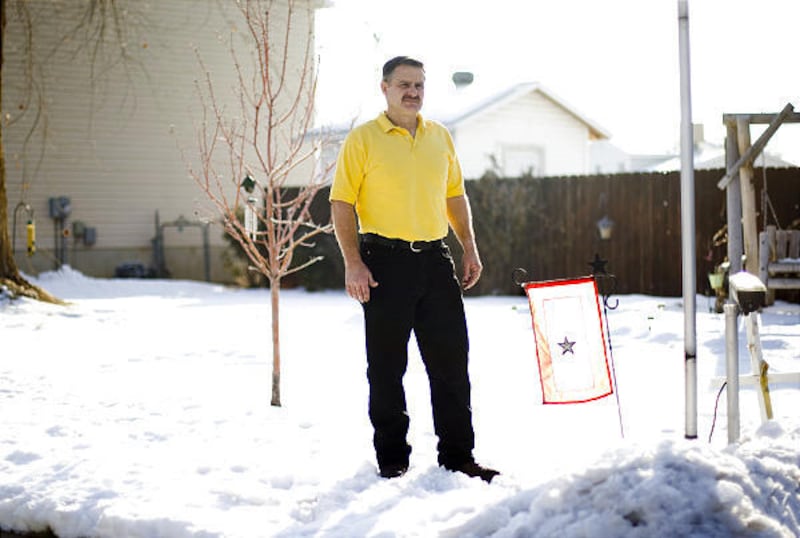
Instead, the Gold Star decorates the Dolans' home. An American flag flies out front. A stone is etched with their son's name and sits adjacent to the walkway to their front porch.
"In the three years since, it's a little easier," Fay Dolan said, "but you still have your moments where it kills you."
They, like Lehmiller, have changed their definition of what it means to be patriotic, of what it means to give.
"You get involved in a lot of things you never were involved with before," she said. "It used to be you wrote a check. You didn't participate."
Their lens on life in the United States, like so many others, changed focus.
"I look at things differently since Dan and 9/11," she said. "It's not a matter of if but when we are attacked again. I see that there is so much hate out there."
The war is always with them, in what they believe, how they grieve and what they do.
They became that core group in the Mike's Guardian Eagle Foundation, spending much of their time helping others.
"It is a way to honor the fallen and give back to the wounded," Fay Dolan said.
Like so many others in grief, the Dolans have been told to move on.
"We have, but this is different," Tim Dolan said. "The day he died our lives changed forever. Our daughter, we can put her through school, we can buy her things, make sure she gets what she wants. There is only one thing we can do for him: make sure he is not forgotten."
The Dolans and Lehmiller point out they lost sons who will not go on to be married, to be remembered by widows, to be mourned by sons and daughters.
"They weren't on this Earth that long," Fay Dolan says. "They didn't make much of a footprint, and what's there will be blown away in short order. We remember what we lost and how big it was. If it isn't for us, they will be lost forever."
And the Dolans and the Lehmillers, like so many other Americans, already feel too much has been lost in a post-9/11 world.
e-mail: amyjoi@desnews.com