

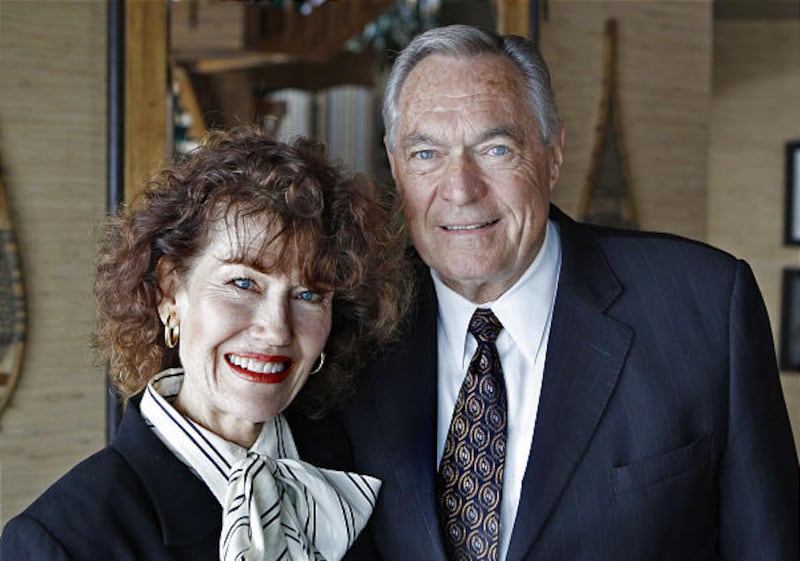


SALT LAKE CITY — When Hal Jensen first met Abdurrahman Wahid, he told the blind Islamic cleric he couldn't drink the tea that was offered him because he was a Mormon.
Intrigued, Wahid — who would later become the president of Indonesia — began peppering the Salt Lake City businessman with questions about his faith, wanting to know more about what Mormons believe and how the LDS Church's humanitarian service program worked. That simple conversation outside a mosque in Jakarta blossomed into a friendship that lasted for years and grew to include LDS leaders, especially President Boyd K. Packer, of the Quorum of the Twelve. It also built a bridge between the faiths of many Muslims and Mormons and paved the way for greater church presence in Indonesia, especially through humanitarian service.
"Wahid made such a remarkable change in our ability to have a close and friendly relationship as a Christian church with Indonesia," Jensen said Wednesday from his winter home in Deer Valley. "He loved the tenets of the Mormon Church. He was ready and willing to stand up for the church. He never hesitated."
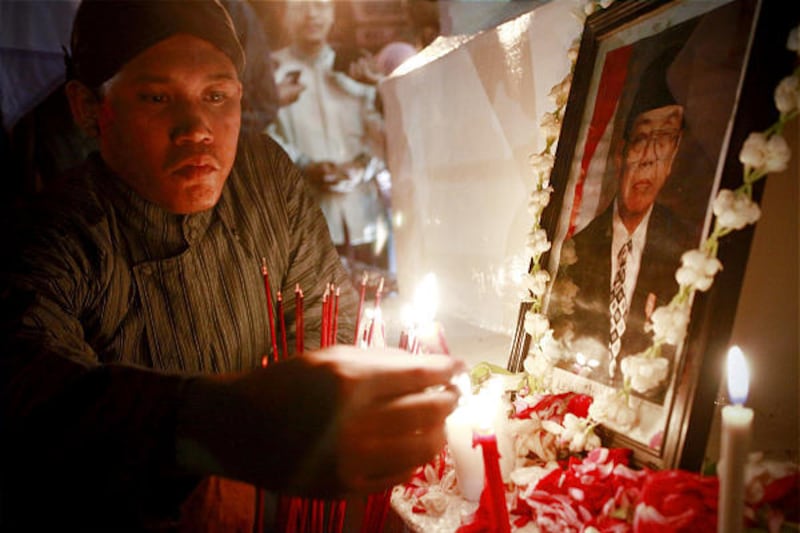
Wahid, 69, died Wednesday during surgery to remove a blood clot from his heart. He had been in poor health due to complications from diabetes and kidney failure.
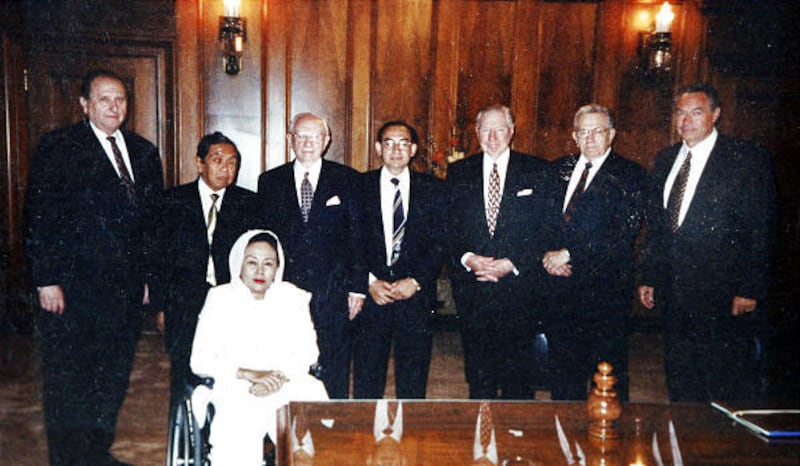
Known fondly by his nickname, Gus Dur, Wahid was a proponent of moderate Islam and a democratic reformer who led Indonesia from 1999 to 2001 after the downfall of late dictator Suharto. As his familiarity with the LDS Church grew, Wahid visited Salt Lake City in 1999 and underwent eye surgery, then visited with the First Presidency — then Presidents Gordon B. Hinckley, Thomas S. Monson and James E. Faust.
During the visit, Jensen said Wahid invited President Hinckley to visit Indonesia when Wahid became president. Roughly six months later, Wahid was elected president in a democratic election, and in 2000, President Hinckley and President Packer visited Indonesia and were invited to the palace for a dinner in their honor.
Wahid visited Utah five times, meeting with the LDS leaders each time to strengthen bonds of friendship. "They became close friends," Jensen said of Wahid and President Packer.
That close association with LDS leaders has influenced humanitarian service in the area, especially in 2004 when a devastating tsunami hit a widespread area of the Pacific. The LDS Church immediately responded by sending needed body bags, food, water, supplies and support for the overwhelmed nation. President Packer and Elder David A. Bednar of the Quorum of Twelve Apostles, with Gerrit Gong, a vice president at BYU, visited the country to view the devastation.
President Packer spoke during at a BYU devotional in 2006 introducing Dr. Alwi Shihab, a scholar, former Harvard professor and currently the Indonesian presidential adviser and special envoy to the Middle East. President Packer said, "Church members and Muslims share similar high standards of decency, temperance and morality. … As societal morality and behavior decline in an increasingly permissive world, the church and many within Islam increasingly share natural affinities."
After learning of Wahid's death President Packer said Wednesday, "Indonesia had lost an extraordinary leader and the church has lost a good friend."
e-mail: sisraelsen@desnews.com. Contributing: Associated Press.