






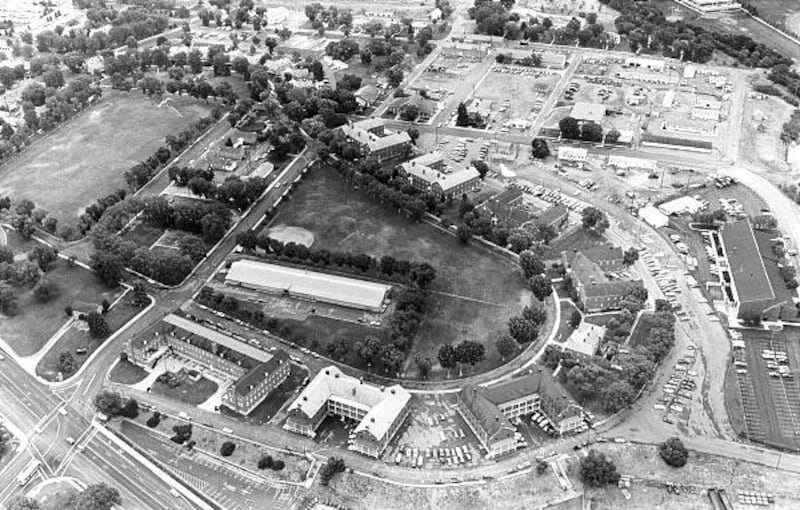


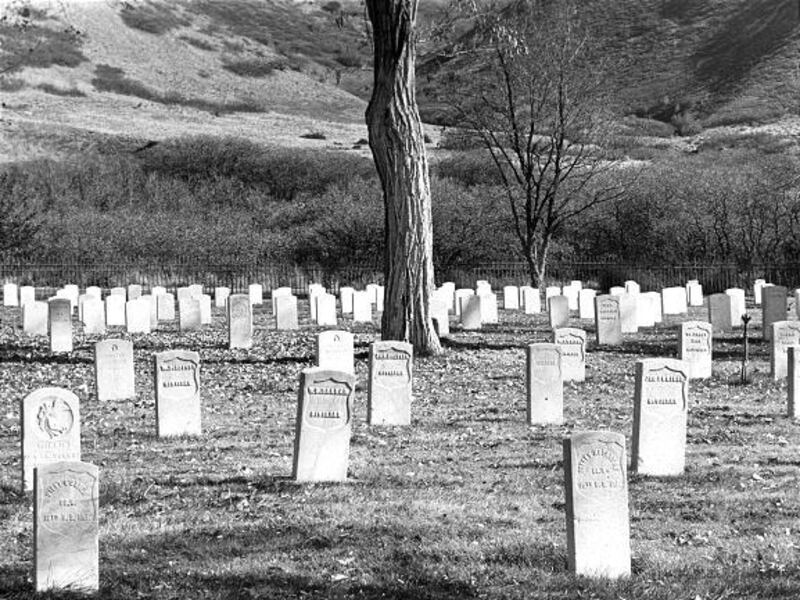

For its first 30 years, Fort Douglas represented federal authority in the largely Mormon Utah Territory.
And for almost 100 years more, it helped train and prepare soldiers to protect the nation's freedoms.
In a premature obituary for Fort Douglas that appeared in the Dec. 19, 1964, Deseret News, when the nation considered closing the post, staff reporter Del Van Orden wrote: "Historians claim that no army post established in the West during the 19th century had a more significant part in the development of the community surrounding it than Fort Douglas."
Soldiers from what was originally known as Camp Douglas were among the first to discover ore in Bingham Canyon, and camp leaders helped to establish the state's mining industry. The camp published Utah's first daily newspaper, was instrumental in bringing electricity into the valley and kept the mail routes open during the Indian Wars.
When the railroad came in 1869, Fort Douglas became the central location for Army activities in the Mountain West, providing a much-needed infusion of money for Salt Lake City.
In 1898, two years after Utah gained statehood, the fort served as a training ground for U.S. troops that would fight in the Spanish-American War, a role it continued to play in World Wars I and II.
During the 1930s, Civilian Conservation camps were directed by the fort.
Fort Douglas proved to be a survivor. The government considered closing the post in the 1860s and again just prior to World War I, just after World War II, in 1967 and again in 1978. It was finally closed as an official army facility in 1988, but its usefulness continues.
In 2002, it served as a temporary home for approximately 4,000 athletes, trainers and officials for the 2002 Winter Olympic Games. Those buildings are now used as student housing for the University of Utah.
The southern portion of Fort Douglas, including the 120-year-old houses fashioned in "quartermaster Victorian" architecture on Soldiers Circle, continues to be used as the headquarters of the 96th Army Reserve Command and as a base of operations for U.S. Navy and Marine Reserves, as well as home to the Fort Douglas Museum, which traces the military history of the state from the beginning.
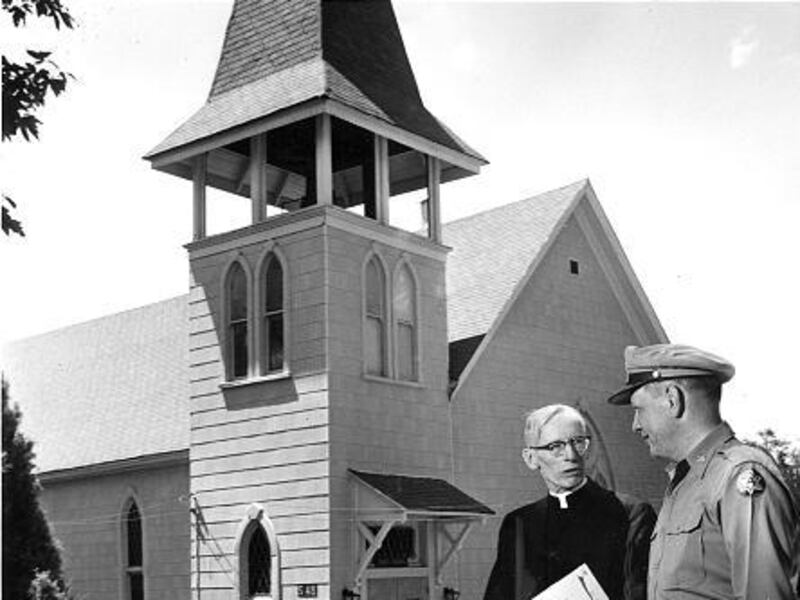
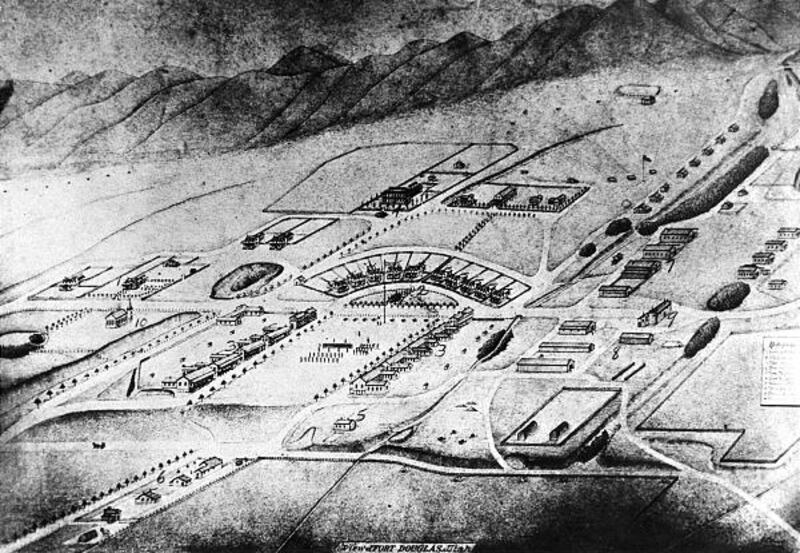
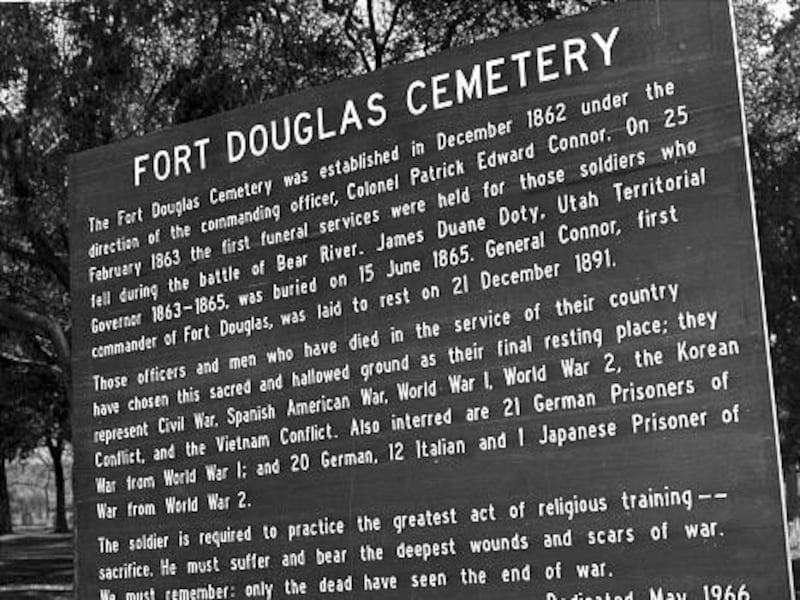
A gallery featuring photos from the history of Fort Douglas, retrieved from the archives of the Deseret News by photo researcher Ron Fox, is available now at deseretnews.com.
Fort Douglas traces its beginnings to the Civil War in 1862, when Col. Patrick Edward Connor and the California-Nevada Volunteers were ordered to Utah Territory ostensibly to guard the Overland Mail Route from bands of marauding Indians.
But the military camp was also in place to ensure that the Mormon settlers, who were experiencing some unrest over the issue of polygamy, remained firmly in the Union.
Connor named the camp after Illinois Sen. Stephen A. Douglas, a friend of the West, who had lost a presidential bid against Abraham Lincoln in 1860. Connor chose the site for his camp well, on 10,525 acres on a plateau three miles east of Salt Lake City, where his troops could keep an eye on the community of "traitors, murderers and fanatics" that Connor imagined the Mormons to be.
The feeling was mutual. When he first heard about the fort, Brigham Young ordered the south gate of Temple Square sealed. In 1865, when it was rumored that Young might be taken prisoner by the Army and prosecuted for practicing polygamy, a telescope was mounted atop the Beehive House to keep watch on activities at the fort.
Troops from Fort Douglas only participated in one major Indian action, the Battle of Bear River, which took place on the Utah-Idaho border in 1863. Connor was promoted to brigadier general following that expedition. The resulting cannon fire to celebrate the event prompted residents in Salt Lake City, who thought the Army was attacking, to grab their weapons and prepare for battle.
Gradually relations between the fort and Mormons softened, and over the years Fort Douglas and the soldiers stationed there have had a social and economic impact in Utah that is still felt today.
Camp Douglas became increasingly important in the Western military establishment as a supply center for the fast moving cavalry during the 1870s, and in 1878 it became Fort Douglas.
During the two World Wars, the post served as a mobilization and training garrison, as well as a prisoner-of-war camp, housing 300 German POWs during World War I and 1,500 of the same during World War II.
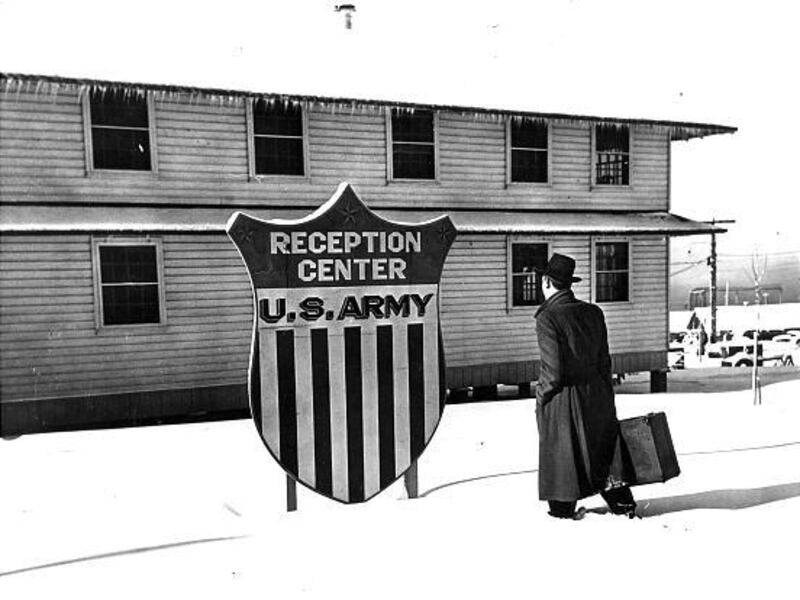
Thousands of GIs were inducted into the army through the post's main gates, and the reception center was kept busy processing newcomers and assigning them to basic training sites.
When World War II ended, Fort Douglas was the last stop on the road home for thousands of soldiers who were discharged there. More than 56,000 GIs were separated from the Army at Fort Douglas in an eight-month period.
In the years since World War II, Fort Douglas has served as headquarters for Reserve and National Guard units and as a support detachment for military activities in the area. The historic area of Fort Douglas was designated a National Historic Landmark in 1970.
Over the years, the original 10,525-acre site has been parceled out. Mount Olivet Cemetery, University of Utah, Shriners Hospital for Children, Veterans Medical Center and the U.'s Research Park are just a few of the properties that were granted or sold that were originally part of Fort Douglas. The military now occupies 58 acres.
E-mail: marchaddock@utwire.com